


 Beijing + Tibet Tours
 Chengdu + Tibet Tours
 Shanghai + Tibet Tours
 Xining + Tibet Tours


Jokhang Temple - A World Heritage Sanctuary of Tibetan Buddhism
Latest Tibet Travel News (updated in March, 2026):
⑴. Free admission to scenic spots, as well as discounted prices for transportation and accommodation, have reverted to normal rates. It is advisable to make early reservations to secure the best prices.
⑵. Peach Blossoms in Bomi County, Nyingchi enter the best blooming period. The best blooming period is from March 17 to April 7. Scenic spots in Bomi County and Basum Tso will present a magnificent sight of peach blossoms, and tourists can go there to enjoy the view.
Jokhang Temple (or Jokhang Monastery) is the spiritual center of Tibet and the holiest destination for all Tibetan pilgrims. It is listed in the World Cultural Heritages with Potala Palace and Norbulingka.
Situated at the heart of the old town of Lhasa and surrounded by Barkhor Street, this 4 storied building, built in the 7th century by Songtsan Gambo with roofs covered with gilded bronze tiles, demonstrates a combination of the architectural style of Han, Tibet, India and Nepal, as well as a Mandala world outlook of Buddhism. It was originally called the 'Tsuklakang' (Tsulag Khang) - 'House of Religious Science' or 'House of Wisdom' during the Bon period of Tibet, which refers to geomancy, astrology, and divination of Bon. Today it is more commonly known as the Jokhang, which means the 'House of the Buddha'. Visiting Jokhang Temple for a real discovery tour in the mysterious and sacred land, you can get close to the religious part of Tibet and experience the devotion of Tibetans.Jokhang Temple Facts
- Ratings:
-

#3 of 30 Things to Do in Lhasa
- Season:
- All year round
- Type:
- World Heritage Site, Religious Temple; Historical Architecture
- Altitude:
- 3650 meters
- Location:
- Center of Lhasa old town
See UNESCO’s brief synthesis of Jokhang Temple on the World Heritage List as part of the "Historic Ensemble of the Potala Palace, Jokhang Temple and Norbulingka", reference from UNESCO Official Website (https://whc.unesco.org/en/list/707)
"The Jokhang Temple Monastery was founded by the regime also in the 7th century, in order to promote the Buddhist religion. Covering 2.5ha in the centre of the old town of Lhasa, it comprises an entrance porch, courtyard and Buddhist hall surrounded by accommodation for monks and storehouses on all four sides. The buildings are constructed of wood and stone and are outstanding examples of the Tibetan Buddhist style, with influences from China, India, and Nepal. They house over 3,000 images of Buddha and other deities and historical figures along with many other treasures and manuscripts. Mural paintings depicting religious and historical scenes cover the walls."
- History
- Buddha Statue
- Highlights
- Kora Routes
- Temple Comparison
- Transportation
- Tips
- Nearby Sites
- Tour Plan
History of Jokhang Temple - Seen through a Tibetan Proverb
Have you ever heard the saying, "First came the Jokhang Temple, then the city of Lhasa"? This saying captures the profound historical truth that the sacred temple is not merely a part of the city but its very reason for being. Survived from the Anti-Buddhist activities, it went thought several reconstructions and becomes a massive building of earth & wood structure, covering an area of 2.51 hectares.
Jokhang Temple was constructed by Tibetan King Songtsan Gambo in the 7th century to house the sacred image of the Buddha-Jowo Rinpoche, which was the dowry of Chinese princess Wencheng, the second wife of Songtsan Gambo married in 641.
Legend has it that the King threw his ring into the air to show where to build the temple. The ring fell into a lake and a stupa emerged from the water. Then the lake was filled up by sand and soil carried by thousands of white rams. This construction lasted over three years, and the temple at first was called Rasa, which means the land of ram, to commemorate the contribution of the rams. After many Buddha enshrined, the temple changed its name to Jokhang, means the house of Buddha. And the city was named Lhasa, which means the land of Buddha.
Jokhang Temple went through twice destructions in the Anti-Buddhist activities which took place in late 7th century and the middle period of 9th century. During those times, Jokhang Temple was closed and the Jowo Rinpoche was buried under earth for two times to avoid the damage.
As the first civil structure construction, Jokhang Temple had several reconstructions in Yuan, Ming, Qing dynasties, and becomes a massive building consisting of four floors and an open roof all filled with chapels and chambers. For over 1300 years of history, the Jokhang Temple has some well-preserved architecture of Songtsan Gambo period and the Jowo Tinpoche statue is still enshrined within the temple as the holiest object in Tibet.
 Walking Clockwise around the Jokhang Temple
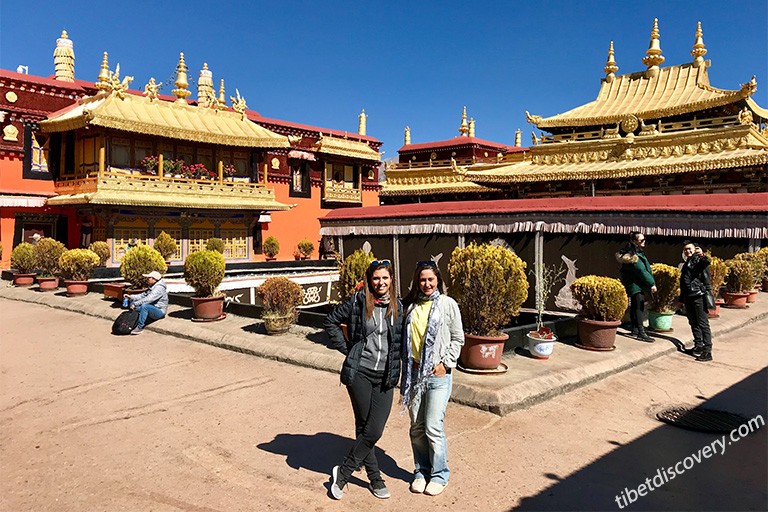
 Our guests Julie's group visited Jokhang Temple
Sacred Icon of the Jokhang Temple - The 12-Year-Old Life-Size Statue of Shakyamuni
The Jowo Rinpoche (or Jowo Shakyamuni), a life-sized (5 foot/1.5m) statue of the Shakyamuni of age 12, is the treasure of Jokhang Temple as well as the great collection of Tibet. It is one of the “Three Life-Sized Statues of the Buddha”, alongside the 25-year-old life-sized statue from Bodh Gaya, India (now lost), and the 8-year-old life-sized statue enshrined in the Little Jokhang Temple in Lhasa. Among them, the 12-year-old statue is the most well-preserved and holds the highest religious significance.
It is said that the Jowo Rinpoche was made in India and later was given to China as a gift. When Tubo King Songtsan Gambo married Chinese Princess Wenchen in the Tang Dynasty, Jowo Rinpoche, along with extraordinary Tibet religious art treasures was brought to Lhasa as dowry in A.D. 641. The statue is crafted from a special alloy and is entirely gilded with gold, depicting a serene and compassionate countenance. The Jowo Rinpoche is seated in the full lotus posture, with its right hand extended in the earth-touching gesture, while the left hand rests in the meditative gesture. The figure is adorned in monastic robes, embodying both solemnity and profound tranquility. There are many pilgrims coming to Jokhang Temple from different places in the world to pay homage to Jowo Rinpoche. They believe that one devoted prayer will bring them blessedness.
 The 12-Year-Old Life-Size Statue of Shakyamuni
©baike.baidu.com
Highlights of Jokhang Temple
Regarded as the number one spiritual site for Tibetans and the historical heart of Lhasa, the Jokhang Temple is deeply rooted in culture. To truly experience its essence, be sure not to miss these key highlights, including the sacred Buddhist statues, exquisite thangkas, narrative murals, unique architectural fusion, and mesmerizing pilgrim circuits.
Artistic Treasury - Statues, Murals and Thangkas
The interior of Jokhang Temple is an atmospheric labyrinth of chapels dedicated to various gods and bodhisattvas, illuminated by votive candles and thick with the smoke of incense. There are thousands of Buddhist statues and images which were brought by the two princesses (Wencheng & Bhrikuti) as part of their dowries. While walking through those atmospheric labyrinthes of chapels for various gods and bodhisattva, you may feel like getting back to the ancient mysterious land and find all around you is religion. On the right side of the front gate of Jokhang Temple are two murals, one depicting the procession of princess Wencheng arriving in Tibet and the other describing how the Jokhang Temple was built. Some other fine murals and Thangkas hanging on the walls are also worthy of your visit.
Architectural Marvel - A Millennia-Old Model of Tibetan-Han Fusion
Jokhang Temple enjoys a long history of over 1,300 years and holds a high status in Tibetan Buddhism. It is the existing most resplendent monastery built in the Tubo Dynasty and the earliest civil structure in Tibet. Combining the features of Chinese, Tibetan, and Nepalese architecture, Jokhang Temple becomes a model of Tibetan Buddhist building. As you get close to Jokhang Temple, your eyes will first be caught by the beautiful golden roof. There is still something preserved in spite of several destructions. Under the roof, you can find the original wooden beams and rafters. In the lobby, there are Newari door frames, columns, and finials from the 7th and 8th centuries.
 Exquisite Murals in Jokhang Temple
 Beautiful Golden Roof
Historic Witness - Jokhang Temple Square and Alliance Stele
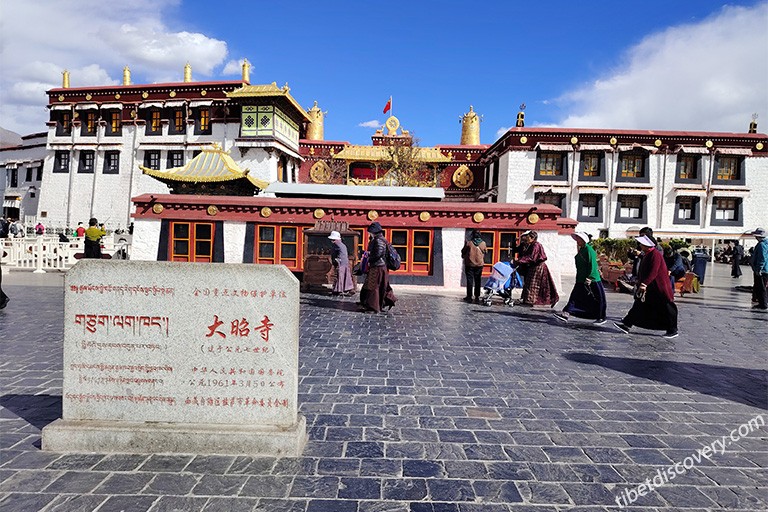
Jokhang Temple Square is an extension of the Jokhang Temple, serving as both the starting and ending point for pilgrims' kora (the Barkor circuit). Historically, it has been a site for major religious ceremonies as well as a public space for issuing decrees, trade, and social gatherings. Today, it has also become the best spot for visitors to experience the atmosphere of Lhasa and capture the magnificent golden roofs of the Jokhang Temple. Standing on the western side of the square, protected by glass, is the Tang-Tibet Alliance Stele, one of the most precious material testimonies to ethnic relations in ancient Chinese history. Erected in 823 CE, the stele is inscribed in both Chinese and Tibetan scripts, detailing the reasons and process of the alliance and swearing to "unify as one nation".
Cultural Immersion - Pilgrimage and Prayer Wheel Rituals
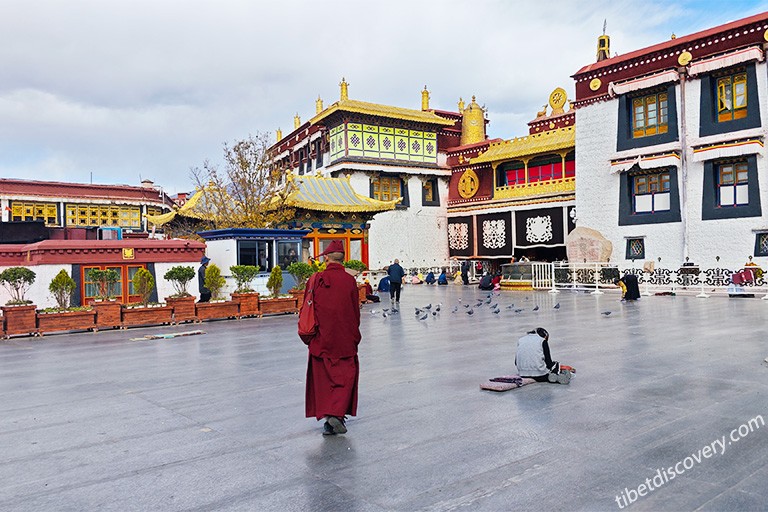
As the spiritual heart of Tibet, the Jokhang Temple attracts endless pilgrims and holds profound significance for Tibetans. Devotees constantly walk clockwise around it, many spinning handheld prayer wheels as they murmur mantras, while others prostrate themselves in full devotion at its gates. For them, each step and every turn of the wheel is an act of merit accumulation and karma. The praying outside the temple is worth seeing and it will give you a great visual impact than words. If you want to see the pilgrims do their prayers, you can tour around the exterior of Jokhang Temple in the morning. There are two gates of the temple, one is for locals with a big queue lining up; the other is for tourists to get in.
 Our Guests at Jokhang Temple Square
 Devouted Pilgrim in front of Jokhang Temple

Sacred Paths of the Jokhang Temple - Discover the Three Kora Routes
The concentric paths encircling the Jokhang Temple define the sacred geography of Lhasa. These three circuits, known as the kora, guide pilgrims in a ritual of walking meditation. By circling the temple, spinning prayer wheels, and chanting mantras, devotees accumulate merit, purify karma, and embody the Buddhist ideals of cyclical existence and ultimate fulfillment. The most devout express this through full-length prostrations, measuring the sacred path with their bodies.
Nangkhor - The Inner Circuit
This route lies inside the temple complex, circling the Jowo Khang, the main chapel housing the sacred statue of the 12-year-old Shakyamuni Buddha. As the most sacred of the three circuits, devotees walk this path while turning the prayer wheels lining the chapel walls.
Barkhor - The Middle Circuit
This is the circular path formed by the bustling Barkhor Street, which wraps around the outer walls of the Jokhang Temple. More than just a pilgrimage route, the Barkhor is the social, commercial, and cultural heart of old Lhasa.
Lingkhor - The Outer Circuit
This is the largest circuit, roughly tracing a loop around the whole of historic Lhasa, encompassing landmarks such as the Jokhang Temple, Potala Palace, and Chakpori Hill (Yaowang Mountain). Devotees often choose this longer route during major religious festivals as an act of deep devotion.
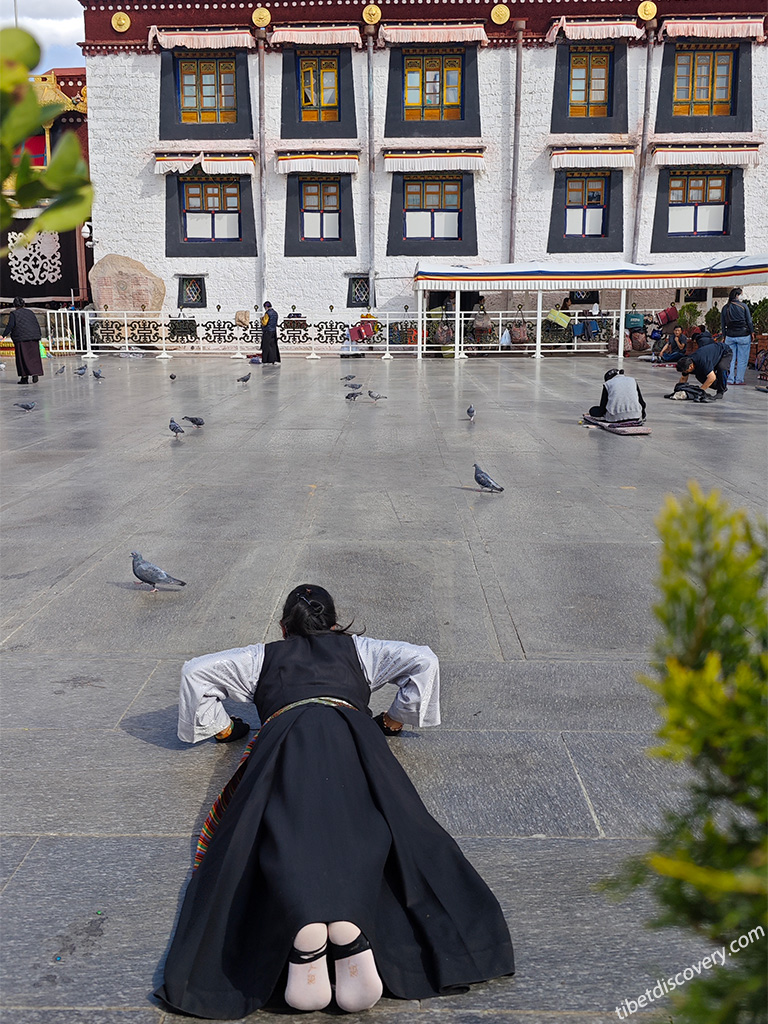 Circling Jokhang Temple with Full-body Prostrations
Join the Celebration - Experience the Jokhang Temple during Festivals
Shoton Festival - Paying Homage to the Jowo Rinpoche
The Shoton Festival, the grand celebration beginning on the 30th of June according to the Tibetan calendar and lasting about 7 days, starts with the unveiling of a giant thangka at Drepung Monastery. Pilgrims then flow to the Jokhang Temple, one of the festival's key religious sites, gathering at the temple and the Barkhor circuit to pay homage to the Jowo Rinpoche and offer their most sacred prayers of the year, giving thanks for the Buddha's blessings and praying for a bountiful harvest.
Tibetan New Year - the First Pilgrimage of the Year
On the first day of the Tibetan New Year, after the custom of “fetching the first water", locals dress in traditional attire and flock to the Jokhang Temple for their first pilgrimage of the year. They present khata scarves and butter lamps to the Jowo Rinpoche, making the temple's incense fires burn at their brightest annually. Thus, the Jokhang becomes the absolute spiritual center for New Year blessings, carrying the collective hopes of the people for peace, health, and good fortune.
Note : Tibet might to be closed for foreign traveler during Tibetan New Year Festival.
Tsongkhapa Butter Lamp Festival - An Ocean of Lamps
Tsongkhapa Butter Lamp Festival is observed annually on the 25th day of the 10th month in the Tibetan calendar. It commemorates the passing of Je Tsongkhapa (1357–1419). On this day, the Jokhang Temple becomes a focal point of devotion. Thousands of butter lamps are lit along its roofs, windowsills, and throughout the surrounding Barkhor circuit. Monks hold chanting ceremonies inside the temple, while devotees offer lamps, circumambulate, and pray. The illumination of the temple and the old quarter of Lhasa creates a solemn yet radiant atmosphere.
Great Prayer Festival - the Primary Assembly at the Jokhang Temple
Founded in 1409 at the Jokhang Temple, this grand prayer assembly still regards the temple as its spiritual heart. During the first month of the Tibetan calendar, tens of thousands of monks gather here for sutra recitation and philosophical debates, holding important rituals such as Geshe degree examinations and the Butter Lamp Lighting ceremony.
Check more about Tibet Festivals
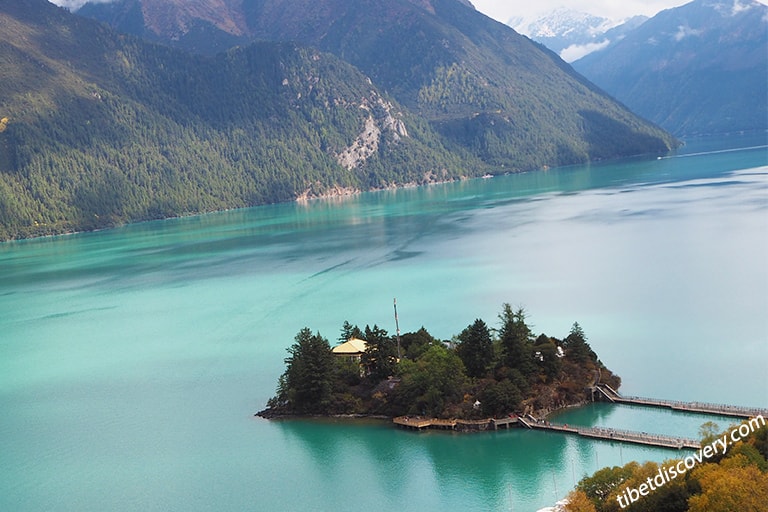
Lhasa's Great Monasteries: Which One Should You Visit?
Lhasa is not only home to the iconic Jokhang Temple, the spiritual heart of Tibet, but also a living center of Tibetan Buddhism, whose spirit is further illuminated by other great monasteries. Each offers a distinct pilgrimage: Sera Monastery is renowned for its dynamic Buddhist debates, Drepung Monastery impresses with its vast, village-like scale, while Ganden Monastery provides a serene mountain retreat rich in foundational history. Below, we compare these four essential sites to help you decide which to visit based on your interests, time, and travel style.
| Features | Jokhang Temple | Sera Monastery | Drepung Monastery | Ganden Monastery |
|---|---|---|---|---|
| Elevation | 3,650m | 3,700m | 3,800m | 3,800m |
| Distance from Downtown Lhasa | 0km | 7km | 10km | 55km |
| Drive Time | / | 20 minutes | 30 minutes | 1.5 hours |
| Admission Fee | ¥85 / person | ¥50 / person | ¥60 / person | ¥40 / person |
| Key Highlights | Jowo Shakyamuni statue; Barkhor Street pilgrimage circuit |
Daily Buddhist debates (except Sundays) | Lhasa's largest monastic complex; Shoton Festival thangka display platform |
Birthplace of Tibetan Gelugpa; panoramic views from the ridge |
| Recommended Duration | 2~3 hours (including Barkhor Street circuit) | 2~3 hours (focus on debates) | Half a day (due to vast scale) | Half a day (including round-trip travel) |
How to Choose Your Temples in Lhasa
Most popular choice ideal for first-time visitors: Sera Monastery on Day 2 + Jokhang Temple on Day 3
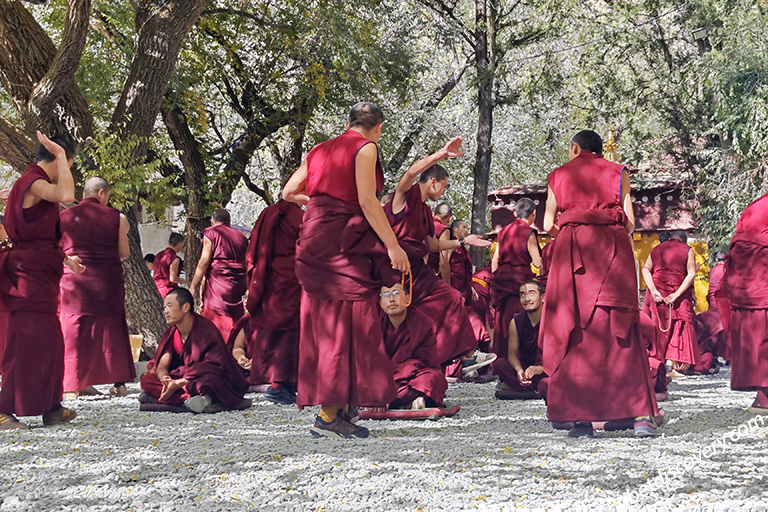 Buddhist Debating at Sera Monastery
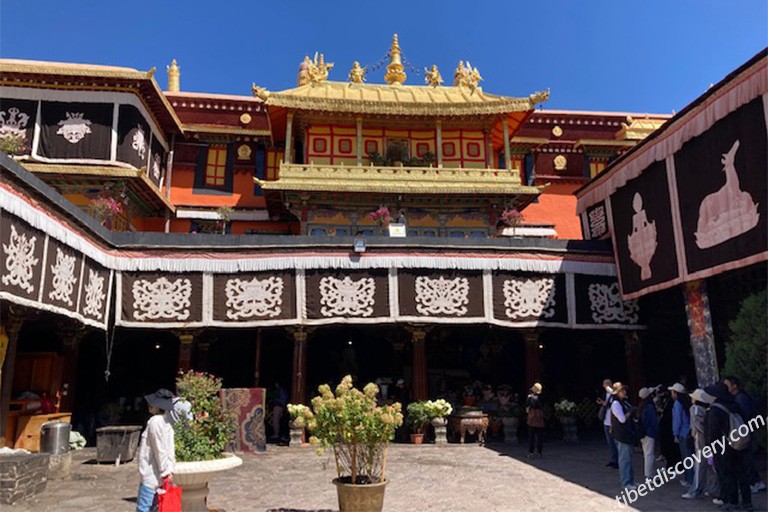 The Thousand-Buddha Courtyard in Jokhang Temple
Complete experience ideal for culture enthusiasts: Jokhang Temple on Day 2 + Drepung & Sera Monasteries on Day 3 + Ganden Monastery on Day 4
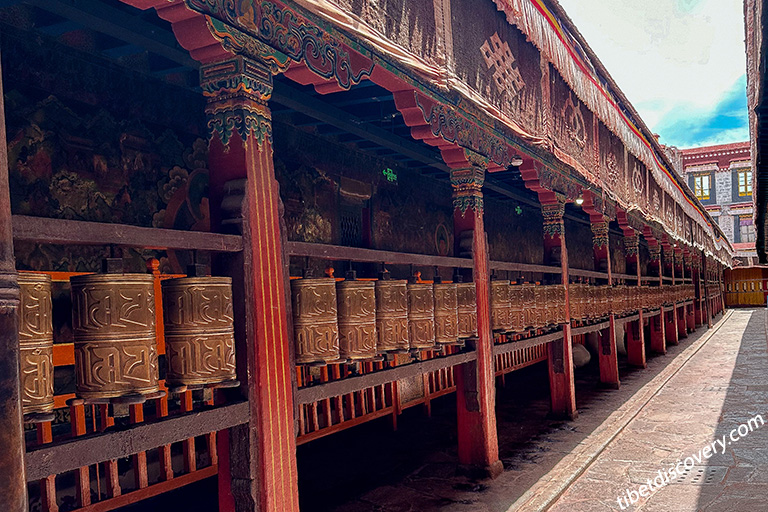 Prayer Wheel Corridor in Drepung Monastery
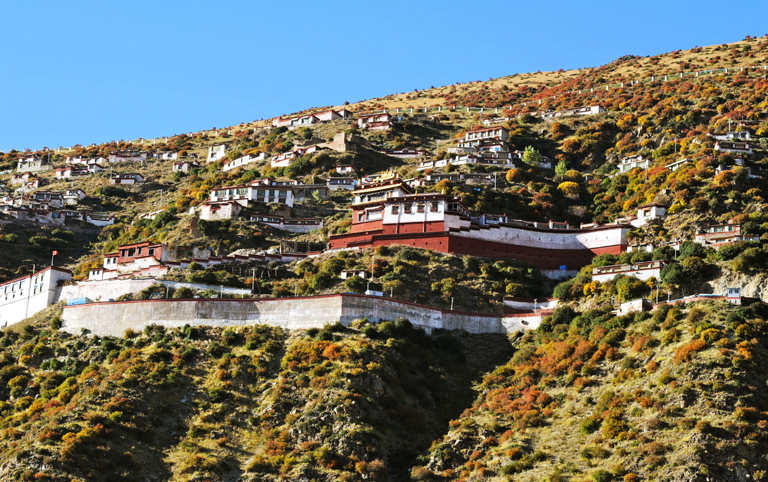
 Seeing Ganden Monastery from Distance
How to Get to Jokhang Temple
Jokhang Temple is located at No. 2 Bakuo West Street, Chengguan District, Lhasa (拉萨市城关区八廓西街2号). It is the center of Lhasa old town and still a landmark in Lhasa. Reaching Lhasa is convenient via non-stop flights or the scenic Qinghai-Tibet Railway. Once you arrive in Lhasa city center, you can easily get there by bus, taxi, or private car.
● about 1.6 km away from Potala Palace, 12 mins by car
● about 4.5 km away from Norbulingka Park, 20 mins by car
● about 10 km away from Lhasa Railway Station, 30 mins by car
● about 60 km away from Lhasa Gonggar International Airport, 70 mins by car
Private Transfer with Tibet Discovery
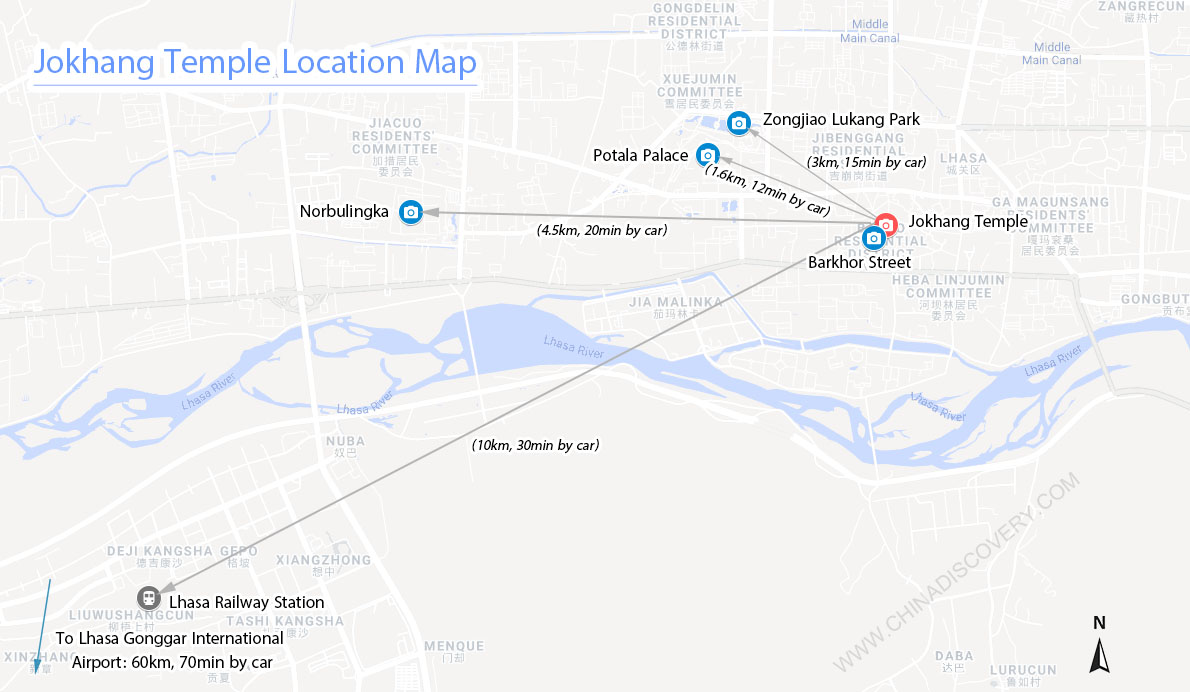 Jokhang Temple Location Map
If you book a Tibet tour with us, we can arrange seamless private transportation, from your airport or train station pickup to transfers between your hotel and all attractions. We also offer customized itineraries that take care of the details of your trip, including tickets, meals, accommodations, and more. Feel free to contact us for details.
Useful Travel Tips for Jokhang Temple
For tourists, there are some useful travel tips for you before you go.
● Admission Fees: The ticket is CNY 85 per person. Please note that advance reservation is required one day prior to your visit. If you would like professional assistance with booking, we at Tibet Discovery is a reliable option. Feel free to contact us for ticket reservations or customized tour arrangements.
● Opening Time: 08:30~18:30 all year round. It is advisable to allocate 1~2 hours for your visit to fully experience the main halls, iconic artifacts, and the spiritual ambiance.
● Altitude and Acclimatization: Jokhang Temple is situated in the heart of Lhasa city at an elevation of approximately 3,650 meters above sea level. It is recommended to rest well on your first day upon arrival in Lhasa and plan your visit to the Jokhang Temple for the second or third day. Stay well-hydrated, avoid alcohol, take it slow, and consider bringing altitude sickness medication.
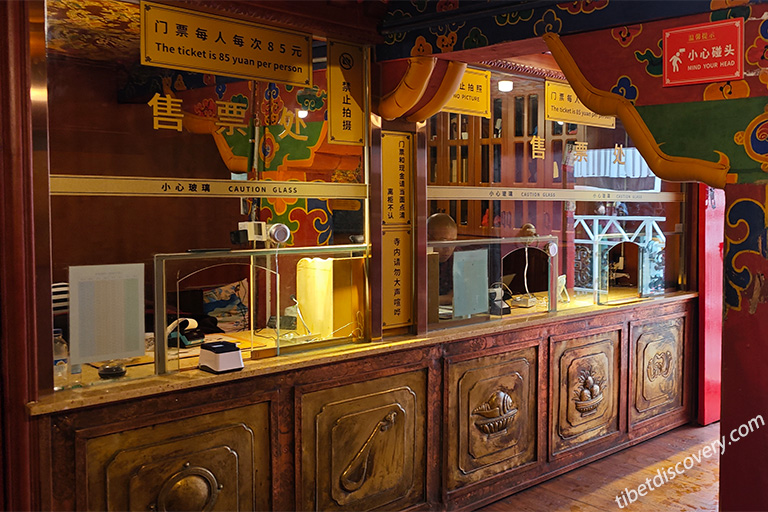 Jokhang Temple Ticket Office
Check more about How to Avoid High Altitude Sickness in Tibet 丨 Lhasa Altitude - How High is Lhasa & Tips to Avoid Altitude Sickness
● Manners & Taboos: As the Jokhang Temple is a sacred site, visitors should dress modestly, remove hats and sunglasses before entering, follow local customs such as walking clockwise, and be respectful of worshippers. Taking photos is not allowed inside the temple, unless there is a permission sign (normally need to pay). However, you are permitted to take photos in the square and golden roof.

Nearby Attractions Around Jokhang Temple
Potala Palace - A World Heritage Architectural Masterpiece
Location: No. 35, Beijing Middle Road, Chengguan District (拉萨市城关区北京中路35号); about 1.5km away from the Jokhang Temple for 5 minutes' drive
Potala Palace, the must-visit site of Lhasa, regarded as a landmark and the symbol of Tibet, is a great giant palace consisting of many houses, towers, chapels, etc. According to the Guinness Book of World Records, Potala Palace is the highest palace in the world. Because of its spectacular architectural style, it is honored as one of the most beautiful architectural buildings in the world. As the historic ensemble of Lhasa, Potala Palace, together with the exceptional Jokhang Temple and Norbulingka is the UNESCO World Heritage Site.
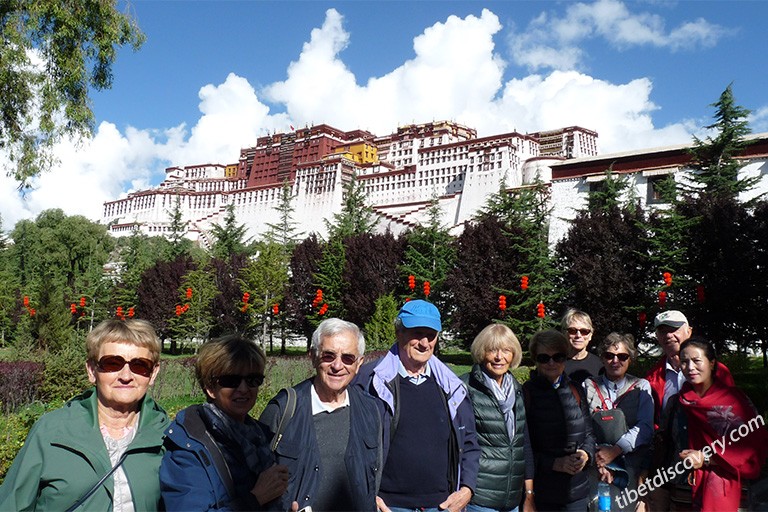 Our guests visited Potala Palace
Barkhor Street - Best Place to Feel Tibet's Local Vibe
Location: Yutuo Road, Chengguan District, Lhasa (拉萨市城关区宇拓路); about 200m away from the Jokhang Temple for 5 minutes' walk
Barkhor Street beside Jokhang Temple is the popular circumambulation for pilgrims and a commercial center. Being “a saint road” in the eyes of Tibetan, you can feel the local spiritual belief when you see different pilgrims from all over Tibet in different dresses and dialects to pray devoutly along Barkhor Street. Like a miniature of Lhasa, it shows you another aspect of the Tibetan life. There are an eyeful of fantastic stores and shops to display most characteristic items and commodities such as thangkas, prayer wheels, prayer flags and milk tea. Barkhor Street is such a great place to buy some souvenirs and suck up the local Tibetan lifestyle.
 Makye Amy Restaurant at Barkhor Street
Little Jokhang Temple - A Holy Sanctuary of Han-Tibetan Harmony
Location: No. 8, Little Jokhang Temple Road, Chengguan District, Lhasa (拉萨市城关区小昭寺路8号); about 1km away from the Jokhang Temple for 10 minutes' walk
Though relatively small in scale, its historical significance, religious importance, and architectural artistry are profound, making Little Jokhang Temple one of the most important temples in Tibet. It is a perfect example of the fusion of Han and Tibetan architectural styles. It features typical Tibetan stone walls and fortress-like structures, giving it a solid and imposing presence. The layout and decorations of the sutra halls and Buddha halls adhere to Tibetan Buddhist traditions, with exquisite murals, some of which depict the story of Princess Wencheng’s journey to Tibet. Unlike the bustling pilgrimage scene at the Jokhang Temple, the Little Jokhang Temple is often more serene. With fewer tourists, visitors can better appreciate the solemnity of the temple itself and experience the daily monastic life of the monks.
 Little Jokhang Temple
Check more about Top Things to Do in Lhasa - the Checklist for a No-Regrets Trip 丨 How to Plan a Lhasa Trip & Visiting Lhasa Advices
Why Now Is the Golden Time to Travel to Lhasa and Tibet
Now is the golden time to travel to Lhasa and other parts of Tibet, where multiple advantages converge to create an ideal journey: transportation networks are fully upgraded, intra-city travel is seamless, the region’s ecology and comfort have also improved significantly, and both accommodation and dining options have been improved and diversified.
Easy Arrival in Lhasa
Lhasa is now more accessible than ever. The most convenient way to get to Lhasa is by flying into Lhasa Gonggar International Airport, which is well-connected to major cities across China, including Chengdu (about 3 hours), Chongqing (about 3 hours), Beijing (about 4.5 hours), Xining (about 2.5 hours), etc. With a distance of around 60 km from airport to Lhasa city center, you can take the airport shuttle bus or car to get there in 1~1.5 hours; Taking the train is a classic and scenic way to reach Lhasa, though journeys can be quite long. The Qinghai-Tibet Railway connects Lhasa to domestic cities like Chengdu (about 34.5 hours), Chongqing (about 34 hours), Beijing (about 40.5 hours), and Xining (about 20~21.5 hours). Upon arrival at Lhasa Railway Station, it's only about a 9-kilometer drive for 0.5 hours to the city center.
Intra-city Transportation Upgrades
Lhasa’s road system has been significantly improved, featuring smoother, well-paved highways that connect all key destinations seamlessly. Whether you are traveling from the airport to the city center via the Lhasa-Gonggar Airport Expressway, or venturing from downtown to farther natural wonders like Namtso Lake, Yamdrok Lake, and even the Mount Everest region, you can expect a comfortable journey on expansive, orderly roads.
Enhanced Ecology & Lowering Altitude Sickness Risks
Vibrant greenery and orderly streets define Lhasa's new look. From the tree-flanked expressway to the city's parks and well-kept residential lanes, every corner offers a fresher, more picturesque setting for your journey.
Diverse Dining & Accommodation Options
Lhasa offers a wide range of dining options. You can savor Tibetan specialties such as yak meat dishes, butter tea, and sweet tea, explore other popular Chinese regional flavors like Sichuan and Hunan cuisine, or try Nepalese, Indian, and Western dishes. Halal food is also available, catering to different tastes and needs. Complementing this variety are numerous comfortable hotels, many featuring convenient oxygen services to alleviate high-altitude concerns and ensure a comfortable night's sleep.
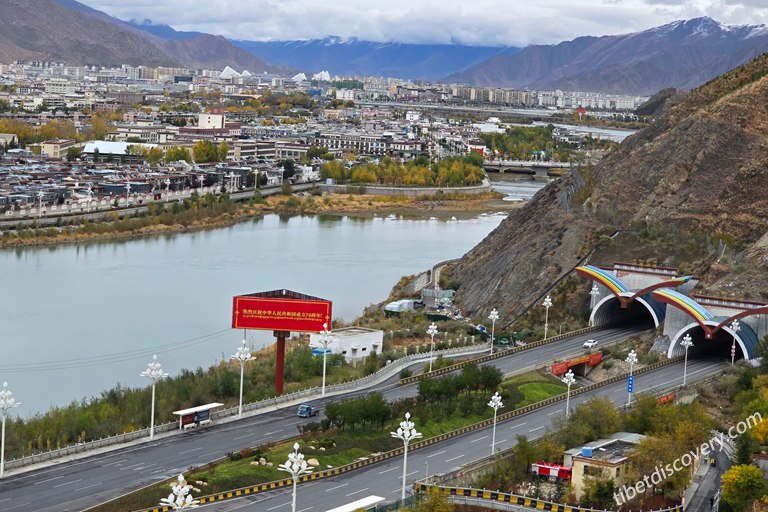 Well-paved expressway in Lhasa
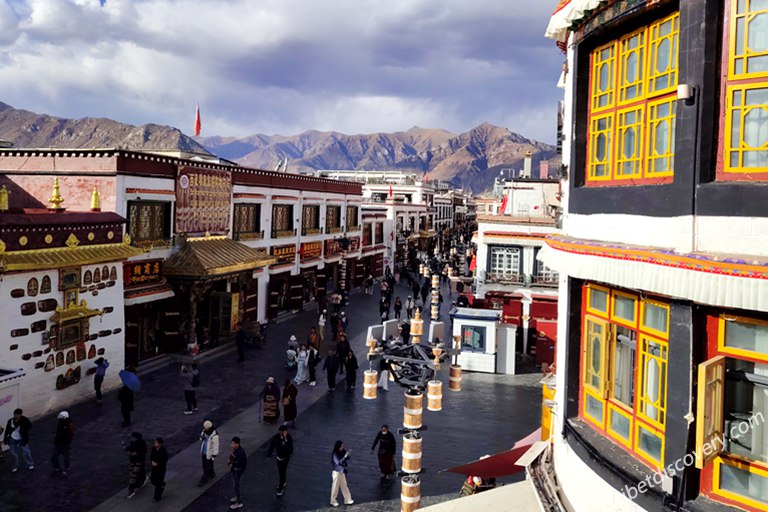 Lively street of Lhasa
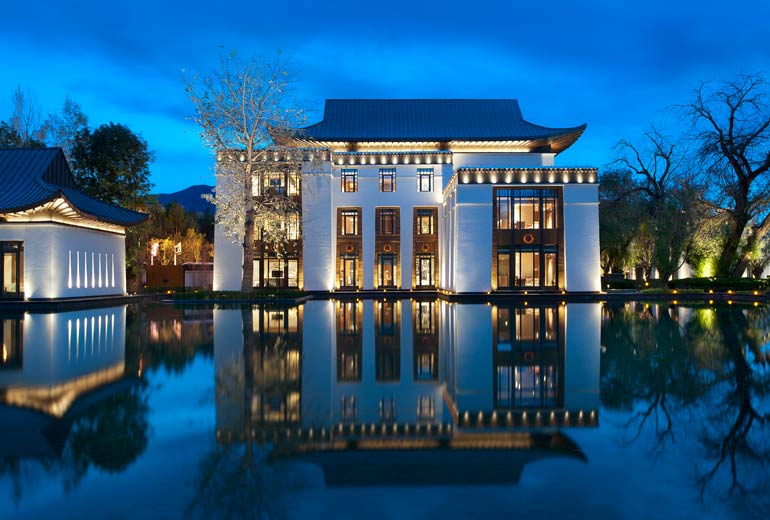 5-star hotel in Lhasa - St Regis
How to Plan a Lhasa Tour
How to Get to Lhasa : Nonstop flights to Lhasa Gonggar International Airportfrom Chengdu (about 3 hrs), Chongqing (about 3 hrs), Beijing (about 4.5 hrs), Xi'an (about 4.5 hrs), Xining (about 2.5 hrs), Kunming (about 3 hrs), Shangri-La (about 2.5 hrs), etc. and Qinghai-Tibet Railway to Lhasa Railway Station from Xining, Chengdu, Chongqing, Beijing, Shanghai...
Best Time to Visit Lhasa : all year round, with the summer (Jun.~Aug.) and autumn (Sept.~Nov.) seasons being the optimal time to visit.
Where to Stay in Lhasa : Central Lhasa's Chengguan District, with the Barkhor Street or Potala Palace areas being highly recommended.
Lhasa, the capital of Tibet, is known as the "Sunlight City" and serves as the spiritual heart of Tibetan Buddhism. We recommend spending 3~4 days exploring the city.
☛ How to Plan a Lhasa Trip & Visiting Lhasa Advices
The 4-day classic Lhasa journey is designed for first-time visitors to Lhasa. Its carefully paced itinerary allows for gradual acclimatization while covering Lhasa's highlights, gently guiding you from heritage sites to living traditions. Spend your first day gently adapting to Lhasa's high altitude (3650 m). On your second day, begin at the Tibet Museum, where you'll gain a thoughtful introduction to the region's history, art, and heritage. From there, step into the tranquil Norbulingka, the former Summer Palace celebrated as a masterpiece of Tibetan garden design. By afternoon, experience the lively Buddhist debates at Sera Monastery, offering a glimpse into Tibetan Buddhist scholarship.
On the third day, ascend to the UNESCO-listed Potala Palace, standing at 3,700 meters and housing sacred halls and historic artifacts. Continue to the spiritual heart of the city, Jokhang Temple, where pilgrims gather in devotion before the revered Jowo Shakyamuni statue. Finally, step into the vibrant Barkhor Street circuit, circling the temple amidst a lively blend of prayer, traditional markets, and local craftsmanship. The final day is reserved for departure.
☛ 4 Days Holy City Lhasa Private Tour - Heart of Tibet
For a touch of nature beyond the city, consider a day trip to one of Tibet’s Three Sacred Lakes: Namtso Lake or Yamdrok Lake. Namtso Lake ranks among the world's highest saltwater lakes, with prayer flags and mani stones along its shores completing a landscape of profound serenity. Yamdrok Lake is famed for its ribbon-like turquoise waters winding through the mountains. Its ever-shifting shades of blue and green create a view often described as "heaven on earth".
☛ 5 Days Lhasa City and Holy Lake Namtso Tour
☛ 5 Days Best of Lhasa & Beautiful Yamdrok Lake Tour
With 6~9 days to explore, extend your journey from Lhasa to more of Tibet's iconic destinations, such as the world's highest peak Everest, the lush and scenic Nyingchi known as "Tibetan Switzerland", and Shigatse, the Tibet's second-largest city and home to the historic Tashilhunpo Monastery.
☛ 6 Days Lhasa Gyantse Shigatse Historical Tour
☛ 7 Days Classic Lhasa Nyingchi Landscape Discovery Tour
☛ 8 Days Everest Base Camp Tour - Top of the World
☛ 9 Days Tibet Discovery Tour plus Everest and Namtso Expedition
At Tibet Discovery, we can seamlessly connect your Lhasa experience with a comprehensive Tibet tour, handling all itineraries, permits, and transportation so you can focus on the once-in-a-lifetime adventure. Contact us to customize your journey now!
 Must-Visit Attractions in Lhasa
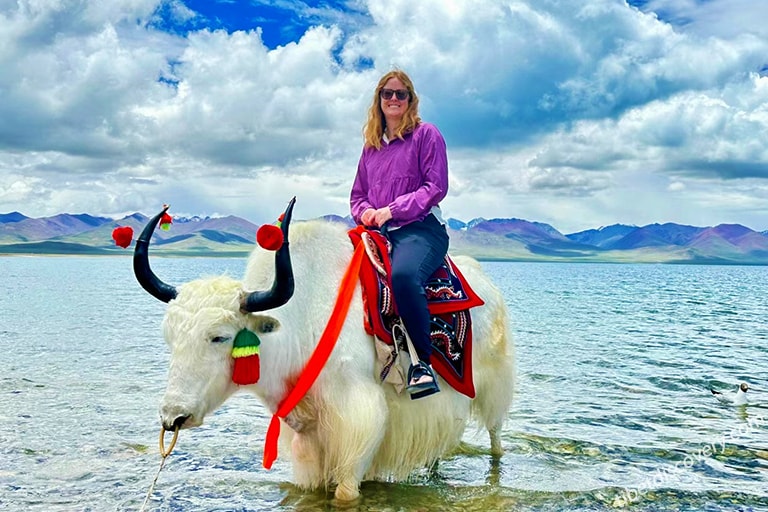 Our Guest visited Namtso Lake in Summer Time
Discover Tibet with a Journey Tailored to You
International travelers are required to join an organized tour with a licensed travel agency to visit Tibet, which means independent travel isn’t permitted. But rather than viewing this as a limitation, we at Tibet Discovery see it as an opportunity to craft something extraordinary for you. Our decades of experience operating in Tibet allow us to transform what could be a simple route into a carefully curated journey. Just contact us to plan your adventure!
When you travel with us, you’ll benefit from:
◾ An expert local guide who brings Tibet’s history, culture, and hidden stories to life.
◾ A comfortable private vehicle suited to Tibet’s unique road conditions.
◾ An experienced driver who knows every curve of the route and can spot wildlife or photo opportunities you might otherwise miss
◾ Flexible pacing that lets you linger at viewpoints or explore unexpected discoveries along the way
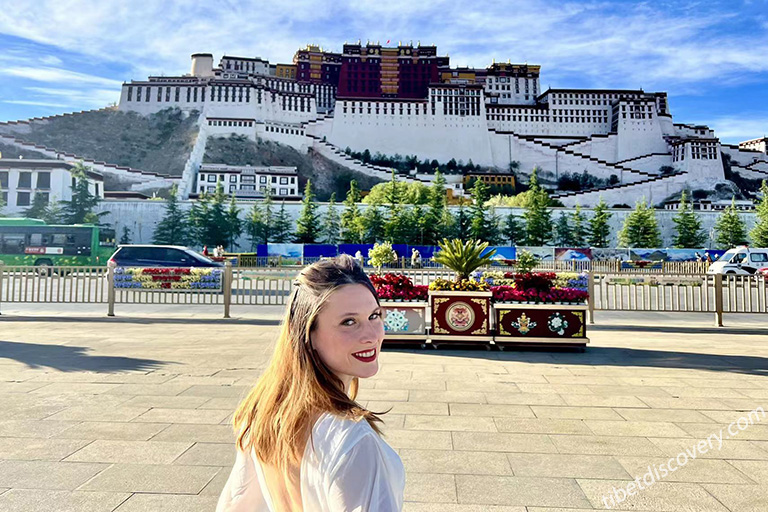
Travel with Tibet Discovery
Lhasa Top Attractions
- Potala Palace
- Namtso Lake
- Barkhor Street
- Sera Monastery
- Drepung Monastery
- Norbulingka
- Ganden Monastery
- Nyemo Tunba
- Reting Monastery
- Zongjiao Lukang Park
- Tibet Museum
Lhasa Travel
Recommended Tour Packages
Escorted by a skilled private drivers and companied by a professional local tour guide to organize all the activities, all you have to do is to enjoy your fantastic Tibet journey. Time can never be wasted waiting for a group, hopping on and off buses or negotiating unfamiliar destinations.
-

Lhasa / Yamdrok Lake / Gyantse / Shigatse / Mount Everest / Lhasa
8 Days Lhasa to Mount Everest Private Tour with Base Camp Experience
Highlights: Potala Palace, Jokhang Temple, Yamdrok Lake, Palcho Monastery, Everest Base Camp, Sakya Monastery, Tashilhunpo Monastery
-
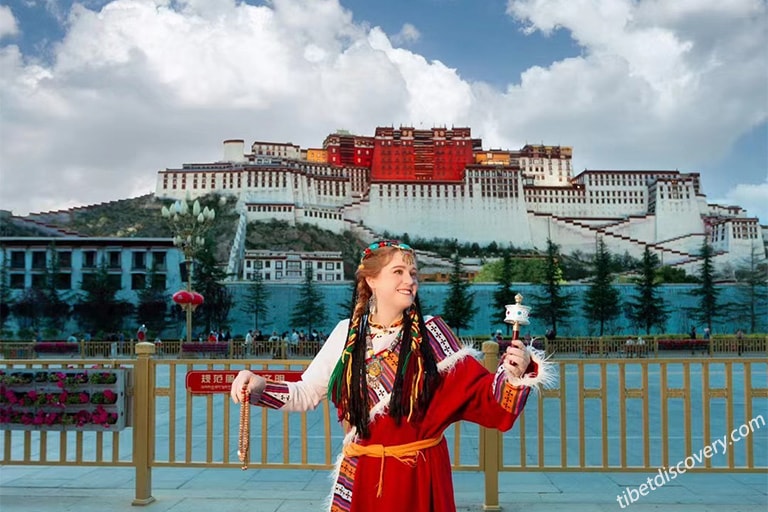
Lhasa
4 Days Holy Lhasa City Highlights Private Tour with Cultural Heritage Treasure
Highlights: Potala Palace, Jokhang Temple, Barkhor Street, Norbulingka, Sera Monastery Monk Debate
-
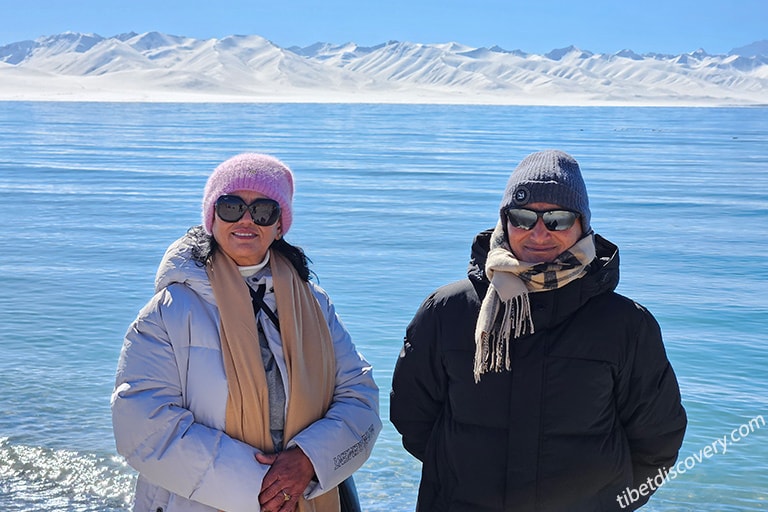
Lhasa / Yamdrok Lake / Gyantse / Shigatse / Mount Everest / Namtso Lake / Lhasa
9 Days In-depth Tibet Discovery Private Tour plus Everest and Namtso Expedition
Highlights: Potala Palace, Jokhang Temple, Yamdrok Lake, Palcho Monastery, Everest Base Camp, Sakya Monastery, Tashilhunpo Monastery, Namtso Lake
Prefer to tailor a trip that totally suits your requirements and interests? Our 20+ professional, helpful and friendly travel experts are ready to help! Tell us your needs, and one of our experts will get to you with trip details within 0.5~23.5 hrs. You can also call us at 86-28-85227275 / 86-28-85223672.

 Karen
Karen Wonder
 Jack
Jack Rita
Rita Johnson
 Vivien
 Wing
Wing Ariel
Ariel Leo
Leo Tracy
Tracy Evelyn
 April
April Phoebe
 Kelly
Kelly Shirley
 Reya
Reya Elk
Elk Samantha
 Bliss
Bliss York
York Felix
Felix Sean
Sean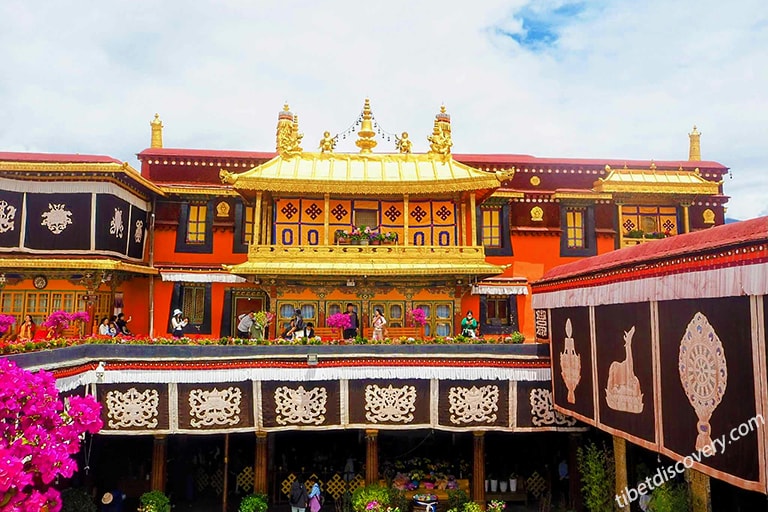
Our specialists are always ready to help!
Have a question? Get answers from our travel experts soon!
- Your Question:
- Your Name:
- Your Email:
- Submit