


 Beijing + Tibet Tours
 Chengdu + Tibet Tours
 Shanghai + Tibet Tours
 Xining + Tibet Tours


Ganden Monastery - Birthplace of Tibetan Gelugpa
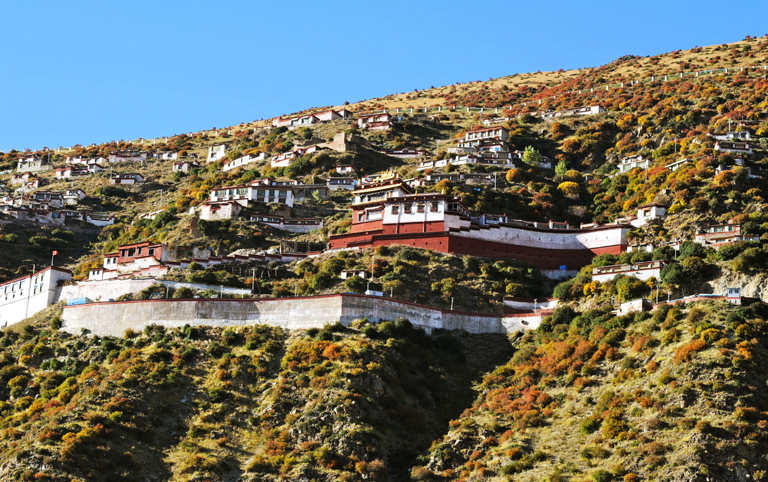
Ganden Monastery is one of the earliest and largest Buddhist monasteries in Tibet. With over 600 years of history for building in 1409 by Tsongkhapa, the founder of the Gelug Sect, it stands atop the six famous temples of Gelugpa, and is also known as one of the Three Great Temples in Lhasa, together with the Sera Monastery and the Drepung Monastery. In the meaning of bliss and contentedness in Tibetan, Ganden Monastery is the main dwelling of successive Gelug abbots, and many of these revered masters' stupas, tombs enshrining their relics, are within the monastery. With an orderly architectural layout of standing Buddha halls, towering roofs, splendid stupas, Ganden Monastery is arranged well with vivid colors of black windows, white walls and golden roofs, like a castle under the heavens. Besides, the kinds of architectural buildings and a large quantity of cultural relics and handicrafts are worth visiting. Along the winding, twisty road up, you can appreciate the authentic holy land under the blue sky.
Ganden Monastery Facts
- Rating:

#5 of 69 Things to Do in Lhasa
- Season:
- All year round
- Type:
- Religious Temple; Historical Architecture
- Altitude:
- 3,800 meters
- Location:
- Wangori Mountain, Dazi County, Lhasa
- History
- Highlights
- Transportation
- Tips
- Tour Plan
- Packages
History of Ganden Monastery
As the first Gelugpa monastery, Ganden Monastery has an important role in Tibetan religious culture. It is the product of the reformation movement practiced by Tsongkhapa in the early 15th century. Its establishment signifies that the Gelug sect possesses a foundational monastery. With a high rank status in Tibet, there was a heyday when over 4000 monks lived in the monastery after the construction in 1409. In 1980, there was a thorough reconstruction of some major buildings, including the holy stupas of Tsongkhapa, scripture halls, Buddhist halls, etc.
The Founder & Gelug Sect
Tsongkhapa (1357-1419), the founder of Ganden Monastery, who was supposed to be the reincarnation of Manjusri, born in Qinghai, first encountered Buddhism when he was three years old. After studying Buddhist doctrine for 9 years in Xia Qiong Temple, he left Qinghai for Tibet for further study at the age of 16. In the later years, he learned from different sects’ monks and absorbed all the essentials of the Buddha Dharma. At the same time, he got more and more reputation in Tibet.
With the development of Tibetan Buddhism, irregularities emerged in the academic, religious, and monastic practices of sects such as the Kagyu and Sakya. Disappointed at those undesirable phenomena, Tsongkhapa reined in his disciples and followers into a strict new order- the Gelug sect was established with an austerity of monastic life and emphasized the primacy of philosophical study. In order to distinguish themselves from other sects, he and his followers wore yellow, peach-shaped hats. Hence, the Gelug sect is also called the Yellow Hat sect. In 1409, the Ganden Monastery, as the first Gelug Monastery, was built near Lhasa, and Tsongkhapa was the first abbot of Ganden Monastery.
 Seeing Ganden Monastery from Distance
Ganden Monastery Highlights
As the first Gelug temple, Ganden Monastery once was a massive building complex with typical Buddhist buildings and many historical relics. What’s more, in Ganden Monastery, you can join in the grand traditional festival called the Tsongkhapa Butter Lamp Festival.
Historical and cultural relics
There are many precious historical and cultural relics left in Ganden Monastery, including beautiful murals and sculptures, elaborate Thangkas, dating back to the Ming dynasty, and the armor carved with four languages and decorated with jewelry that was bestowed by Emperor Qianlong of the Qing Dynasty in 1757.
Architectural Splendor
As a revered cultural and spiritual hub of Tibet, Ganden Monastery is composed of over 50 structures, including assemblies, shrines, chapels, pagodas, and some other halls for Buddhist chanting or learning. The Tsochin Hall, the biggest assembly, contains over one hundred massive pillars and different sections of lobby halls, chapels, and Buddha palaces. Most of the chapels are two-storey buildings that could accommodate over one hundred Buddhists chanting at the same time.
Nestled against the mountainside, these buildings, most with white walls and red roofs, and some with vermilion red walls and golden yellow exteriors, have different purposes. Red ones mainly house Dharma protector shrines or key scripture study halls, golden ones serve as the monastery's core religious ritual sites, holding supreme status, while white-walled buildings with red rooftops form the heart of the monastery's religious activities and monastic daily life. Such as the Tri Thok Khang, known as the clothing-preserving Hall, once served as the bedchamber of Tsongkhapa and his successors, was the place for them to learn esoteric methods. And the Serdhung is the Holy Stupa Hall to keep the body of each abbot by building a pagoda here.
Tsongkhapa Butter Lamp Festival
Tsongkhapa Butter Lamp Festival, celebrated in whole Tibet is the most important traditional festival in Ganden Monastery to commemorate its founder. On October 25 of the Tibetan calendar, the death date of Tsongkhapa, this festival is quite solemn and grand. During the daytime, the 26 meters long, 10 meters wide tapestry of Buddha hangs outside the temple, and at night, all the butter lamps light up the whole monastery to make the worship all night. The local Tibetans around villages prepare the butter lamps several days in advance and light them up on that day and put them along the window side. If you stay overnight here, you can find that this region is covered with dim lighting.
 Buddhist Buildings in Ganden Monastery
 Tibetan Buddhists in Ganden Monastery
How to Get to Ganden Monastery
Compared with some other attractions in Lhasa, Ganden Monastery is a bit far from the city area. But the road offers a great view. Located in the Dazi County, at the top of Wangbur Mountain with 3800 meters above sea level, it's about 50 km north of Lhasa downtown area—a 1.5-hour drive away. Most visitors journey to the monastery from downtown Lhasa, with convenient options including taxis, buses, and private transfers. However, public transportation can be cumbersome, especially when there are language barriers. And please be warmly noted that independent travel is not available for foreigners in Tibet. So if you need any help, please feel free to reach out to us. In our Tibet tour packages, we take care of everything for you, including airport/train private transfers, tickets, meals, accommodation, etc. Contact us now >>
For your reference, we offer distances from the main attractions and transportation hubs to Gandan Monastery as follows.
● about 57 km away from Potala Palace
● about 55.5 km away from Barkhor Street
● about 63 km away from Lhasa Railway Station
● about 115 km away from Lhasa Gonggar International Airport
 Ganden Monastery Location Map
Useful Travel Tips for Gandan Monastery
1. Open Time: 9:00 to 16:00, except during holidays and major events.
2. Best Time to Visit: Summer months (June to August) are the best time to visit Ganden Monastery with great scenery and meet the Buddha ceremony during the Shoton Festival on June 30 of Tibetan calendar.
3. Ticket: CNY 40 per person
4. Manners & Taboos: Visit in a clockwise direction. Do not step on the doorsill and do not smoke in the halls; do not take photos without permission; do not wear a hat or sunglasses entering inside.
5. Other Attractions: If you have enough time, the Ganden Kora (walking in a clockwise direction) is great experience to meet stunning views of the nearby Kyi-chu Valley and encounter large numbers of pilgrims, rubbing holy rocks and prostrating themselves along the path; for hikers, the 80 km pilgrimage road from Ganden Monastery to Samya Monastery is worth trying during the months from May to October. In this 4-day trekking trip, you can encounter valleys, temples, lakes, hillside fields, desert, villages, groves, and more to experience authentic Tibet's nature.
 Our Customers Taking Photos with Ganden Monastery
How to Plan A Tibet Tour
Tibet is too vast to be visited in one single trip, but planning ahead of time can make most of your holiday. A classic Tibet tour always takes about 4 ~ 8 days. Apart from 2 days for arrival and departure, it usually needs 2 other days to explore majestic Potala Palace and other landmarks in Lhasa, the capital of Tibet. With a day trip’s distance from Lhasa, Namtso Lake is another perfect tour extension if you visit Tibet from May to October.
☛ 4 Days Holy City Lhasa Private Tour - Heart of Tibet
☛ 5 Days Lhasa City and Holy Lake Namtso Tour
To explore further, it’s strongly recommended to travel from Lhasa to Mount Everest via Gyantse and Shigatse, which usually needs 4 more days. It is an unforgettable sightseeing trip with lots of attractions to visit, such as Yamdrok Lake, Karola Glacier, Kumbum Stupa of Palcho Monastery, Tashilhunpo Monastery, etc. Of course, the biggest draw must be gazing upon the unparalleled north face of the world’s highest peak – Mount Everest.
☛ 6 Days Lhasa Gyantse Shigatse Historical Tour
☛ 8 Days Everest Base Camp Tour - Top of the World
☛ 9 Days Tibet Discovery Tour plus Everest and Namtso Expedition
For Buddhist followers and hiking lovers, you are suggested to travel to Ngari to join the kora around the holy Mt. Kailash and sacred Lake Manasarovar, which usually takes about 5 ~ 8 more days from Lhasa. The wild nature of Ngari is spectacular as well.
☛ 13 Days Mt. Kailash & Lake Manasarovar Trekking Tour
☛ 16 Days Mt.Kailash Pilgrimage Private Tour
Most travelers combine a Tibet trip with visits to other top destinations, often extending their journey from nearby hubs like Chengdu, Xian, Yunnan, or Xining, or pairing it with iconic cities and landscapes such as Beijing, Shanghai, Zhangjiajie, Guilin, etc. If you have your own needs or interest, just feel free to contact us to customize a trip of your own!
 Lhasa, Namtso, Mount Everest and Ngari are four most popular destinations in Tibet
Lhasa Top Attractions
- Potala Palace
- Namtso Lake
- Jokhang Temple
- Barkhor Street
- Sera Monastery
- Drepung Monastery
- Norbulingka
- Nyemo Tunba
- Reting Monastery
- Zongjiao Lukang Park
- Tibet Museum
Lhasa Travel
Recommended Tour Packages
Escorted by a skilled private drivers and companied by a professional local tour guide to organize all the activities, all you have to do is to enjoy your fantastic Tibet journey. Time can never be wasted waiting for a group, hopping on and off buses or negotiating unfamiliar destinations.
-

Lhasa / Ganden Monastery / Tsetang
11 Days Ganden to Samye Trekking Tour
Highlights: Potala Palace, Ganden Monastery, Samye Monastery
-
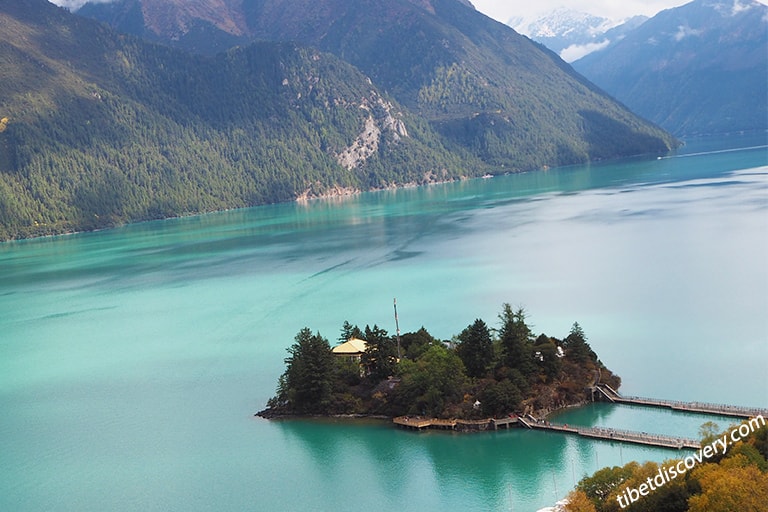
Lhasa / Nyingchi / Lhasa
7 Days Classic Lhasa Nyingchi Landscape Discovery Tour
Highlights: Potala Palace, Jokhang Temple, Basum-tso Lake, Lulang Forest, Ganden Monastery
-

Lhasa / Ganden Monastery
5 Days Lhasa Ganden Monastery Tour
Highlights: Potala Palace, Barkhor Street, Norbulingka Palace, Ganden, Monastery
Prefer to tailor a trip that totally suits your requirements and interests? Our 20+ professional, helpful and friendly travel experts are ready to help! Tell us your needs, and one of our experts will get to you with trip details within 0.5~23.5 hrs. You can also call us at 86-28-85227275 / 86-28-85223672.

 Karen
Karen Wonder
 Jack
Jack Rita
Rita Johnson
 Vivien
 Wing
Wing Ariel
Ariel Leo
Leo Tracy
Tracy Evelyn
 April
April Phoebe
 Kelly
Kelly Shirley
 Reya
Reya Elk
Elk Samantha
 Bliss
Bliss York
York Felix
Felix Sean
SeanOur specialists are always ready to help!
Have a question? Get answers from our travel experts soon!
- Your Question:
- Your Name:
- Your Email:
- Submit