


 Beijing + Tibet Tours
 Chengdu + Tibet Tours
 Shanghai + Tibet Tours
 Xining + Tibet Tours


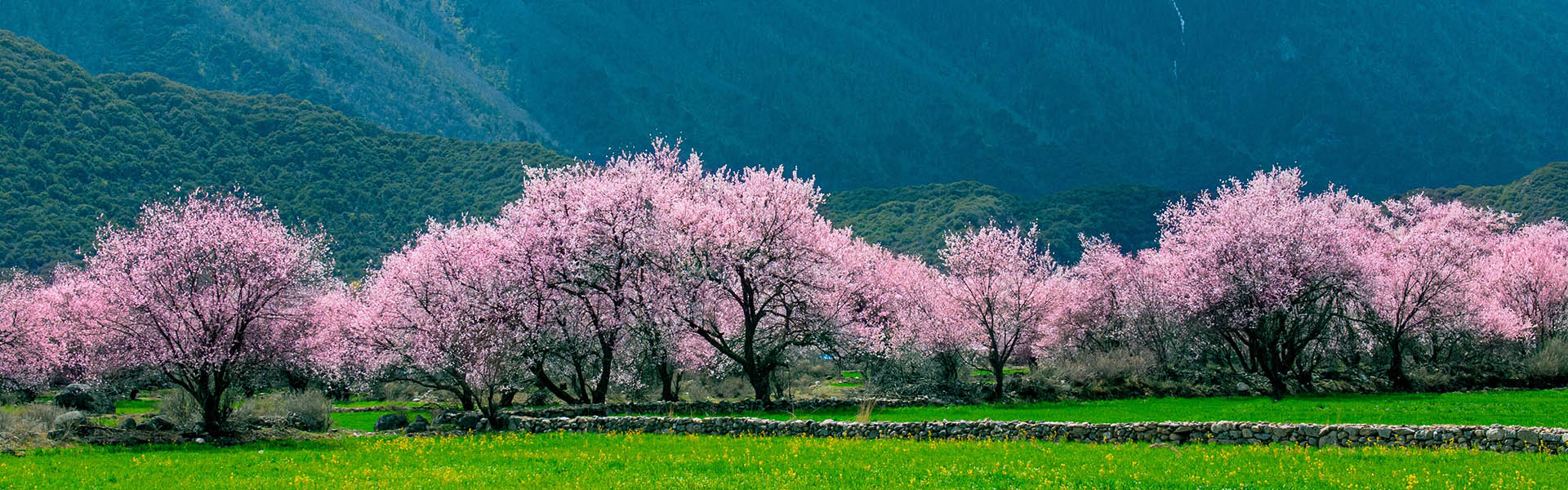
Bomi Peach Blossom Valley: Tibet's Spectacular Spring Destination
Good News: The 2026 Nyingchi Peach Blossom Festival will officially open on April 3, with the opening ceremony held at Gongbu Park in Nyingchi. Don't miss this once-a-year spring spectacle, and start planning now and secure your trip now!
Every spring, the Nyingchi Peach Blossom Festival draws travelers from across the world to witness eastern Tibet's most enchanting seasonal spectacle. Among the region's celebrated peach blossom destinations, Bomi Peach Blossom Valley stands out as a must-visit natural masterpiece for being China's largest and longest wild peach blossom landscape. Stretching over 30 kilometers, this magnificent valley transforms into an ocean of pink each spring, where ancient peach trees—some over 600 years old—bloom against a dramatic backdrop of snow-capped peaks and pristine river waters.
Sitting at a elevation of around 3,300 meters, the valley's wild peach trees grow naturally across hillsides, riverbanks, and the edges of traditional Tibetan villages. Unlike cultivated orchards elsewhere, these ancient trees sprawl freely across the landscape, creating an untamed beauty that feels both timeless and magical. The combination of pink blossoms, Tibetan houses, and towering Himalayan peaks creates a visual symphony that has made Bomi Peach Blossom Valley one of Tibet's most photographed springtime destinations.
Bomi Peach Blossom Valley Facts
- Rating:
-

#8 of 10 Things to Do in Nyingchi
- Season:
- Spring to Autumn (March - October)
- Type:
- Natural Site, Landscape
- Altitude:
- 3,300 meters
- Location:
- Bomi County, Nyingchi City

- Highlights
- Route
- Transportation
- Weather
- Nearby Attractions
- Tips
- Tour Plan
- Packages
Seasonal Highlights of Bomi Peach Blossom Valley
Spring (Late March to Mid-April): The Pink Paradise
This is when Bomi Peach Blossom Valley reveals its full glory. The peach trees bloom in waves from lower to higher elevations, ensuring an extended viewing season. Clusters of delicate pink blossoms cascade along roadsides, frame field edges, and surround traditional Tibetan villages. The contrast is stunning: soft pink petals against white snow-capped mountains, with the turquoise-blue Parlung Tsangpo River winding through the valley below. Morning light bathes the blossoms in a warm glow, while afternoon sun creates dramatic shadows across the mountainsides. The valley becomes a living painting where nature and culture blend seamlessly.
Autumn (September to October): Golden Splendor
While spring steals the spotlight, autumn in Bomi offers its own understated beauty. The valley transforms into a tapestry of gold and green as leaves change color, all reflected in the crystal-clear blue-green waters of the Parlung Tsangpo. The air is crisp and clear, providing excellent visibility of surrounding peaks. This season attracts fewer crowds, offering a more peaceful experience of the valley's natural rhythms.
A Future Vision: The Sichuan-Tibet Railway
When the Sichuan-Tibet Railway opens in the coming years, travelers will experience Bomi Peach Blossom Valley from an entirely new perspective. The railway is designed to pass through this scenic region, meaning future visitors will watch the spectacular landscape of pink blossoms and snow mountains unfold from their train windows, a journey that promises to become one of China's most scenic rail routes.
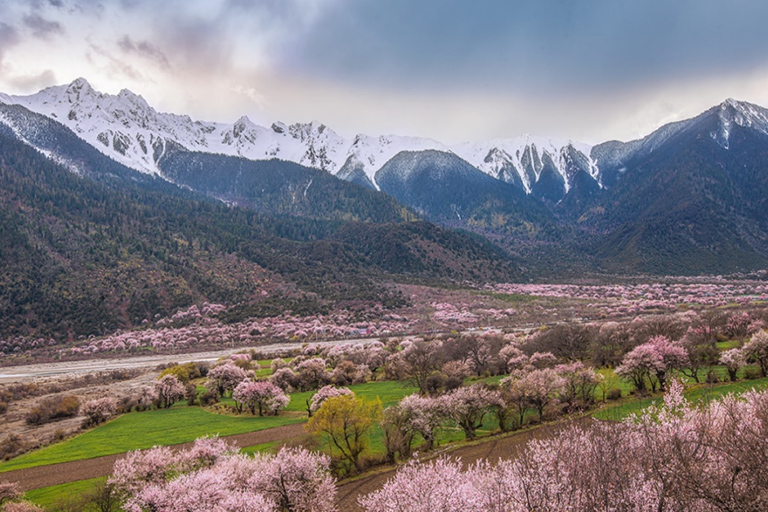 Bomi Peach Blossom Valley in Spring
(© Nyingchi Culture and Tourism Bureau)
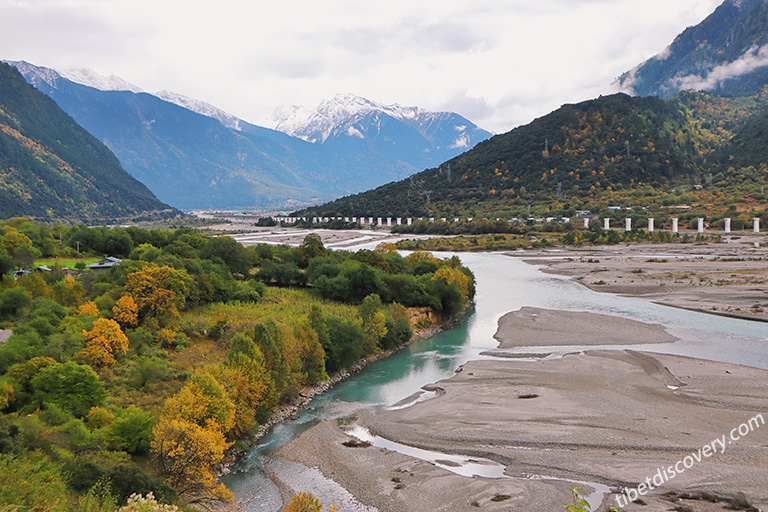 Bomi Peach Blossom Valley in Autumn

Recommended Visiting Route of Bomi Peach Blossom Valley
Traveling through Bomi Peach Blossom Valley offers a continuous floral corridor stretching tens of kilometers. From Galang Village to Qingduo Town, this scenic drive connects traditional settlements, ancient peach groves, and snowy peaks, offering the most immersive experience of the region.
Practical Information
Route: Galang Village (Start) ➔ Runa Village ➔ Gutong Village ➔ Qingduo Town (End).
Distance: Approximately 30 km one way.
Duration: Suggested visiting time is 3–4 hours including photography stops.
Route Highlights
◎ Galang Village & Lake: Begin your journey where charming settlements add a cultural touch to the floral panorama. The nearby Galang Lake is unmissable, especially in the early morning mist when it transforms into a dreamy mirror reflecting pink blossoms and snowy peaks.
◎ Runa Village: Continue to one of the densest peach blossom areas in Bomi. Here, century-old peach trees stand alongside vibrant green barley fields, forming a vivid contrast of colors and a visual climax of the route.
◎ Gutong Village: Passing through this area offers a unique glimpse into local life. Peach trees are not merely scenery but an integral part of daily existence, blending harmoniously with the rustic village landscape.
◎ Qingduo Town: The route concludes near Qingduo where the valley opens up. The continuous stretch of wild peach trees against the backdrop of majestic glaciers provides a spectacular finale to the tour.
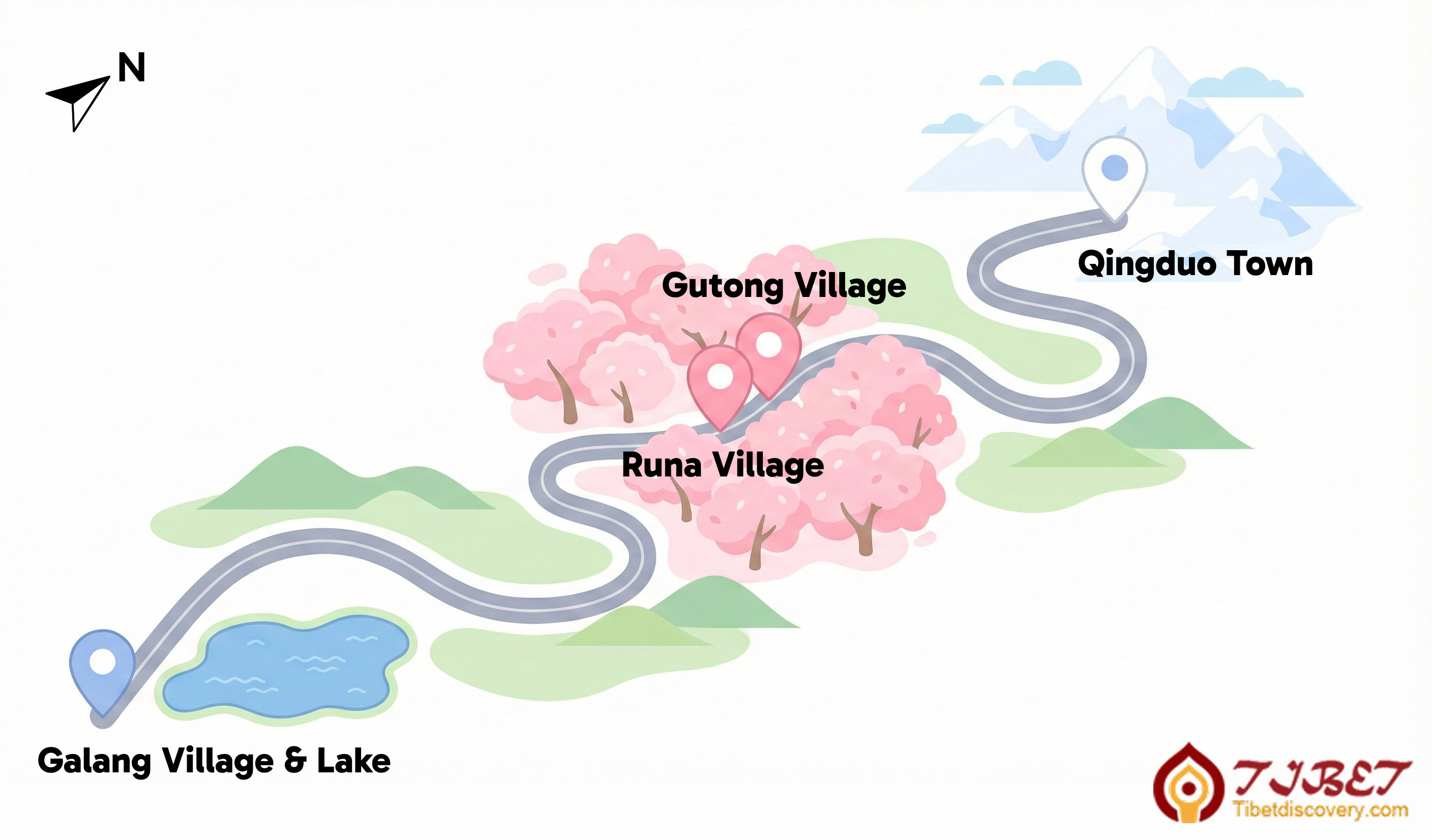 Bomi Peach Blossom Valley Route Map (Click to Enlarge)
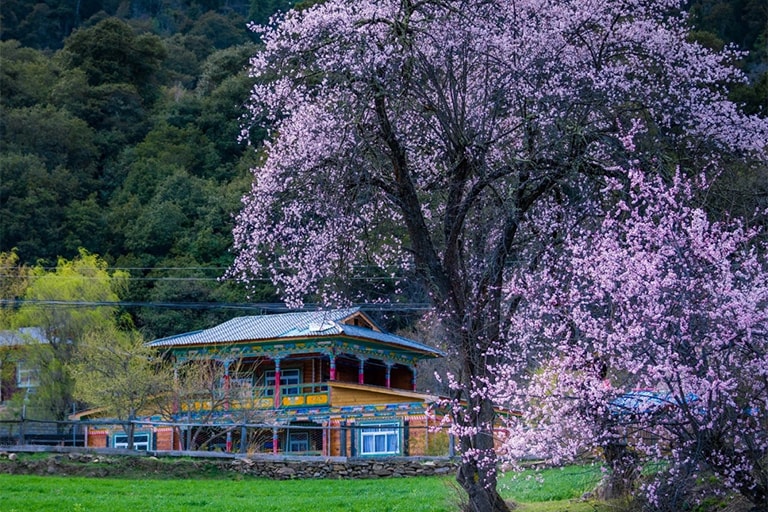 Runa Village in Bomi Peach Blossom Valley
How to Get to Bomi Peach Blossom Valley
Bomi County is located in eastern Nyingchi, approximately 230 kilometers east of Bayi Town (downtown Nyingchi). The Peach Blossom Valley is about a 20-minute drive away from Bomi's central area, easily accessible along the G318 National Highway.
Get to Nyingchi:
Most travelers first reach Nyingchi before heading to Bomi. Multiple non-stop flights operate daily between China's major cities and Nyingchi. The closest airport is Nyingchi Mainling Airport, located about 50 kilometers from from the city center. From Lhasa, you can also take the high-speed train (approximately 3.5 hours), or a scenic 5-6 hour drive along the Lhasa-Nyingchi Expressway, which follows the beautiful Nyang River.
☛ How to Get to & Around Nyingchi
☛ How to Get from Lhasa to Nyingchi
From Nyingchi to Bomi:
Private car or tour vehicle is the most practical option, as there's no direct public bus service to Bomi's peach blossom viewing areas. The journey from down Nyingchi to Bomi County takes approximately 4-5 hours along the G318 National Highway. Most tours include stops at Sejila Pass and Lulang Forest along the way, making the drive itself part of the experience. If you have a flexible schedule, you can also consider visiting Lulang Town, the little Switzerland of Nyingchi.
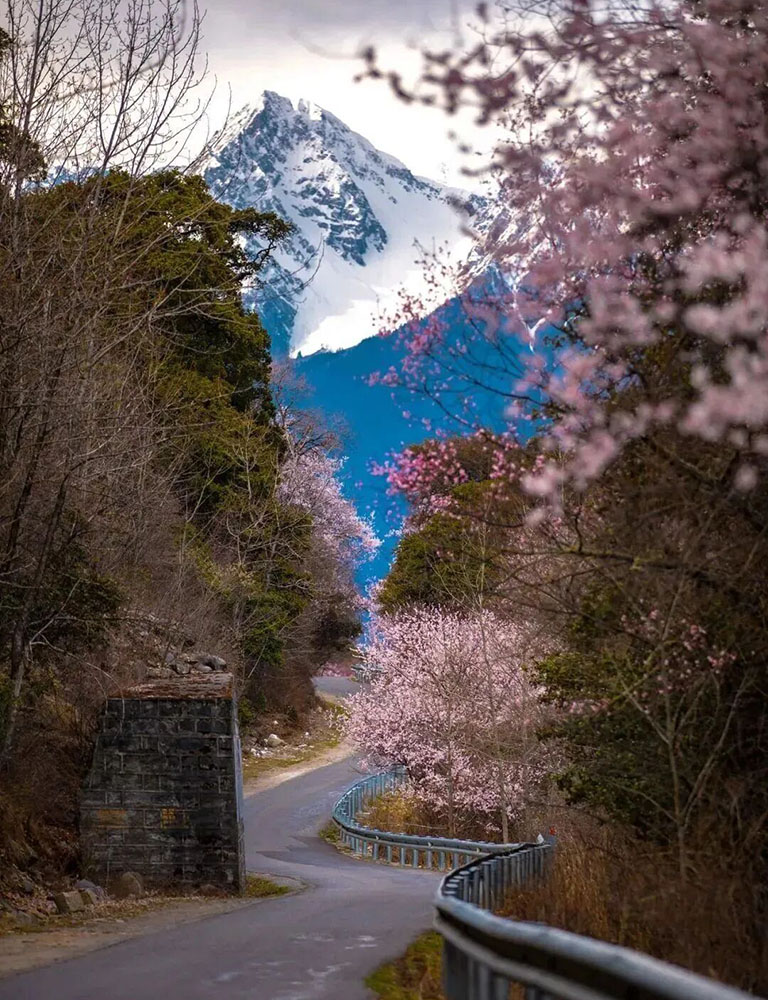 Roads to Bomi Peach Blossom Valley

Weather of Bomi Peach Blossom Valley & What to Wear
Thanks to warm, moist air currents from the Indian Ocean, Bomi enjoys a relatively mild climate compared to other parts of Tibet. However, spring weather can still be unpredictable.
In spring (March-April), daytime temperatures range from 8-15°C, but mornings and evenings can drop near freezing. The weather changes quickly; sunshine can give way to rain or even snow within hours. In autumn (September-October), expect cooler temperatures, typically 5-12°C during the day, dropping to around 0°C at night.
What to Wear
Layer your clothing. Don't forget a sun hat and sunscreen, as UV radiation is strong at this altitude. Bring comfortable walking shoes with good grip for exploring villages and trails. Sunglasses are essential year-round. A light rain jacket is always wise, even during the supposedly "dry" spring season.
Recommended Nearby Attractions of Bomi Peach Blossom Valley
Gala Peach Blossom Village
Located just 12 kilometers southeast of Nyingchi's city center, Gala Village serves as the main venue for the annual Nyingchi Peach Blossom Festival. While smaller than Bomi's valley, it offers easy accessibility and hosts cultural performances during the festival season. Many travelers visit both Gala Village and Bomi Peach Blossom Valley on extended itineraries.
Yigong Village
This scenic village is a hidden paradise off the beaten path. In spring, combine peach blossoms with golden rapeseed flowers creating a vibrant color palette. Yigong is also known for its tea plantations—home to China’s highest-altitude organic tea plantations—and beautiful wetlands. The stunning Yigong Lake reflects surrounding mountains, making it a photographer's delight.
Bomi Region Glaciers
Bomi is nicknamed "hometown of China's most beautiful glaciers" for good reason:
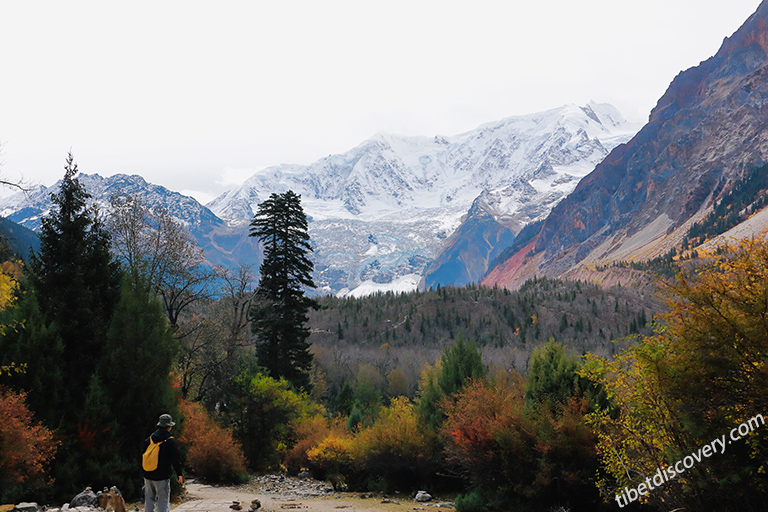
◎ Midui Glacier: One of Tibet's most accessible glaciers, located about 100 kilometers east of Bomi's central area along G318. The glacier's ice tongue descends through lush forest valleys, a rare and spectacular sight.
◎ Ranwu Lake & Laigu Glacier Group: Continue further east from Bomi to the stunning Ranwu Lake, gateway to the magnificent Laigu Glacier Group. Between December and February, explore the ethereal blue ice caves that form within the glaciers.
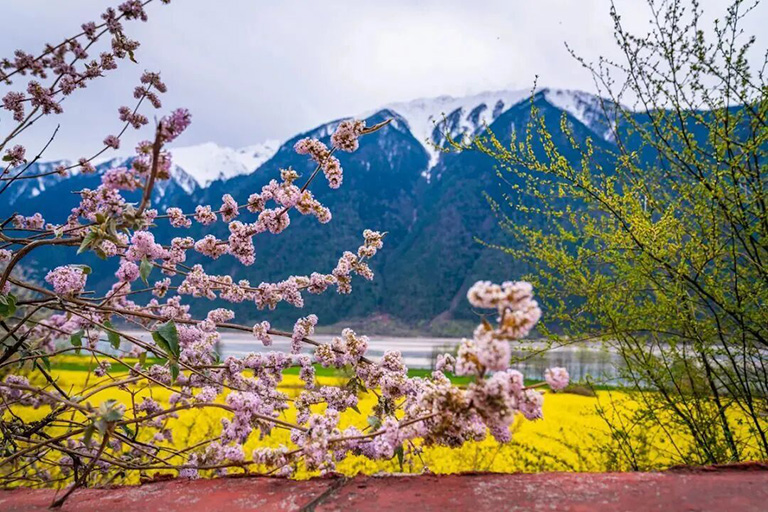 Yigong Village in Spring
 Midui Glacier
Useful Tips for Visiting Bomi Peach Blossom Valley
● Admission: Bomi Peach Blossom Valley is free and open year-round. There's no entrance fee to access the viewing areas along the G318 highway or to explore the villages within the valley.
● Altitude Considerations: Bomi's elevations are relatively moderate for Tibet, and the lush forests provide abundant oxygen, reducing altitude sickness risk compared to higher regions like Lhasa. However, if you're sensitive to altitude or arriving directly from sea level, spend 1-2 days acclimatizing in Nyingchi before heading to Bomi.
● Accommodation: While there are some guesthouses and homestays scattered throughout Peach Blossom Valley villages, we recommend staying in Bomi County for better facilities and more accommodation options. During Peach Blossom Season, remember to book accommodation well in advance.
How to Plan a Nyingchi Tour
Nyingchi deserves more than just a quick stopover. To truly appreciate this region’s natural beauty and allow your body to adjust to the altitude, we recommend spending at least two full days here, with an extra day for acclimatization if you’re arriving directly from lower elevations.
☛ Top Recommended Nyingchi Tours
☛ How to Plan & Visiting Nyingchi Advice
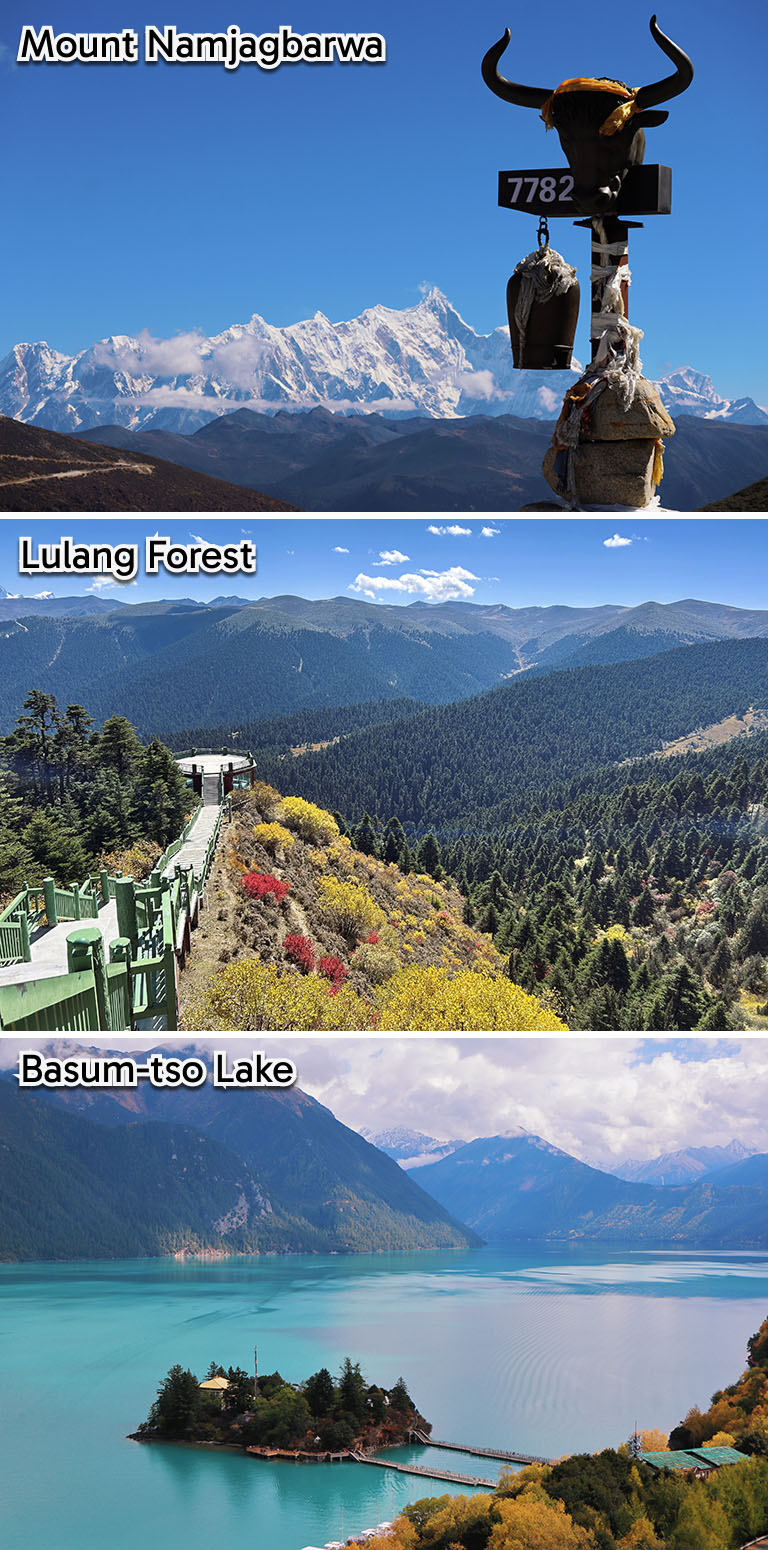
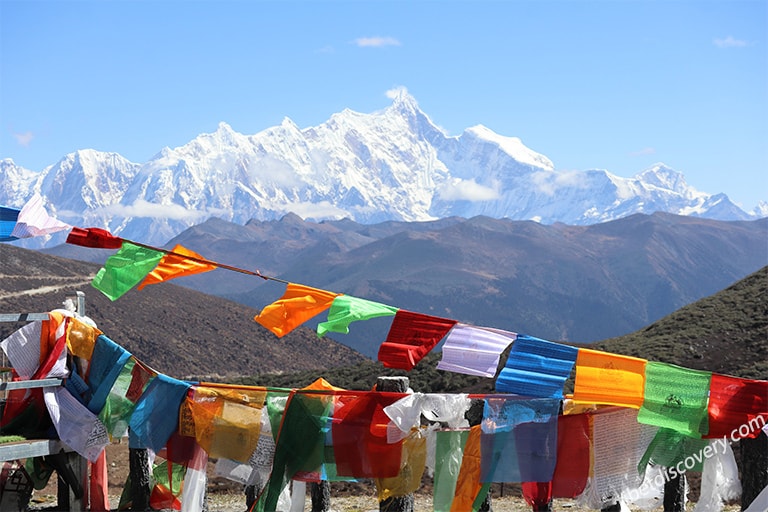
Our classic two-day journey is designed for first-time visitors to experience the region's main highlights. For your first day, venture to Sejila Pass (4,728 meters), where on clear days you’ll witness one of Tibet’s most magnificent sights: Mount Namjagbarwa (7,782 meters) rising dramatically above the clouds. This notoriously shy peak reveals itself only to the fortunate, making clear views truly special. Continue to the Lulang area, often called the “Swiss Alps of Tibet,” where you’ll explore the enchanting Lulang Forest with its dense primeval woodlands and carpets of wildflowers. Visit the picturesque Lulang Town for a taste of local life, then head to the alpine meadows of Zhaxi Gang Village, where Tibetan wooden houses dot the landscape and yaks graze peacefully against a stunning mountain backdrop.
☛ 5 Days Nyingchi Peach Blossom Festival Tour
☛ 7 Days Nyingchi Peach Blossom Festival Tour
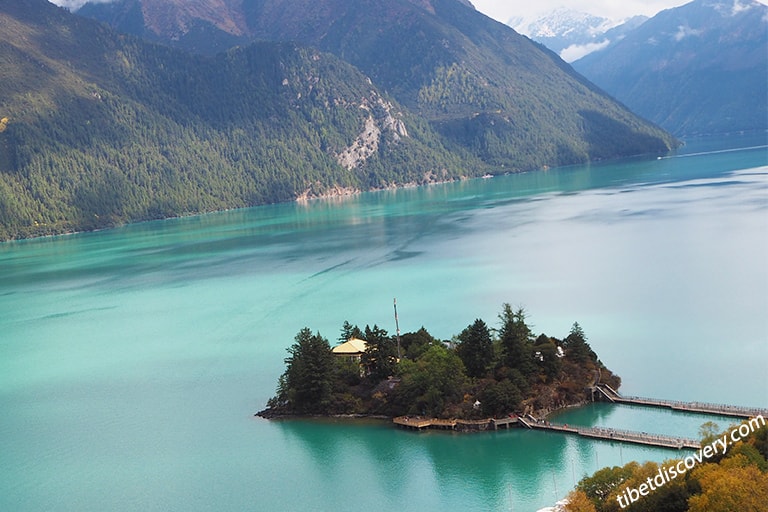
On your second day, discover the mystical Kadinggou Valley, where a spectacular waterfall cascades 200 meters through a narrow gorge. Then journey to Basum-tso Lake, a sacred turquoise jewel nestled at 3,480 meters. Walk across the footbridge to the island in the lake’s center, home to the centuries-old Tsozong Monastery, and take a boat on the lake to take in views of snow-capped peaks reflected in crystal-clear waters surrounded by forests.
☛ 6 Days Best Nyingchi Lhasa Highlights Tour
☛ 6 Days Tibet "Switzerland Views" Tour (Lhasa - Nyingchi)
For travelers who wish to explore deeper into the eastern Himalayas, Nyingchi serves as the perfect starting point for more adventurous expeditions. We highly recommend extending your trip to include sights like the stunning Midui Glacier, one of China's most beautiful and accessible glaciers, and the spectacular Ranwu Lake and the massive Laigu Glacier Group that feeds it. These destinations offer unforgettable views of untouched mountain wilderness and are ideal for photographers and nature enthusiasts.
☛ 8 Days Tibet Dream Tour with Breathtaking Glaciers
After exploring Nyingchi, most travelers continue westward to Lhasa to experience the spiritual heart of Tibet, including the iconic Potala Palace and Jokhang Temple. The scenic overland route between Nyingchi and Lhasa offers breathtaking views and can be broken up with stops at historic sites along the way. Nyingchi can also be incorporated into grander Tibet itineraries that include the ultimate adventures: witnessing Mount Everest Base Camp (EBC) up close, visiting the stunning high-altitude lakes of Namtso and Yamdrok, or completing the sacred trekking circuit around Mount Kailash.
☛ 7 Days Nyingchi Lhasa Tour Plus Heavenly Namtso Lake
☛ 10 Days Awe-inspiring Nyingchi Lhasa Everest Adventure Tour
At Tibet Discovery, we can seamlessly connect your Nyingchi experience with a comprehensive Tibet tour, handling all itineraries, permits, and transportation so you can focus on the once-in-a-lifetime adventure. Contact us to customize your journey now!
☛ 8 Days Lhasa to Mount Everest Private Tour
☛ 14 Days Tibet Photography Tour
 Must-Visit Attractions in Nyingchi
Discover Tibet with a Journey Tailored to You
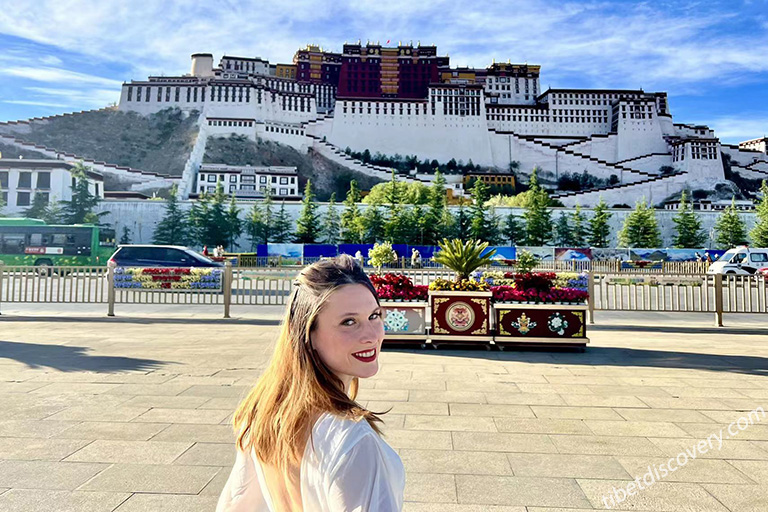
International travelers are required to join an organized tour with a licensed travel agency to visit Tibet, which means independent travel isn’t permitted. But rather than viewing this as a limitation, we at Tibet Discovery see it as an opportunity to craft something extraordinary for you. Our decades of experience operating in Tibet allow us to transform what could be a simple route into a carefully curated journey. Just contact us to plan your adventure!
When you travel with us, you’ll benefit from:
◾ An expert local guide who brings Tibet’s history, culture, and hidden stories to life.
◾ A comfortable private vehicle suited to Tibet’s unique road conditions.
◾ An experienced driver who knows every curve of the route and can spot wildlife or photo opportunities you might otherwise miss
◾ Flexible pacing that lets you linger at viewpoints or explore unexpected discoveries along the way
Travel with Tibet Discovery
Keep Reading about Nyingchi
Recommended Tour Packages
Escorted by a skilled private drivers and companied by a professional local tour guide to organize all the activities, all you have to do is to enjoy your fantastic Tibet journey. Time can never be wasted waiting for a group, hopping on and off buses or negotiating unfamiliar destinations.
-
Lhasa / Nyingchi
6 Days Tibet "Switzerland Views" Tour (Lhasa - Nyingchi)
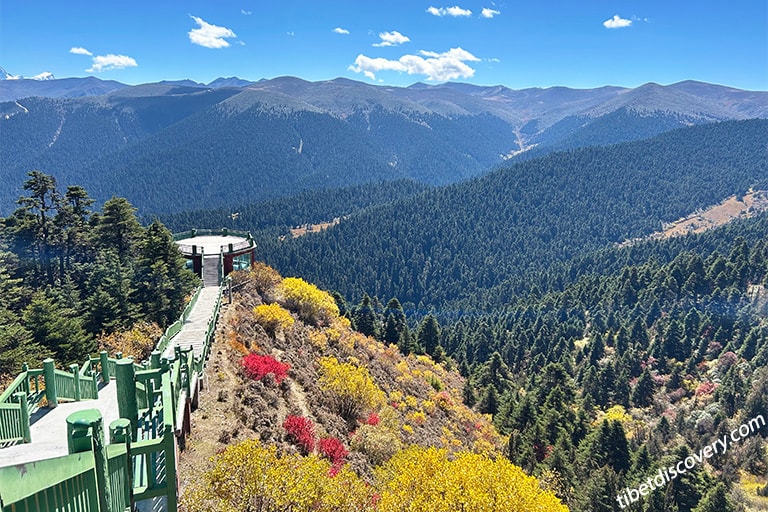
Highlights: Potala Palace, Basomtso Lake, Lulang Forest
-
Lhasa / Nyingchi / Lhasa
7 Days Classic Lhasa Nyingchi Landscape Discovery Tour
Highlights: Potala Palace, Jokhang Temple, Basum-tso Lake, Lulang Forest, Ganden Monastery
-
Nyingchi / Lhasa
6 Days Best Nyingchi Lhasa Highlights Tour
Highlights: Basum-tso Lake, Lulang Forest, Potala Palace, Jokhang Temple
Prefer to tailor a trip that totally suits your requirements and interests? Our 20+ professional, helpful and friendly travel experts are ready to help! Tell us your needs, and one of our experts will get to you with trip details within 0.5~23.5 hrs. You can also call us at 86-28-85227275 / 86-28-85223672.

 Karen
Karen Wonder
 Jack
Jack Rita
Rita Johnson
 Vivien
 Wing
Wing Ariel
Ariel Leo
Leo Tracy
Tracy Evelyn
 April
April Phoebe
 Kelly
Kelly Shirley
 Reya
Reya Juliet
 Elk
Elk Samantha
 Felix
Felix Sean
SeanOur specialists are always ready to help!
Have a question? Get answers from our travel experts soon!
- Your Question:
- Your Name:
- Your Email:
- Submit