


 Beijing + Tibet Tours
 Chengdu + Tibet Tours
 Shanghai + Tibet Tours
 Xining + Tibet Tours


Why Lhasa Shigatse Train is Recommended?
1.Convenient Transportation Connections: For most travelers to Tibet, Lhasa serves as the gateway and the natural first stop. The Lhasa Shigatse Train plays an important role in Tibet’s traffic by providing much convenience for Lhasa Shigatse round-trip travelers. It provides a faster and more reliable connection than the road, efficiently linking these two destinations.
2.Frequent Departures with Flexible Scheduling: 2~3 trains run daily between Lhasa and Shigatse, with departures spaced conveniently throughout the day. This schedule ensures you can easily choose a morning or afternoon departure that fits your itinerary without long waits.
3.An Essence-of-Tibet Experience: On this short but scenic journey, you’ll witness the cultural transition from the holy city of Lhasa to Shigatse, the heart of traditional Tsang. Enjoy the harmonious blend of Tibetan culture and stunning natural vistas along the way.

Palcho Monastery in Shigatse

Lhasa Shigatse Train Schedules and Fares
There are usually 2 daily commuter trains runs between Lhasa and Shigatse on weekdays, increasing to 3 on weekends, with the entire journey taking approximately 2.5 hours. Trains may be increased to satisfy the needs of more passengers during the tourism season.
Train frequencies are adjusted based on the day of the week:
From Lhasa to Shigatse: Trains C4381 and C4383 operate from Monday to Friday, with an additional service C4385 added on weekends.
From Shigatse to Lhasa: Trains C4382 and C4384 run from Monday to Friday, supplemented by train C4386 on weekends.
Facilities on Shigatse Lhasa Train - Life on the Train
| Air Conditioning and Oxygen Supply | There is an air-conditioning system on the train to create an comfortable temperature and ensure a clean and fresh air. There are also two kinds of oxygen supply systems equipped with on the train. One is a "dispersion-mode" oxygen supply system, which spreading oxygen in the train’s cars through the air-con system. The other system is directly used by passengers through independent port. |
| Food and Drink | There is a dining carriage in the middle position of the train which offers breakfast, lunch and dinner and some snacks. Only some Chinese food and cuisines are provide: rice, vegetables, meals and soups. You can also buy the packed food from the Food Trolley. Hot water is provided all the time. The water received from the washing area is not drinkable. |
| Luggage Storage | If you are taking a Soft Sleeper, you can put your luggage or suitcases on the luggage closet above the door in each Soft Sleeper Carriage. It is about 16 inches (40cm) high and 20 inches (50cm) wide. If you are taking a Hard Sleeper, just place your luggage and suitcases on the luggage racks above the window by the side of aisle. |
| Toilet and Washing | The toilets in Soft Sleeper Carriages are one western-style toilet and another squat toilet. While in the carriages of Hard Sleepers and Hard Seats, there are only squat toilets available. Bring toilet papers on your own. There is a simple washbasin at each side of the carriages. Only cold water is provided, undrinkable. |
| Compartment | In the Soft Sleeper Compartment, there are a small table, a heat-retaining vacuum flask, and a trash can. Under the table is a plug to get power supply. There is also a small TV fixed on the door near the aisle. Close to the window, there is an outlet of oxygen. While in the Hard Sleeper Compartment, there are some other friendly facilities - a small table, a thermos, a dustbin. |

Lhasa to Shigatse or Shigatse to Lhasa?
Both Lhasa to Shigatse and Shigatse to Lhasa are good transportation choices and train travel experiences with various natural landscapes along the railway. Since most travelers start their journey in Lhasa, you can plan your trip from there and select the corresponding transportation based on your itinerary. The typical route follows a Lhasa → Shigatse → Lhasa round-trip pattern. For a more flexible and enriched journey between these two cities, travelers often consider combining train travel with driving. A popular and highly recommended driving route follows the scenic circuit: Lhasa → Yamdrok Lake → Gyantse → Shigatse, allowing you to experience breathtaking high-altitude lakes, historic sites, and cultural towns along the way. You may choose to drive one leg of the journey (either to or from Shigatse) and take the train for the other, balancing comfort, sightseeing, and efficiency. The following three route options are recommended for different travel preferences:
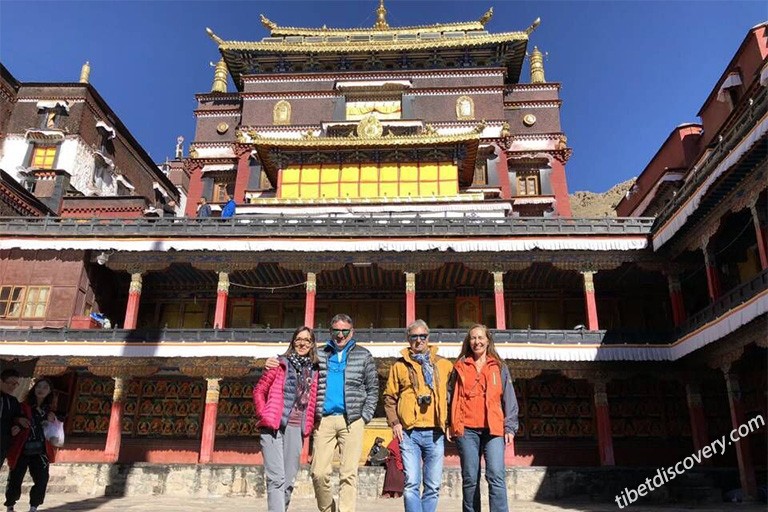 Our Guests - Manuel's Group from Spain at Tashilumpo Monastery, Shigatse
| Option | Lhasa to Shigatse | Shigatse to Lhasa | Suit for |
|---|---|---|---|
| Option 1 | Drive | By Train | Best Overall Experience. Ideal for travelers who wish to comprehensively explore both the cultural sites in Lhasa and the natural/historical highlights along the way, such as Yamdrok Lake, Karuola Glacier, and Gyantse Old Town. Driving is scheduled after acclimatizing in Lhasa, and the train return offers a relaxed and fast journey back. |
| Option 2 | By Train | Drive | Suitable for travelers who prioritize comfort and efficiency initially. Taking the train to Shigatse first is fast and easy. The return drive allows for a flexible visit to attractions like Yamdrok Lake, but requires a long drive at the end of the trip. |
| Option 3 | By Train | By Train | Best for travelers with limited time. Highly efficient and comfortable, with each train leg taking only about 2.5 hours. However, this option does not include scenic stops like Yamdrok Lake. |
The Lhasa Shigatse Train Journey - Beyond Tunnels, Between Views
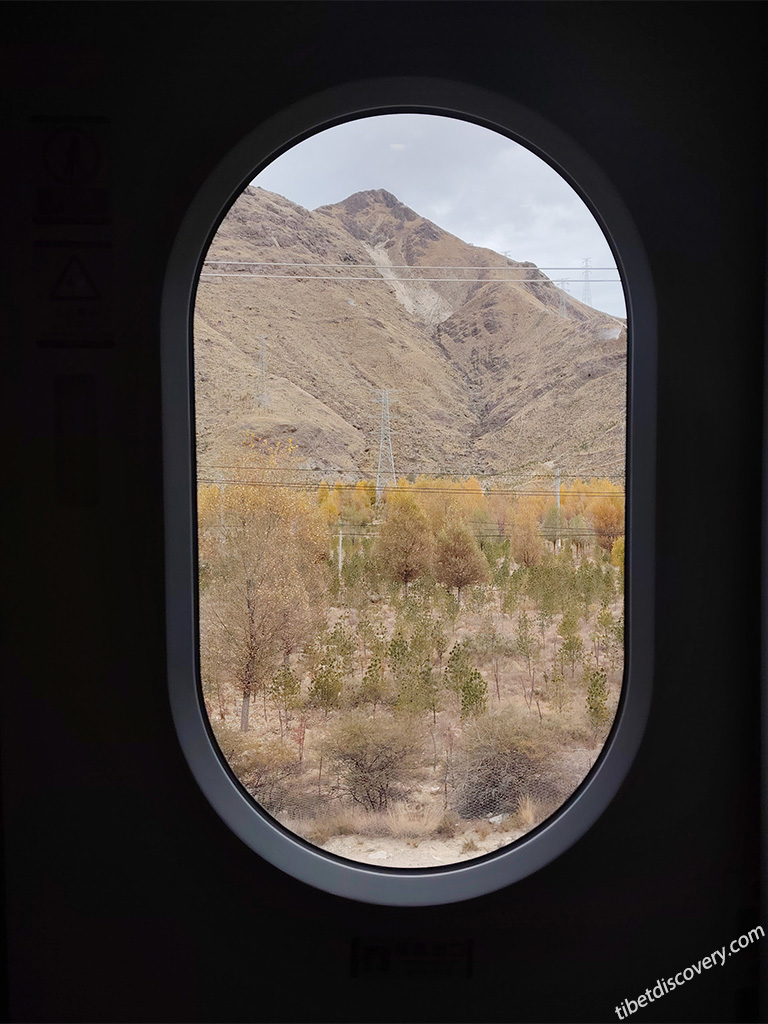
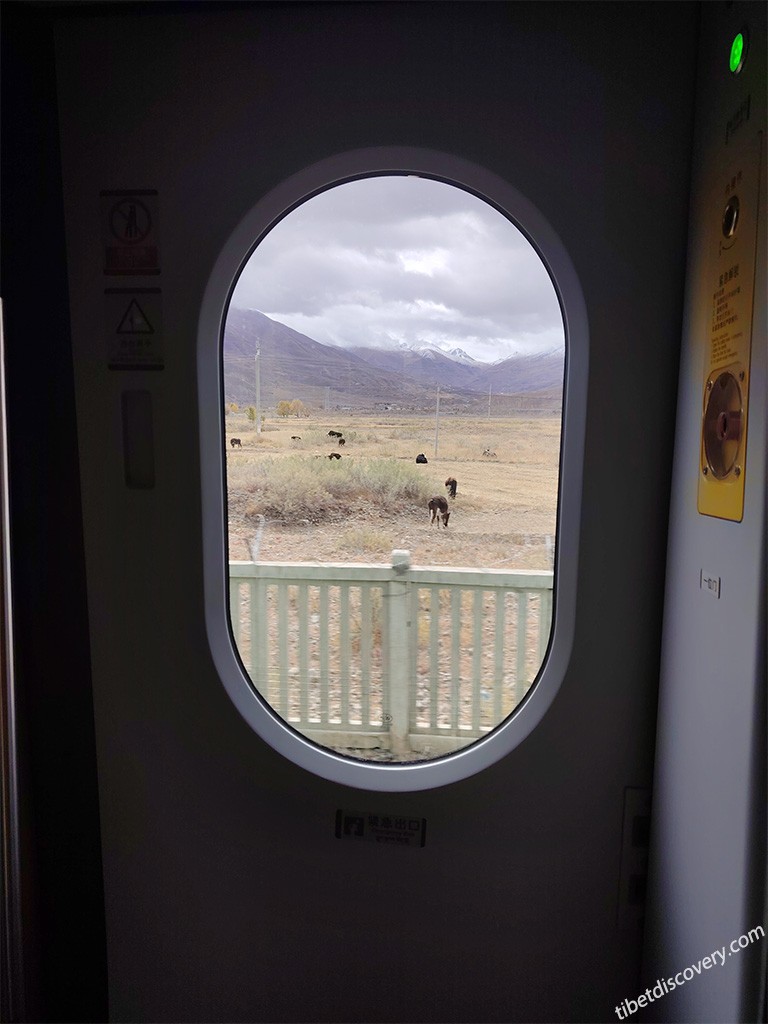
The Lhasa-Shigatse Train features a considerable number of tunnels along its route. The line includes a total of 29 tunnels, which together account for about 10% of its total length. Most of the tunnels are concentrated in the Yarlung Tsangpo Gorge section, meaning tunnel passages are not densely distributed throughout the entire journey. While passing through tunnels may briefly interrupt the outside view, the sections between them still offer travelers sweeping vistas of the Yarlung Tsangpo River Valley, alpine pastures, and other striking highland landscapes.
The railway’s extensive tunneling has been essential to overcoming the complex terrain of the Tibetan Plateau, ensuring smooth operation and all-weather reliability. Passengers can relax and fully enjoy the journey, immersed in the ever-changing scenery.
Travel Tip: When the train passes through tunnels, mobile phone signals may weaken or be temporarily interrupted. As each tunnel is short and spaced apart, disruption is temporary. There is no need to worry. For a smoother journey, consider downloading content like music or e-books in advance.

How to Get to Lhasa / Shigatse Railway Station
How to get to the railway station from Lhasa/Shigatse? Both stations are conveniently located near their city centers and are accessible by public bus or taxi. For the utmost comfort and convenience, we most highly recommend booking a private transfer with Tibet Discovery, ensuring you are effortlessly escorted between airports, railway stations, hotels, and major attractions according to your own schedule. Feel free to contact us! Below is the detailed information regarding railway stations, public bus, and taxi services, which we hope offers helpful guidance for your reference.
| Railway Station | Address | Public Bus | Taxi |
|---|---|---|---|
| Lhasa Railway Station | Tongzhan Road, Doilungdeqen District, Lhasa, Tibet 西藏拉萨市堆龙德庆区通站路 | Location: right hand side of station exit Cost: one yuan per person Available Bus: Bus No.1, No.13, No.14 and No.30,etc |
Location: main road in station front square Cost: dozens yuan |
| Shigatse Railway Station | Sezhan Road, Samzhubze Road, Shigatse, Tibet 西藏日喀则市桑珠孜区色占路 | Location: left hand of station exit Cost: two yuan per person Available Bus: Bus No.4 and No.7.etc |
Location: right hand side of station exit (parking area) Cost: dozens yuan |
*Important Notice:The above transportation information is for reference only.
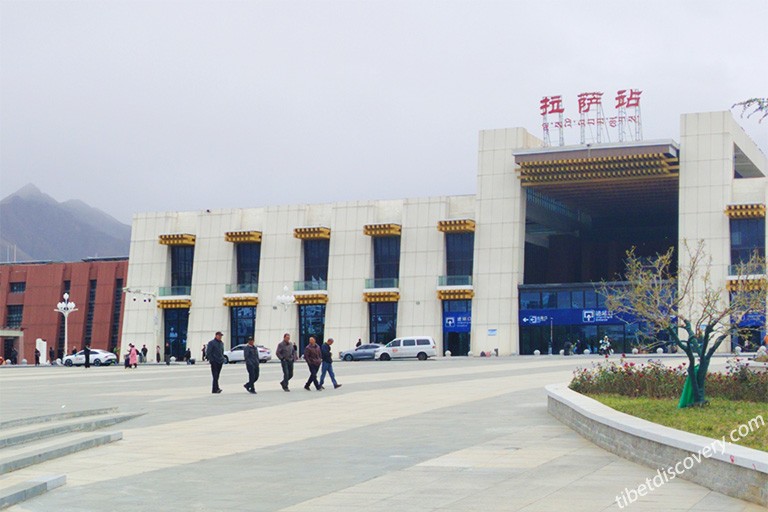 Lhasa Railway Station
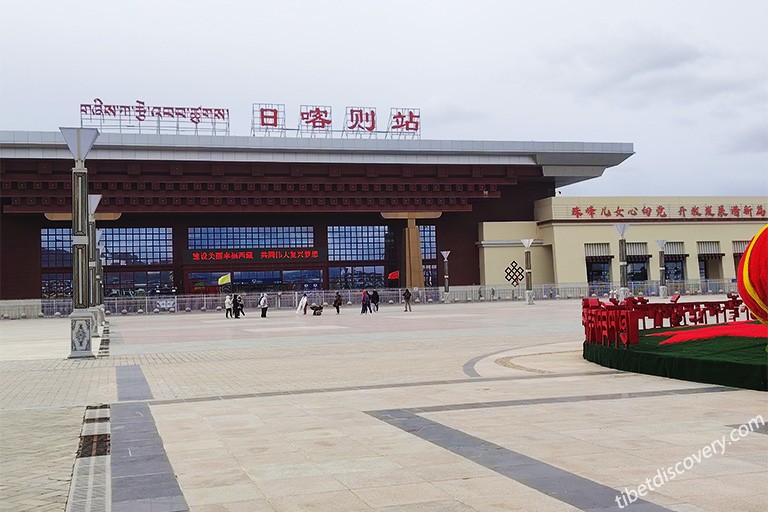 Shigatse Railway Station
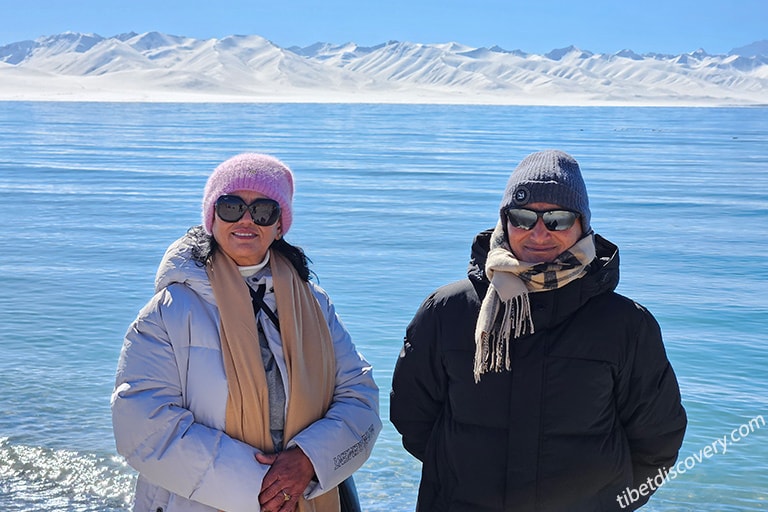
Discover Tibet with a Journey Tailored to You
International travelers are required to join an organized tour with a licensed travel agency to visit Tibet, which means independent travel isn’t permitted. But rather than viewing this as a limitation, we at Tibet Discovery see it as an opportunity to craft something extraordinary for you. Our decades of experience operating in Tibet allow us to transform what could be a simple route into a carefully curated journey. Just contact us to plan your adventure!
When you travel with us, you’ll benefit from:
◾ An expert local guide who brings Tibet’s history, culture, and hidden stories to life.
◾ A comfortable private vehicle suited to Tibet’s unique road conditions.
◾ An experienced driver who knows every curve of the route and can spot wildlife or photo opportunities you might otherwise miss
◾ Flexible pacing that lets you linger at viewpoints or explore unexpected discoveries along the way
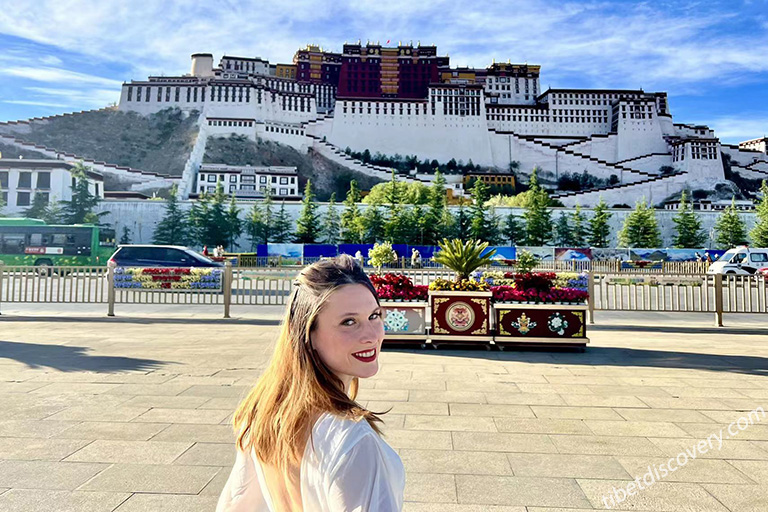
Travel with Tibet Discovery
How to Plan A Tibet Tour
Tibet is too vast to be visited in one single trip, but planning ahead of time can make most of your holiday. A classic Tibet tour always takes about 4 ~ 8 days. Apart from 2 days for arrival and departure, it usually needs 2 other days to explore majestic Potala Palace and other landmarks in Lhasa, the capital of Tibet. With a day trip’s distance from Lhasa, Namtso Lake is another perfect tour extension if you visit Tibet from May to October.
☛ 4 Days Holy City Lhasa Private Tour - Heart of Tibet
☛ 5 Days Lhasa City and Holy Lake Namtso Tour
To explore further, it’s strongly recommended to travel from Lhasa to Mount Everest via Gyantse and Shigatse, which usually needs 4 more days. It is an unforgettable sightseeing trip with lots of attractions to visit, such as Yamdrok Lake, Karola Glacier, Kumbum Stupa of Palcho Monastery, Tashilhunpo Monastery, etc. Of course, the biggest draw must be gazing upon the unparalleled north face of the world’s highest peak – Mount Everest.
☛ 6 Days Lhasa Gyantse Shigatse Historical Tour
☛ 8 Days Everest Base Camp Tour - Top of the World
☛ 9 Days Tibet Discovery Tour plus Everest and Namtso Expedition
For Buddhist followers and hiking lovers, you are suggested to travel to Ngari to join the kora around the holy Mt. Kailash and sacred Lake Manasarovar, which usually takes about 5 ~ 8 more days from Lhasa. The wild nature of Ngari is spectacular as well.
☛ 13 Days Mt. Kailash & Lake Manasarovar Trekking Tour
☛ 16 Days Mt.Kailash Pilgrimage Private Tour
Most travelers combine a Tibet trip with visits to other top destinations, often extending their journey from nearby hubs like Chengdu, Xian, Yunnan, or Xining, or pairing it with iconic cities and landscapes such as Beijing, Shanghai, Zhangjiajie, Guilin, etc. If you have your own needs or interest, just feel free to contact us to customize a trip of your own!
 Lhasa, Namtso, Mount Everest and Ngari are four most popular destinations in Tibet
Tibet Train Routes and Gateway Cities
- Beijing Lhasa Train
- Shanghai Lhasa Train
- Chengdu Lhasa Train
- Chongqing Lhasa Train
- Guangzhou Lhasa Train
- Lanzhou Lhasa Train
- Xining Lhasa Train
- Xian Lhasa Train
- Lhasa Shigatse Train
- Lhasa Nyingchi Train
- Yunnan Tibet Railway
- Sichuan Tibet Railway
More Information about Tibet Train
- How to Book, Collect, Alter and Cancel Train Ticket
- How to Read Tibet Train Ticket and Ticket Maps
- Change Tibet Trains at Xining Since April 19
- Tibet Train Sleeper and Seat Types
- Soft Sleeper on Tibet Trains
- Hard Sleeper on Tibet Trains
- Hard Seats on Tibet Trains
- Tibet Lhasa Train Schedule & Ticket Price
- Facilities and Amenities on Tibet Trains
- Oxygen Supply on Tibet Trains
- Medical Service in Tibet Trains
- Toilet and Bathroom on Tibet Trains
- Dining on Tibet Trains
- Tibet Train Luggage Allowance and Restriction
- How to Board & Disembark Tibet Trains
- Qinghai Tibet Railway Facts and Features
- What to see along the Qinghai Tibet Railway
- Latest News about Tibet Train
- Tibet Travel Permit and Tibet Train Travel
- Lhasa Railway Station
- Tibet Railways Map
- Tibet Train FAQs
Recommended Tibet Train Tour Packages
Check out our most popular train tour packages departing from most popular gateway cities to Tibet - Beijing,Xian, Chengdu, Xining, Shanghai, etc. All packages are customizable according to your requirements. If you have more time, you can extend your trip from Lhasa to other popular destinations, such as Shigatse, Mount Everest, Nyingchi, Ngari, etc. Check more >Tibet Train Tours
-
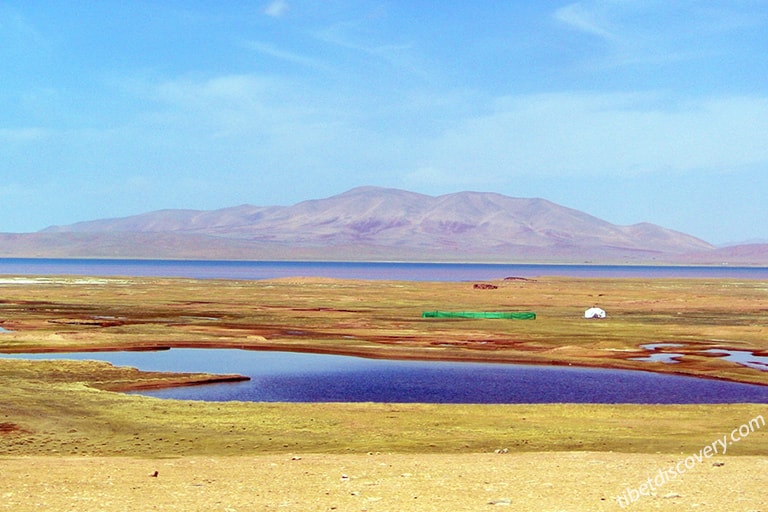
Beijing / Lhasa
8 Days Lhasa Tour from Beijing by Train
Highlights: Forbidden City, Great Wall, Potala Palace, Sera Monastery
-

Chengdu / Lhasa
7 Days Private Scenic Tibet Train Tour from Chengdu
Highlights: Chengdu Panda Base, Qinghai Tibet Railway, Potala Palace, Jokhang Temple
-

Xining / Lhasa
6 Days Scenic Private Qinghai Tibet Train Tour from Xining
Highlights: Qinghai Lake, Scenic Qinghai-Tibet Train Journey, Potala Palace, Jokhang Temple
Prefer to tailor a trip that totally suits your requirements and interests? Our 20+ professional, helpful and friendly travel experts are ready to help! Tell us your needs, and one of our experts will get to you with trip details within 0.5~23.5 hrs. You can also call us at 86-28-85227275 / 86-28-85223672.

 Karen
Karen Wonder
 Jack
Jack Rita
Rita Johnson
 Vivien
 Wing
Wing Ariel
Ariel Leo
Leo Tracy
Tracy Evelyn
 April
April Phoebe
 Kelly
Kelly Shirley
 Reya
Reya Juliet
 Elk
Elk Samantha
 Felix
Felix Sean
SeanOur specialists are always ready to help!
Have a question? Get answers from our travel experts soon!
- Your Question:
- Your Name:
- Your Email:
- Submit