


 Beijing + Tibet Tours
 Chengdu + Tibet Tours
 Shanghai + Tibet Tours
 Xining + Tibet Tours


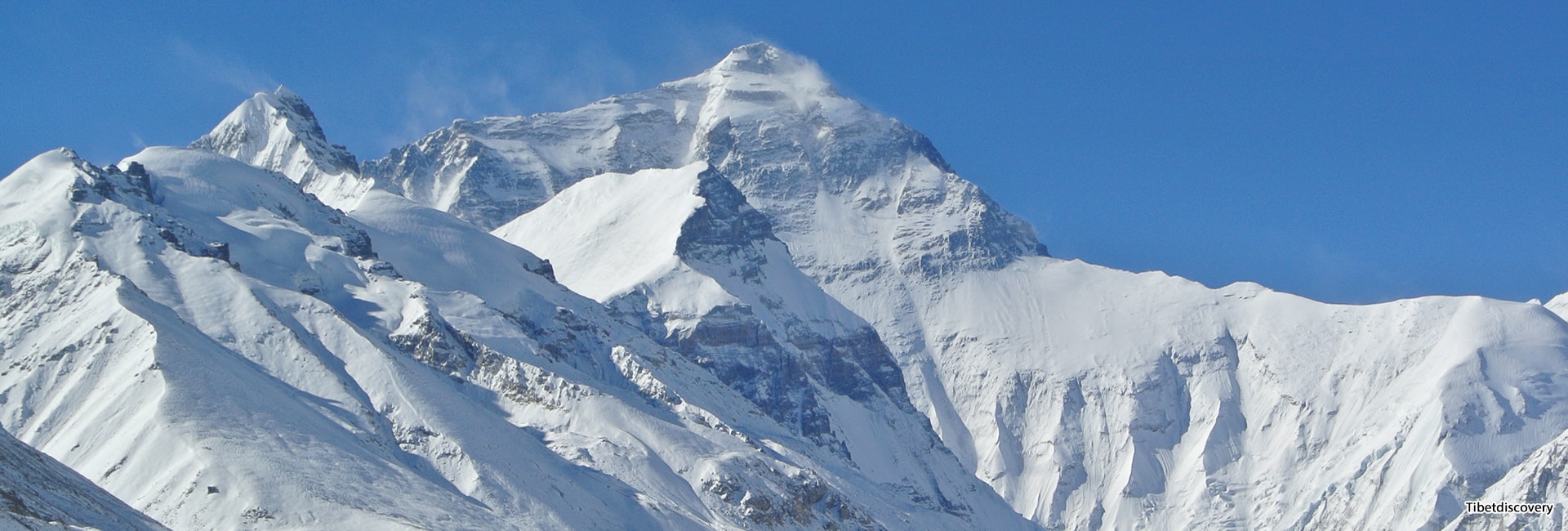
10 Days Awe-inspiring Nyingchi Lhasa Everest Adventure Tour
Once-in-a-Lifetime Adventure from Nyingchi
Choose this tour to experience the diverse beauty of Tibet, from Switzerland-like landscapes to vast, barren wilderness, featuring turquoise lakes, dense forests, dramatic valleys, snow-capped peaks, glaciers, as well as soaring palaces and sacred Buddhist monasteries.
Mount Everest, the highest peak in the world, attracts travelers not only for its legendary status but also for its breathtaking scenery and the long yet spectacular journey leading to its base. A classic Everest tour starting from Lhasa usually takes around eight days. By adding just two more days and beginning your journey in Nyingchi, you will experience a completely different side of Tibet, including lush green forests, blooming peach blossoms, picturesque valleys, and a mild, comfortable climate.
This 10-day tour offers an unforgettable opportunity to appreciate Tibet's striking contrasts and natural diversity. It is thoughtfully designed to help you gradually acclimate to the increasing altitude, starting with the Switzerland-like scenery of Nyingchi. You will then travel to Lhasa, home to the majestic Potala Palace and sacred Tibetan monasteries, where pilgrims from across the plateau seek spiritual fulfillment. Continuing westward, the journey combines stunning landscapes and rich cultural heritage as you travel through Gyantse and Shigatse toward Mount Everest, with countless natural and cultural wonders delighting both your eyes and your soul.
This is a private tour designed with flexibility and comfort in mind. The itinerary can be fully customized according to your travel pace, interests, and schedule, whether you wish to spend more time in nature, focus on cultural exploration, or adjust acclimatization days. Feel free to tell your needs to your travel consultant .
- Type
Private Custom Tour
- Code
TD-NLET-10
- Price
from Request
- Theme


- Physical Demands
- Destinations
Nyingchi / Lhasa / Shigatse / Everest / Lhasa
- Altitude
5,210m
Featured Experiences on This Tour



- Itinerary Details
- Included Services & Fees
- Reviews
- Gallery
- Make an Enquiry
Itinerary Details - Day by Day
Day 1 Nyingchi Arrival
Nyingchi Airport Pick-up & Hotel TransferWelcome to Nyingchi, often called the "Switzerland of Tibet". Upon arrival at Mainling Airport, your local tour guide will meet you at the arrival gate and escort you to your hotel in the city. The rest of the day is free for you to acclimatize to the altitude and explore the nearby surroundings at your own pace.
Free Time Suggestions: You may enjoy a relaxing stroll through Nyingchi Gongbu Park, where a serene lake with swimming ducks, lush greenery, and colorful flowers create a picturesque scene. In the evening, the park’s fountains are beautifully illuminated, and you might even catch local residents dancing nearby.
Travel Tips for Today: 1) There are daily flights to Nyingchi from Chengdu (about 2 hours), Chongqing (2.5 hours), Xi'an (3 hours), and Beijing (about 4 hours). 2) We highly recommend choosing a window seat on the left side of the plane, and you may catch breathtaking views of the snow-capped Himalayas, including the majestic Namjagbarwa Peak if the weather permits. 3) Though altitude sickness is rare here (average elevation: 3,100 meters), it's best to take it easy, avoid strenuous activity, and skip baths on your first night.
-
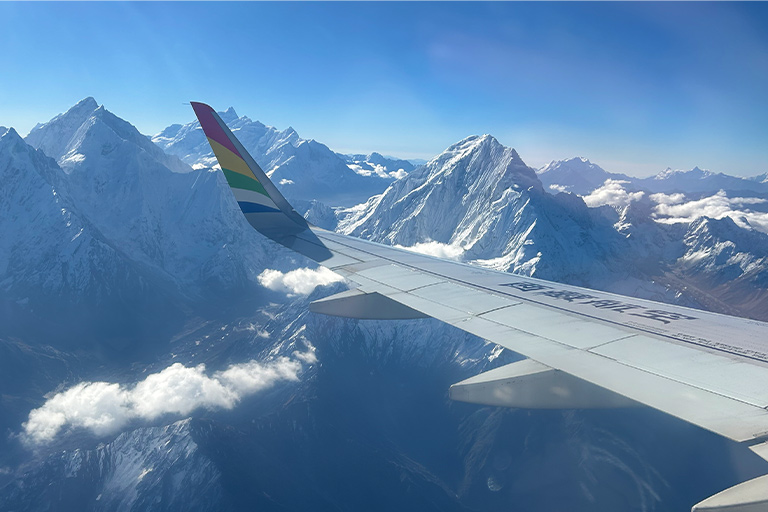 Enjoy Snow Peaks from the Flight to Nyingchi
Day 2 Nyingchi Lulang Discovery / 150 km, About 3.5 hrs' Drive (B)
Today's Highlights: Mt. Namjia Bawa, Lulang Forest, Lulang PastureWake up to a peaceful morning in Nyingchi, surrounded by fresh mountain air and serene landscapes.After breakfast, your tour guide and driver will pick you up and begin today's journey to discover why Nyingchi is known as the Tibetan Switzerland.
After driving about 50 km (1.5 hours), you’ll reach the Sejila Mountain Pass Observatory. On clear days, you may catch sight of the majestic Mount Namjagbarwa (7,782 m), soaring above the clouds with extraordinary grace. Known as one of China’s most beautiful peaks, it stands at the eastern end of the Himalayas, often shrouded in mist and mystery..
Continue driving westward, and soon the dense forest gives way to the vast greenery of Lulang Forest, one of Nyingchi’s most iconic natural wonders. Stop at the best viewing platform to take in a sweeping panorama of alpine meadows, snow-capped peaks, and rolling woodlands. The scenery here changes with the seasons, lush and vibrant in summer, golden and serene in autumn, each offering its own charm.
Then head to Lulang Town, a small but picturesque settlement nestled at the foot of the forest and surrounded by flower-filled meadows. Take a leisurely walk along the wooden boardwalk by Lulang Lake, where the tranquil water mirrors the mountains and clouds above. You can enjoy the calm atmosphere, the gentle sound of the wind, and the sight of a white pagoda standing gracefully in the distance, a perfect spot for quiet reflection and photography.
Then head to Lulang Passture, which is a magnificent high-altitude meadow (3,500m) spanning a 10km by 20km valley. Renowned for its ecological beauty—from fir forests and rhododendron seas to vast grazing lands—it offers vibrant flowers in spring, golden views in autumn, and winter skiing for a complete year-round experience.
After that, drive back to Nyingchi City. Have a good rest.
Tips for Today: 1) Mount Namjagbarwa is often hidden by clouds during July and August. 2) The altitude at Sejila Pass is relatively high, so walk slowly, avoid strenuous activity, and drink water frequently in small sips to stay comfortable. 3) A light jacket and sunglasses are recommended, as the weather can shift quickly from sunshine to mist in the mountain areas.
-
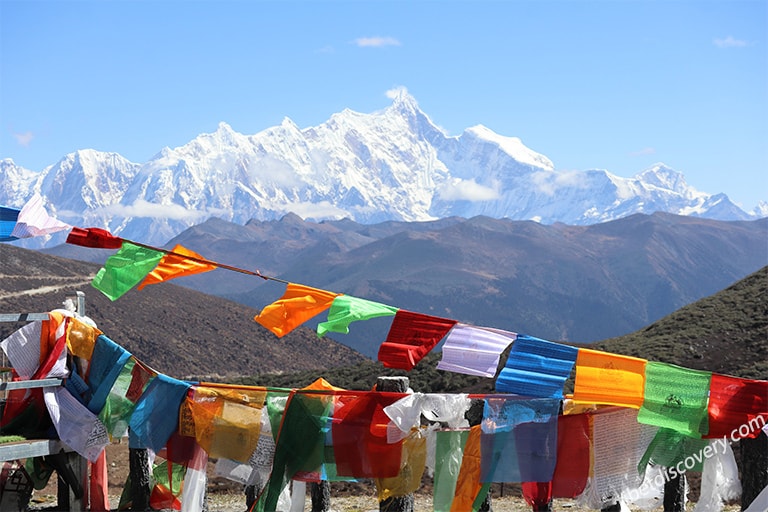 View Namjagbarwa Peak from Sejila Pass
-
Richard and Hamad from USA visited Lulang Forest with Tibet Discovery
-
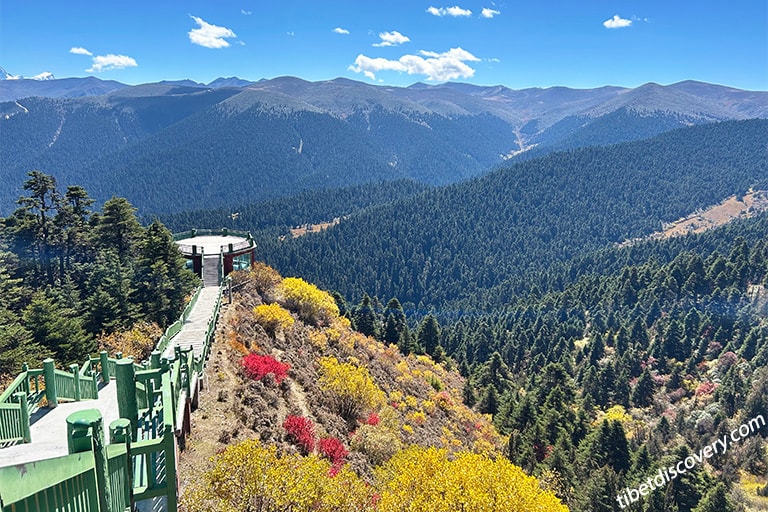 Lulang Forest View in Late October
-
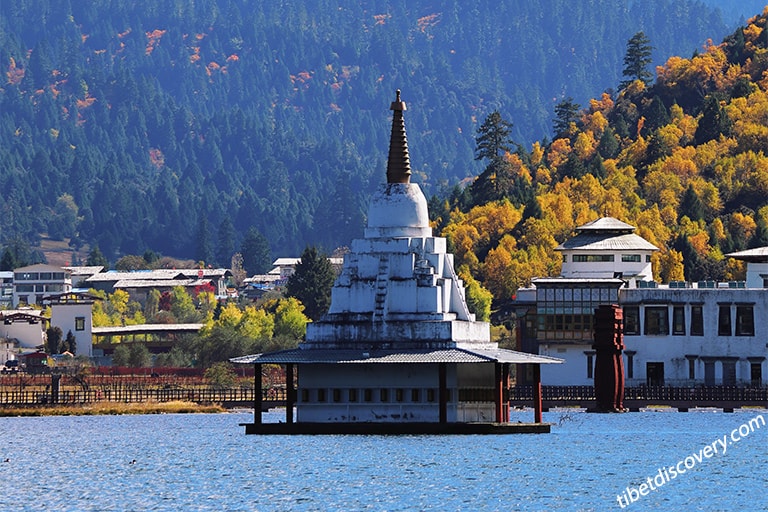 The White Pagoda in Lulang Lake
Day 3 Nyingchi – Lhasa / 470 km, About 6 hrs' Drive (B)
Today's Highlights: Kadinggou, Basum-tso LakeAfter breakfast, we begin our journey from Nyingchi to Lhasa, with a memorable stop at the breathtaking Basum-tso Lake. En route to the lake, you will pass by lush green rivers, dense forests, traditional Tibetan homes, and local farmlands where modern machinery can be seen at work.
After about a 30-minute drive, we'll reach Kadinggou, a scenic park renowned for its primeval forest and the Heavenly Buddha Waterfall, which plunges over 200 meters down a steep cliff. Within the mist, a naturally formed Buddha image appears and disappears, flanked by two guardian figures—adding a sense of mystery and sacredness to the scene. A short hike is required, but the refreshing air, birdsong, and the thunderous sound of falling water make it a truly delightful experience.
As we approach Basum-tso Lake, the scenery becomes increasingly captivating. Situated 3,500 meters above sea level, this pristine lake mirrors the snow-capped peaks and glaciers of the Nyenchen Tanglha Mountains. A short hike leads to a viewing platform, where you can take in a stunning panoramic view of the turquoise waters. On clear days, the lake's surface shifts between brilliant emerald and deep sapphire hues as clouds drift overhead—creating a scene like scattered jewels.
After admiring the vista, you'll descend to the lakeshore and cross a bridge to the central island. Here, a small Nyingma-sect Tibetan monastery awaits. You may observe pilgrims and visitors circling the white pagoda and turning prayer wheels. The island is also known for its "Three Wonders": the Taobao Pine, the Treasure House of the Dragon King, and the Tiger Claw Marks—each adding a touch of mystery and legend to your visit.
After immersing yourself in the beauty of the lake, continue the scenic drive to Lhasa.You will arrive in the late afternoon, and you will have time to check in, unwind, and acclimatize to the city's serene atmosphere.
-
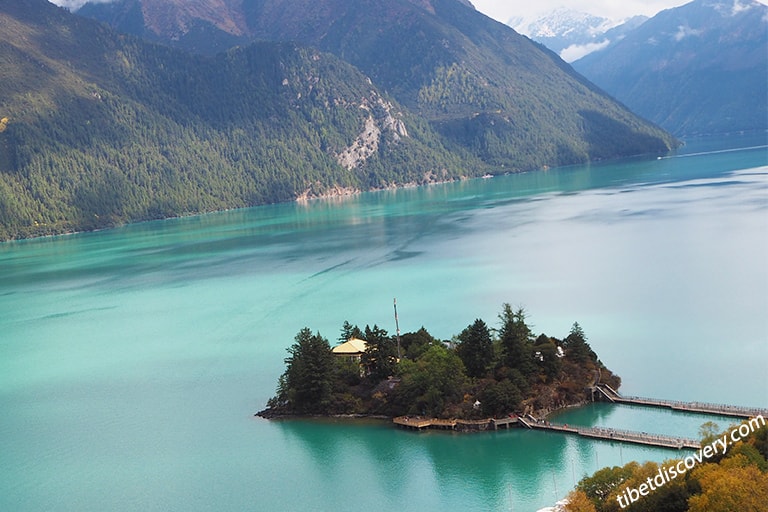 Central Island in Basum-tso Lake
-
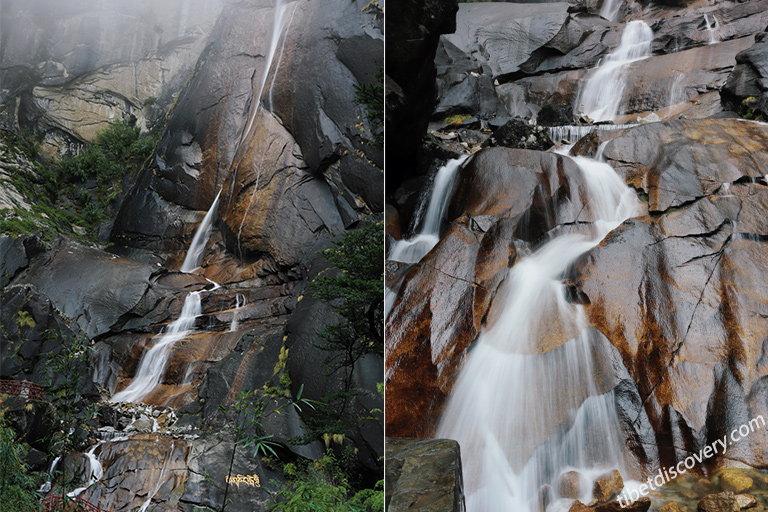 Heavenly Buddha Waterfall in Kadinggou
-
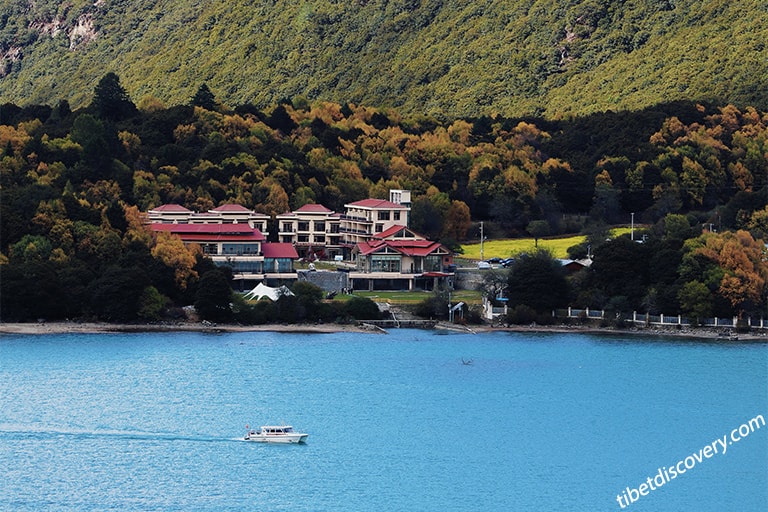 The Serene Waters of Basum-tso Lake
Day 4 Lhasa City Tour (B)
Today's Highlights: Tibet Museum, Norbulingka, Sera Monastery Monk DebateToday, you will explore Lhasa’s city and suburban attractions accompanied by your local guide, gaining deep insight into Tibetan history and culture. Your journey will begin at the Tibet Museum, where carefully curated exhibits trace the region’s past from the Paleolithic era to the rise of early civilization. Highlights include ancient stone tools and pottery, exquisite Buddhist statues, vivid Thangka paintings, and invaluable relics such as gold seals and traditional manuscripts. Next, visit Norbulingka, the summer palace of Lhasa. This expansive garden complex, filled with rare flowers and lush greenery, is often called the “Plateau Oxygen Bar.” Beyond its elegant Tibetan-style architecture, Norbulingka is also a vibrant cultural venue, hosting major Tibetan celebrations and performances, most notably the traditional shows during the annual Shoton Festival (June 30th in the Tibetan calendar, lasting about a week).
In the afternoon, head to Sera Monastery, one of Lhasa’s most renowned monasteries, famous for its daily Buddhist debating sessions. In the courtyard, monks engage in animated debates on Buddhist philosophy, using expressive gestures to sharpen understanding and deepen their studies-an unforgettable cultural experience. After enjoying the "Buddhism Debating", you will be transferred back to the city.
Optional Activity: If there is extra time, it is highly recommended to watch the outdoor live performance of Princess Wencheng at evening. Princess Wencheng Show, performed usually during 21:30~23:00 (late April to Early October), presents the Chinese and Tibetan history and culture through the story that Princess Wencheng of Tang Dynasty married Songtsen Gambo 1,300 year ago. Since the performance is outdoors and the nighttime temperatures in Lhasa are relatively low, please make sure to dress warmly in advance.
The Etiquette of Visiting Monastery: 1) you shouldn't wear short and uncover shoulders; 2) taking off your sunglasses and hat before entering the monastery; 3) taking photos and videos are usually not allowed inside the monastery.
-
 Buddhism Debating in Sera Monastery
-
 Norbulingka Summer Palace in October
-
 Tibet Museum with Traditional Tibetan Style Architecture
-
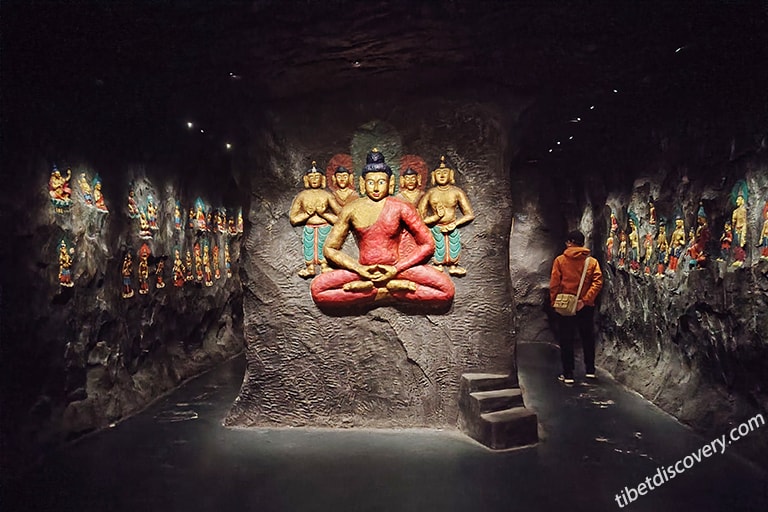 Buddha Statues Exhibited in Tibet Museum
Day 5 Lhasa Potala Palace (B)
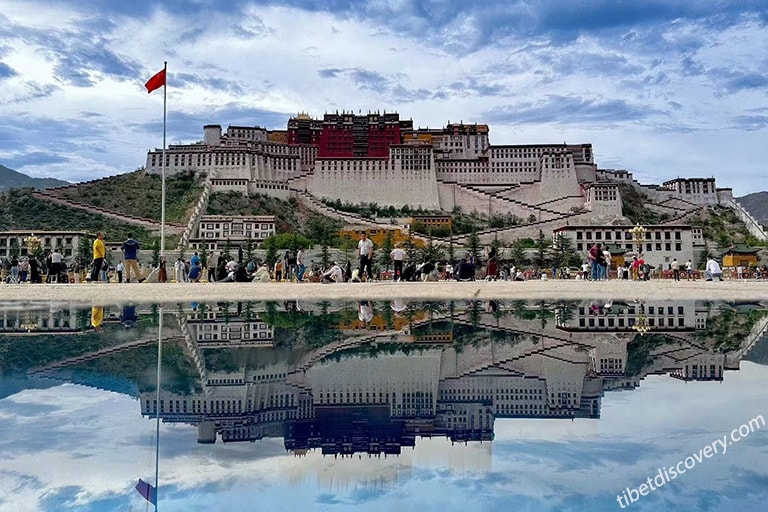
Today's Highlights: Potala Palace, Jokhang Temple, Barkhor StreetStart today's cultural heritage journey from the Potala Palace Square, where you can admire the grandeur of Potala Palace and capture classic photos of its magnificent front facade. From here, continue to the landmark - Potala Palace, an outstanding symbol of Tibetan architecture mainly composed of the White Palace and the Red Palace with many cherished cultural heritages. After entering the gate of Potala Palace, you need to walk up about 30 minutes along the zigzag stone paths with white-and-red walls to the White Palace. Remember to ascend the steps slowly and take some stops for sightseeing and rest which will be helpful to reduce high altitude sickness. Then you will explore the palace in an orderly way from the White Palace to the Red Palace with explanations accompanied by your local guide. After exploring Potala Palace, enjoy a leisurely walk through Zongjiao Lukang Park, a scenic lakeside park located behind the palace. Here, you can experience authentic local life, often seeing Tibetans gathering for singing and dancing, chatting, exercising, and walking kora. On clear days, the lake also offers beautiful reflections of Potala Palace.
Continuing your exploration, you will then get to Jokhang Temple, widely regarded as the spiritual heart of Lhasa and the most sacred religious site in Tibet as it enshrines the revered Jowo Rinpoche, a life-sized (about 1.5 meters / 5 feet) statue of Shakyamuni Buddha depicting him at the age of twelve. In the square before the temple, you will witness devoted pilgrims performing full-body prostrations, gradually polishing the stone flagstones beneath them-a deeply moving and unforgettable sight. The day’s exploration concludes at Barkhor Street, the bustling circular street that surrounds Jokhang Temple. The local Tibetans usually walk clockwise on the street for several circles, as part of their daily pilgrimage. Lined with lively shops and stalls, Barkhor Street is also an excellent place to browse for traditional Tibetan handicrafts and local specialties, offering a vibrant glimpse into both the spiritual and everyday life of Lhasa.
Optional Activity: If your physical strength permits, you can take a short climb to the Chakpori Hill Viewing Platform, which is precisely the location featured on the back of China's fifth series 50-yuan banknote. From this platform, you can appreciate the terraced architecture of Potala Palace ascending the mountainside.
Tips of today: 1) Potala Palace (3,700m) is situated at a higher elevation than the average city altitude (3,650m) and requires climbing many steps, so please walk slowly and take breaks as needed; 2) taking photos, videos and wearing hats are not allowed in the palace; 3) please bring some water, a hat, sun cream, and sun glasses with you.
-
Jokhang Temple Square
-
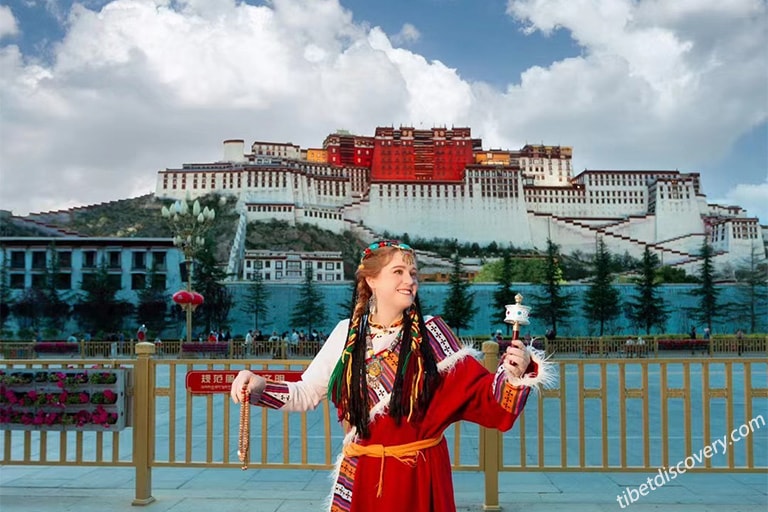 Our Guest Megan in Tibetan dress at the Potala Palace
-
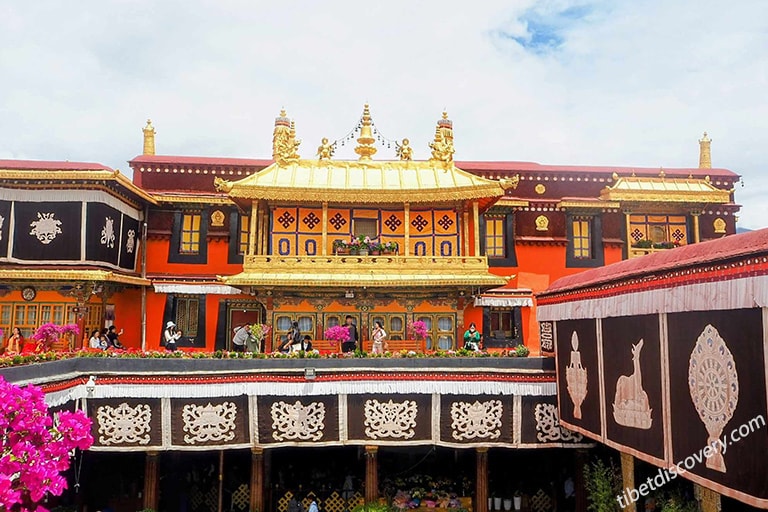 Golden Roof of Jokhang Temple - shot by our guest Sabine
-
 Barkhor Street
-
 Our Guest Neubert Visiting Potala Palace
Day 6 Lhasa - Shigatse / 360 km, About 8 hrs' Drive (B)
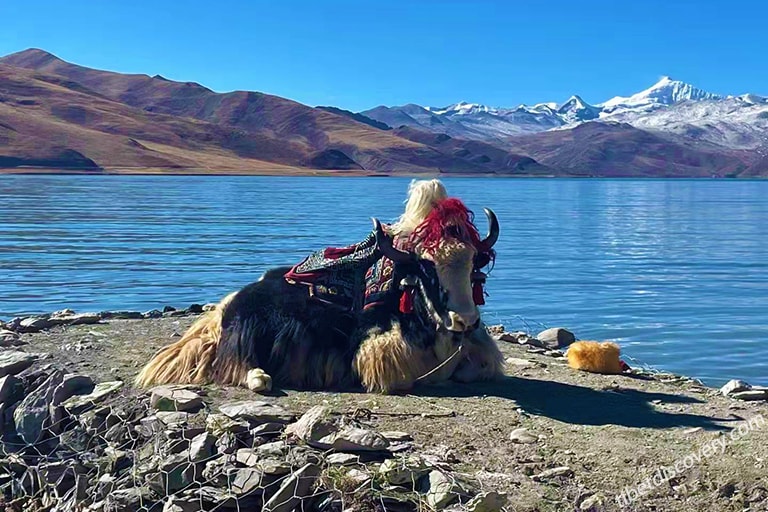
Today's Highlights: Yamdrok Lake, Karola Glacier, Palcho MonasteryToday, you will leave Lhasa and head to Shigatse, the second largest city in Tibet. It may be a long journey, but there are many things to do and see along this scenic road. You will first pass through Shannan City and take a short stop in the viewing platform of Yarlung Tsangpo River Valley (4,280m), where you can take a view of the snaking road and gorge scenery. Go on with your trip and you will reach your first highlight - holy Yamdrok Lake (4,441m). As the largest fresh lake in the northern of the Himalaya Mountains, it spreads about 675 square meters from south to north, like an eardrop lying in the arms of snow-capped giant mountains. Viewing from a distance, you can see fertile pastures full of yaks and sheep, and some small Tibetan villages along the lakeshore. Keeping driving not so far from Yamdrok Lake, you will get to the imposing Karola Glacier (5,400m) towering aloft on the right side of the road. Go on driving, you will pass by Simi La Pass (4,330m) and have several minutes' break here to take some photos of Simila Mountain and Manla Reservoir.
Continuing your trip, you will get to the historical county - Gyantse. Feel hungry? Have a good lunch in the town, then go to visit the mysterious Palcho Monastery. The monks and tradition of three important sects of Tibetan Buddhism - Sakyapa, Zhalupa and Gelukpa, peacefully coexist in this monastery. Its Kumbum, which is 35 meters high and has 76 small chapels with hundreds images of Kriyatantras, is believed to be the largest such structure in Tibet.
After the Gyantse sightseeing, keep drive about 1.5 hours, and you will arrive at your hotel in Shigatse city. Have a good rest!
Tips of today: 1) some attractions are at high altitudes, so move slowly and bring an oxygen tank to prevent altitude sickness; 2) wear warm clothes to prevent from cold and wild; 3) pack some food and drinks with you because you will spend much time on the road.
-
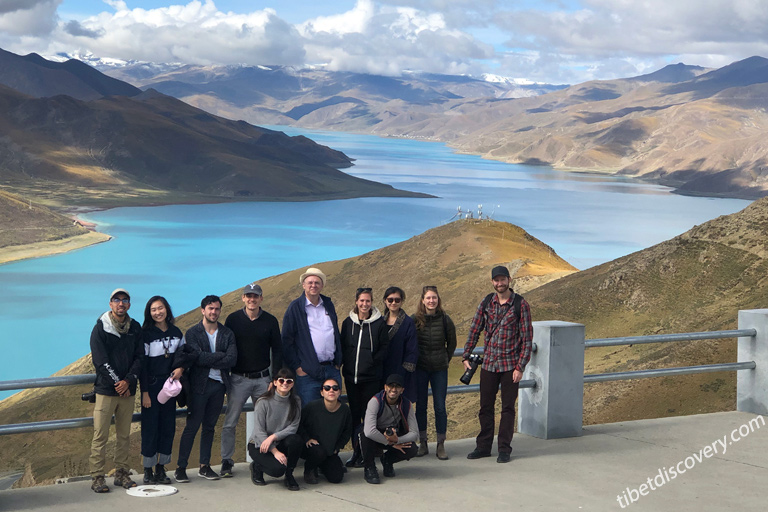 Our Guests visited Yamdrok Lake with Tibet Discovery
-
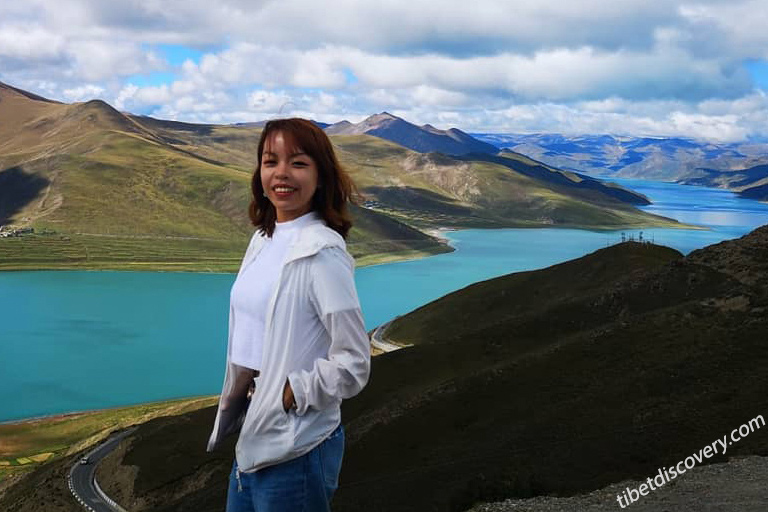 Chona's Great Experience in Yamdrok Lake with Tibet Discovery
Day 7 Shigatse - Mount Everest / 350 km, About 7 hrs' Drive (B)
Today's Highlights: Himalaya Views from Gawula Pass, Mount EverestAfter breakfast, embark on your once-in-a-lifetime Mount Everest expedition. Departing from Shigatse and traveling along National Highway 318, the scenery outside the window gradually transforms from farmland to vast mountains and deserts. Upon reaching the Gyatsola Pass (5,248 meters), you will first see fluttering prayer flags and the prominent Mount Everest Nature Reserve signpost. This is one of the highest points on G318, symbolizing your official journey toward the summit of the world. Next, you arrive at the Mount Everest National Park gate, the formal entrance to the core area. The large signboard is a classic photo spot.
Following this, you will begin ascending the Gawula Pass (5,200 meters). It is the highest, most open, and most spectacular viewing platform for the Himalayas in the world. On clear days, you can see four snow-capped peaks over 8,000 meters from here: Mount Makalu (8,463 meters, 5th highest in the world), Lhotse (8,516 meters, 4th highest), Mount Everest (8,848.86 meters, 1st highest), and Cho Oyu (8,201 meters, 6th highest), along with many peaks over 7,000 meters. Descending from Gawula Pass, you enter the famous "Everest 108 bends." Vehicles travel along zigzag roads, continuously descending with sharp turns one after another. Each hairpin turn offers a different perspective on the grandeur of the Himalayas.
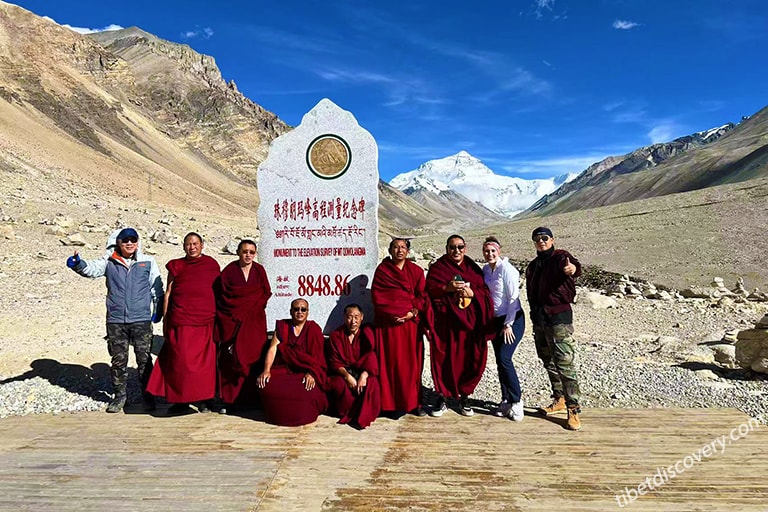
After descending, you arrive at the thriving Tashi Dzong Town, also known as Everest Town. This is the most important supply point before reaching Everest Base Camp. Here, you can buy water and snacks. At the nearby eco-shuttle transfer point, you switch to the park's unified eco-electric vehicles for the final journey to Everest Base Camp (5,200 meters). When the eco-shuttle comes to a stop, the massive pyramid-shaped peak of Mount Everest stands before you, unobstructed. The remaining time is yours to enjoy up close with the world's tallest mountain. Walk to the 8,848.86-meter measurement monument for photos, gaze at the "flag cloud" drifting from the summit, and feel the peak moment of life.
In the evening, stay overnight in a tent lodge at Base Camp or Rongbuk Monastery Guesthouse.
-
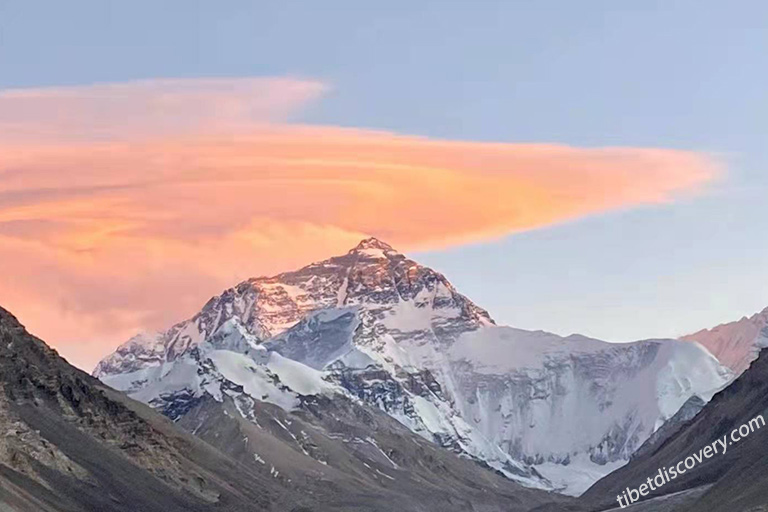 Mount Everest Flag Clouds photographed by Our Guest
-
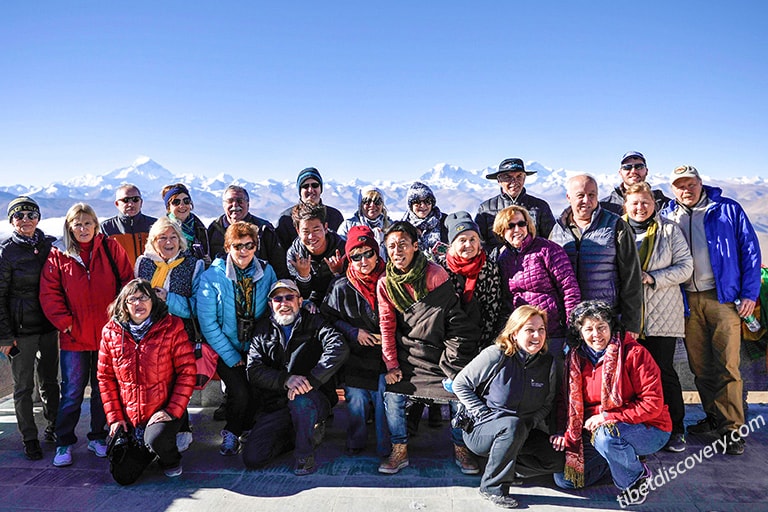 Boguisia's group had a good view of snow-capped peaks in Gawula Pass
-
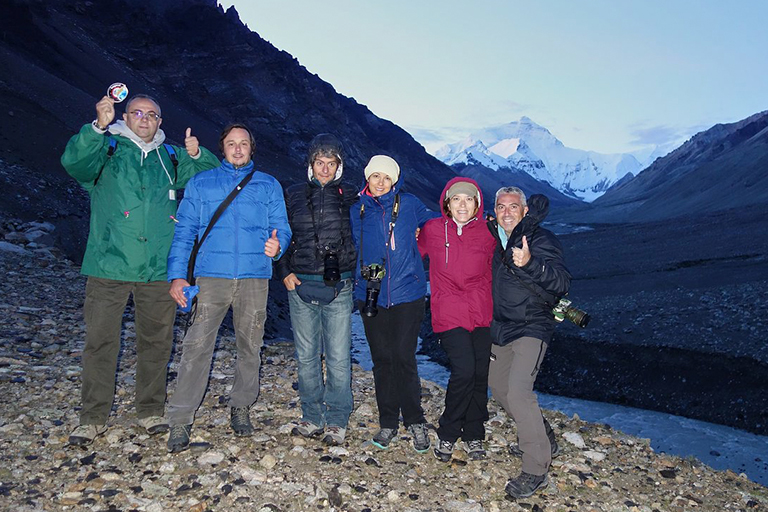 Alfonso's group from Italy visited Mount Everest with Tibet Discovery
Day 8 Mount Everest - Shigatse / 350 km, About 7 hrs' Drive
Today's Highlights: Sunrise over Mount EverestAt dawn, get ready for encountering the sacred sunrise at the World’s Roof. As the first rays of sunlight pierce the clouds, wait quietly at the 5,200-meter-high Everest Base Camp to witness the sunrise—watching the snow peaks gradually gilded with gold, the golden glow of sunrise cascading like molten lava, intertwining with the crimson prayer flags and silvery glaciers into a breathtaking panorama.
After breakfast, visit the nearby Rongbuk Monastery, a Nyingma sect temple founded in 1899—the world’s highest-altitude temple. The monastery preserves the meditation cave of Master Padmasambhava and a holy stone carved with hand and footprints. Here, it is not only a religious sanctuary but also a window to gaze up at Everest up close, where faith and nature coexist.
The return trip takes the Eastern Road, known as the "Third Pole Sky Road" of Earth, which traverses quiet villages, pastures, and towering mountain passes in its wild and open manner. Arriving at the Dinggye Xilin Viewpoint (4,900 meters above sea level), you can simultaneously capture the pyramidal peak of Everest’s eastern slope, the sharp ridge of Lhotse (the world’s fourth-highest peak) forming a twin-peak composition, and the red-and-white striped geological gallery of river valley sedimentary rocks, with vast wetlands, lovely sand dunes, and winding rivers beneath your feet. In the afternoon, reach Sakya Ancient Town, stroll around, then enter Sakya Monastery to explore its unique treasures. Established in 1073, Sakya Monastery holds a pivotal position in Tibetan Buddhism. Its outer walls feature three distinct colors—red, white, and black—symbolizing Manjushri (the Bodhisattva of Wisdom), Avalokiteshvara (the Bodhisattva of Compassion), and Vajrapani (the Bodhisattva of Power), respectively. The monastery houses 84,000 volumes of Buddhist scriptures, including the Budda Jalongma(the world's largest sutra) and numerous precious palm-leaf manuscripts (written on talipot leaves). It also boasts over 3,000 Yuan Dynasty murals, whose themes cover religion and history. These murals were created with vibrant pigments made from minerals such as turquoise, earning the monastery the title "China's Second Dunhuang." Also climb the city wall of Sakya Monastery to overlook the panoramic view.
Later, return to Shigatse, and have a good night in the city.
Friendly Reminder: The return route may be adjusted according to the season, especially during heavy summer rains or winter blizzards. Due to weather conditions, the return route may be subject to changes. In such cases, the route will be changed to pass through Gyawula Pass and Tingri, and return to Shigatse, but this will not affect the visit to Sakya Monastery.
-
Mount Everest Flag Clouds photographed by Our Guest
-
 Our Guests take photo with Mount Everest 5200 Altitude Monument
Day 9 Shigatse - Lhasa / 280 km, About 6 hrs' Drivie (B)
Today's Highlights: Tashilhunpo Monastery, Nyemo TunbaToday after breakfast, you will firstly take a visit to Tashilhunpo Monastery, located in the Shigatse city area, which is also the largest and most influential Gelug Monastery in the Shigatse prefecture. Here, you will be awed by the giant statue of Future Buddha, the largest of its kind in the world, standing at an impressive 26.2 meters tall and 11.5 meters wide. Adorned with precious pearls, turquoises, corals, and ambers, it is a magnificent sight.
After your visit in Tashilhunpo Monastery, you will begin your journey back to Lhasa, traveling along the legendary Yarlung Tsangpo River, also known as the mother river of Tibet. On the way, you will make a stop at Nyemo Tunba, the historic home of Tunmi Sangbuzha, the inventor of the Tibetan character as well as the renowned Tibetan Incense. During peak season (usually from May to October), you might have a chance to witness the traditional process of making Tibetan Incense with a water mill. The surrounding scenery here is equally captivating, with ancient cypress trees, lush green willows, and the soothing sound of the river adding to the charm of the place.
After about 2 hours of driving, you will arrive at your hotel in Lhasa city and take a good rest.
-
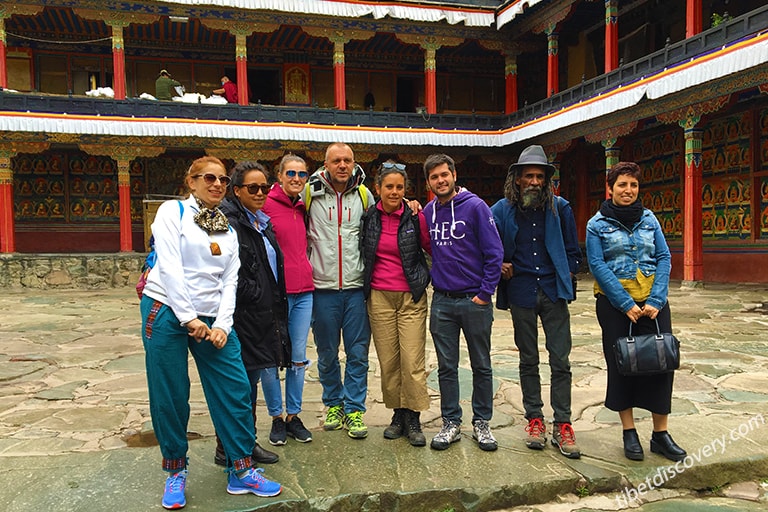 Silvia's group visited Tahilhunpo Monastery with Tibet Discovery
-
 Majestic Tashilumpo Monastery with Traditional Red Architecture
-
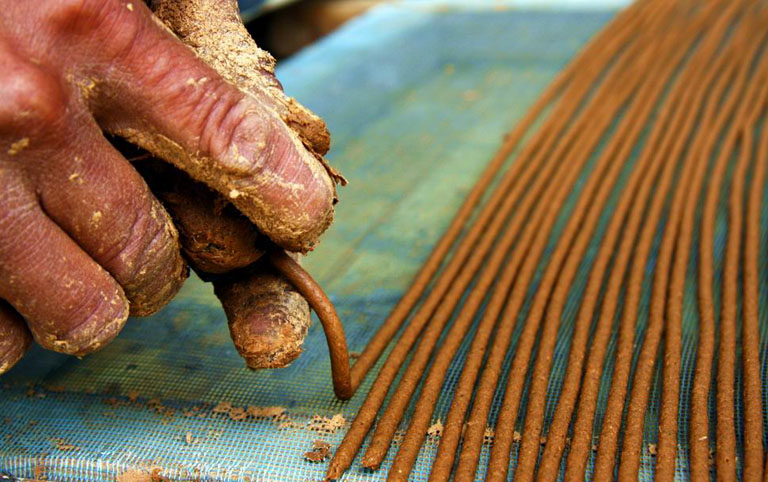 A worker is making Tibetan Incense
Day 10 Lhasa Departure (B)
Lhasa Airport or Train Station Drop-OffToday is free for you until your tour guide and private driver transfer you to the airport in time for your flight or drop you off at Lhasa train station.
Tips of today: 1) please pack your luggage carefully, especially for small things like camera charger, power adaptor, mobile phone, phone charger, wallet and towel; 2) if your flight is arranged in the afternoon, please make sure you check out the hotel before 12 PM.

Useful Trip Notes
Other Recommended Tour Packages
-
Nyingchi / Bomi / Ranwu / Nyingchi / Lhasa
8 Days Tibet Dream Tour with Breathtaking Glaciers
Highlights: Ranwu Lake, Midui Glacier, Laigu Glacier Group, Basum Tso Lake, Potala Palace
-

Nyingchi / Lhasa / Namtso / Lhasa
7 Days Nyingchi Lhasa Tour Plus Heavenly Namtso Lake
Highlights: Namtso Lake, Potala Palace, Jokhang Temple, Basum-tso Lake, Lulang Forest
-

Nyingchi / Lhasa / Yamdrok Lake/ Lhasa
7 Days Splendid Nyingchi Lhasa Tour with Basum-tso Lake & Yamdrok Lake
Highlights: Yamdrok Lake, Basum-tso Lake, Lulang Forest, Potala Palace, Jokhang Temple
-

Nyingchi
5 Days Nyingchi Peach Blossom Festival Tour
Highlights: Basum-tso Lake, Lulang Forest, Gala Village, Bomi Peach Valley
Prefer to tailor a trip that totally suits your requirements and interests? Our 20+ professional, helpful and friendly travel experts are ready to help! Tell us your needs, and one of our experts will get to you with trip details within 0.5~23.5 hrs. You can also call us at 86-28-85227275 / 86-28-85223672.

 Karen
Karen Wonder
 Jack
Jack Rita
Rita Johnson
 Vivien
 Wing
Wing Ariel
Ariel Leo
Leo Tracy
Tracy Evelyn
 April
April Phoebe
 Kelly
Kelly Shirley
 Reya
Reya Juliet
 Elk
Elk Samantha
 Felix
Felix Sean
Sean