


 Beijing + Tibet Tours
 Chengdu + Tibet Tours
 Shanghai + Tibet Tours
 Xining + Tibet Tours


16 Days Nepal Tibet Bhutan Classic Tour (Price from )
Himalayan Kingdoms Highlights
In this 16 Days Nepal Tibet Bhutan Classic tour, you will explore the highlights of the three Himalayan kingdoms, including the world-famed architectural wonders, high plateau natural landscape, the sacred Buddhist sites, the rare wild animals, etc. With great convenience to get into, Nepal is your first destination. Starting from Kathmandu, you can learn the cultural charm of Kathmandu valley and travel to Pokhara to enjoy the breathtaking natural beauty. Then, take a flight to Lhasa and visit the landmarks in Lhasa. After the sightseeing in Lhasa City, you will take an overland driving journey to Kathmandu via Gyantse, Shigatse, Mount Everest and Gyirong. This route is filled with various attractions which will give you a pleasant surprise. Next, take a short flight from Nepal to Bhutan and appreciate the most peaceful Shangri-La.
Highlights of this tour:
- Start your tour from Nepal which can be reached conveniently and easily by international flights;
- Feel the laid-back life and cultural essence in Nepal by walking into the Durbar Squares, Swayambhunath and Boudhanath;
- Enjoy the overland tour from Tibet to Nepal, and glut your eyes with breathtaking nature (mountains, glaciers and lakes) as well as the majestic architectures (monasteries and palaces);
- Discover the tranquil valleys in Bhutan and admire its spectacular Buddhist Dzongs and monasteries.
Tour Brief Information
- Tour price: from
- Tour code: TD-NTB-16
- Tour Type: Private Customizable Tour Package
- Destination: Kathmandu / Pokhara / Lhasa / Gyantse / Shigatse / Everest / Gyirong / Paro / Thimphu / Punakha / Paro
- Duration: 16 days and 15 nights
- Departure: Flexible
- Travel Theme:


- Best Time:


- Physical Level
- Tour Pace
- Max Altitude
5,200m
- Itinerary Details
- Price Guide & Booking
- Trip FAQs
- Reviews
- Make an Enquiry
Your tour - at a glance
Day 1 ~ 4 Kathmandu Arrival & Nepal Highlights
Day 5 ~ 7 Kathmandu to Lhasa & Lhasa Tour
Day 8 Lhasa to Shigatse via Gyantse
Day 9 ~ 10 Shigatse - Mount Everset - Gyirong
Day 11 Gyirong Port - Kathmandu
Day 12 ~ 15 Flight to Bhutan & Bhutan Highlights Tour
Day 16 Bhutan Departure
Itinerary Details - Day by Day
Day 1 Kathmandu Arrival (D)
Welcome to Kathmandu, the colorful capital of Nepal. Upon arriving at Kathmandu Tribhuvan International Airport, you will be welcomed by our enthusiastic local guide with smiles, then transfer to Kathmandu downtown to check in your hotel by an air-conditioned vehicle. The rest of today is on your own to relax. If you want to explore nearby, feel free to get some practical suggestions from your tour guide.
At evening, a "Welcome Dinner" will be held for you at an excellent traditional Nepalese Restaurant where you will enjoy a Nepalese cultural program as well as a fine dinner.
Free time ideas: 1) visit Garden of Dreams, Royal Botanical Garden; 2) Walk around Thamel, Ason or Indrachowk bazaar.
-
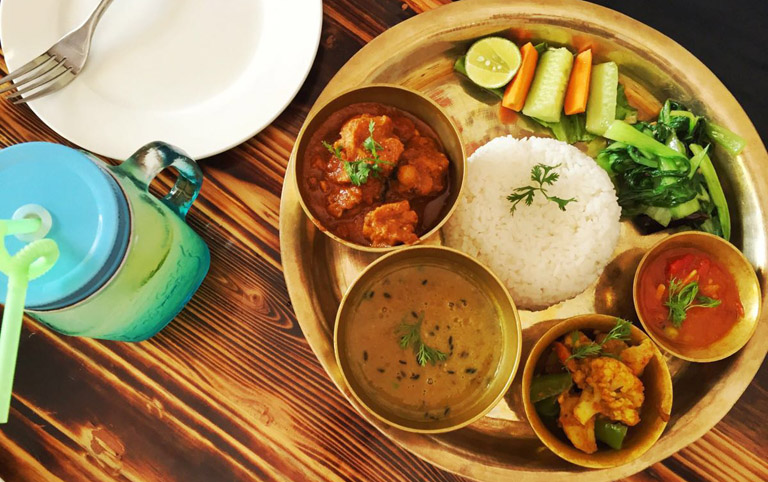 Traditional Nepalese Food
Day 2 Kathmandu Sightseeing & Flight - Pokhara, About 25 minutes' Flight (B)
This morning, after being picked up by our local Nepalese guide at your hotel, you will then start the captivating Kathmandu private tour with a leisure visit to the western delight of the Valley - Swayambhunath, the Kathmandu's most ancient and enigmatic holy shrine with a history over 2500 years. There are a lot of monkeys residing in the Temple, that's why the shrine is also famous as the Monkey Temple. It is an excellent place for a quick hike and some fresh air. On the clear days, you are able to see a line of Himalayan Ranges, and enjoy a fine view over Kathmandu city and the valley. Nest place to visit is Pashupatinath, the largest Hindu temple worshiping the Hindu God Shiva who is known as Pashupati, the master of the whole universe in the Hindu mythology. Located at the bank of the Bagmati River, the holy temple has a reputation of “the Temple of Living Beings” for it attracts thousands of pilgrims from all over the world come to pay homage. For tourists, it is a great place to get a deep exploration of Hinduism culture.
Drive about 4km to Patan, the second largest city in Kathmandu valley. Compared with Kathmandu city, Patan is quieter, a living place to experience Nepal local culture and lifestyle. You will visit its landmark - Patan Durbar Square which is honored as the finest collection of temples and palaces with exquisite carvings in Nepal. There are Hindu and Buddhist relic sites spread around the square. Most famous one is Krishna Temple which is said to be carved from a single enormous stone. Enjoy the beautiful stone works, religious sculptures, and enjoy a leisure stroll through packed streets of souvenirs in the square.
After the sightseeing, drive to the airport to take a flight (about 25mins) to Pokhara, a remarkable place of natural beauty. The enchanting city with a population of around 95,000 has several beautiful lakes and offers stunning panoramic views of Himalayan peaks. The serenity of lakes and the magnificence of the Himalayas rising behind them create an ambience of peace and magic. So today the city has not only become the starting point for most popular trekking and rafting destinations but also a place to relax and enjoy the beauty of nature.
-
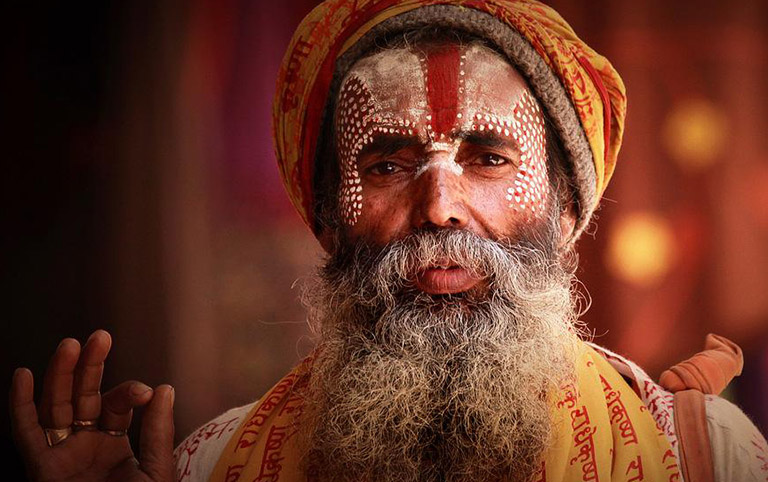 Ascetic Monks in Pashupatinath Temple
-
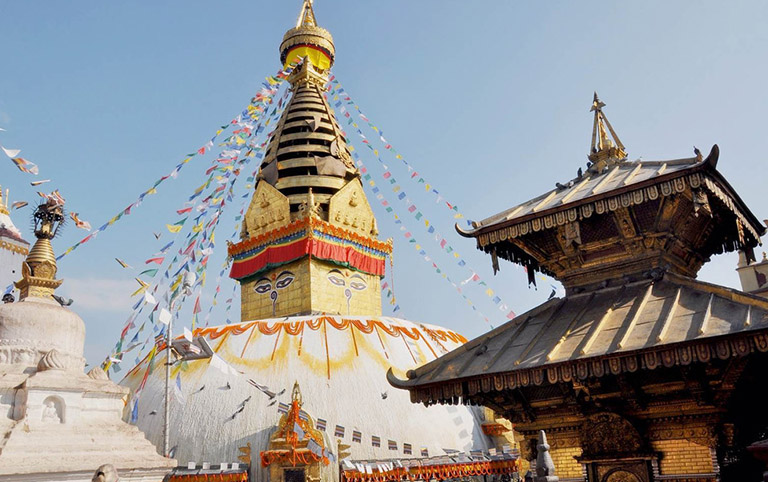 Swayambhunath (Monkey Temple)
-
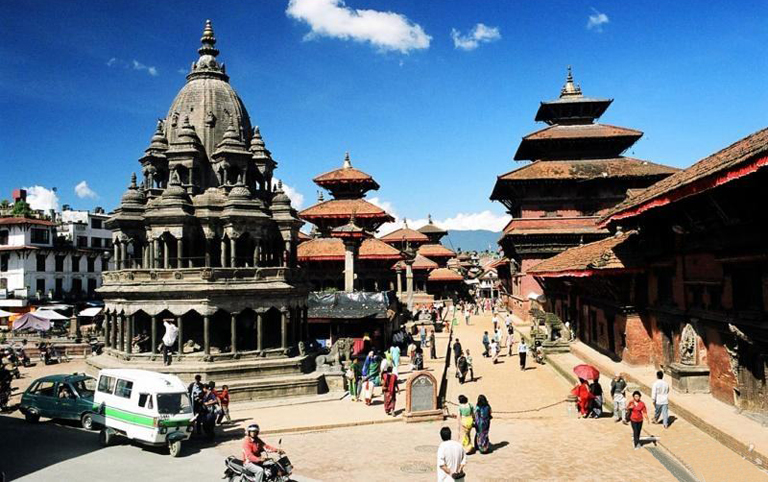 Patan Durbar Square
Day 3 Pokhara (B)
Get up in the early morning and go to Sarangkot to enjoy breathtaking sunrise. When the sun picks out the peaks, they are transformed from a purple-pink to a celestial gold. As the day breaks thoroughly, you can admire a wonderful panoramic sweep of Himalayan peaks from west to east, which is praised as one of the most beautiful picture in Nepal. After the spectacular sunrise and landscape weeping at Sarangkot, you will drive to Peace Temple to see the brilliant World Peace Pagoda. The road to the pagoda is not in very good condition, but scenery is stunning. Constructed by the Buddhists from Japanese Nipponzan Myohoji organization, World Peace Pagoda expresses the good wishes of world peace. While seeing the enchanting natural sights around, you will also get a feeling of inner peace as well.
After lunch, you will visit Devil’s Fall, locally known as Patale Chhango (Hell’s Fall). It is an awesome waterfall lying about 2 km south-west of Pokhara Airport on the highway to Tanmen. Then, pay a visit to the nearby Gupteswar Gupha, which is a sacred cave. It has some big hall-size rooms and some passages where you have to crawl on all fours. Afterwards, you will have a relaxed journey in Phewa Lake which is the second largest lake in Nepal. You can take one of the beautifully painted boats to cruise on the lake or enjoy a relaxing biking around the lake. You will then visit the most important religious monument in Pokhara - Barahi Temple which is built almost in the middle of Phewa Lake. The two storied pagoda is dedicated to boar manifestation of Ajima, the protector deity representing the female force Shakti.
Recommended optional activities:
1) Paragliding into the sky to witness the magnificent view of the snow peaks and pristine lakes with an experienced pilot; 2) Enjoy a relaxing biking around Phewa Lake.
Other available Pokhara day tours plans:
If you prefer some more adventurous activities, such as hiking, biking, rafting, we can also customize a tour for you.
❶ Nature Day Hike from Australian Camp to Dhampus
After breakfast, drive about 40 mins from Pokhara to Kande, then start hiking to the Australian Camp, which costs around 2 hours. You can enjoy unobstructed scenery of snow mountains of both Annapurna Range and Dhaulagiri Range, beautiful terraces, peaceful villages along the hiking trail. After spending some time at Australian Camp, you will hike down through jungle to Dhampus, a community of local Gurang people with picturesque view of Annapurna mountains. Spend some time for lunching and exploring local culture, then walk down to Phedi, and drive back to Pokhara.
❷ Seti River Rafting Day Tour from Pokhara
Located only about 1 hr’s driving from Pokhara, the Seti River is the perfect venue for a rafting adventure. It is a gentle river providing safe and comfortable rafting experience as well as a great variety of beautiful views including snow peaks, terrace fields, waterfalls, local villages, wild jungles, etc. It is suitable for family with kids either.
-
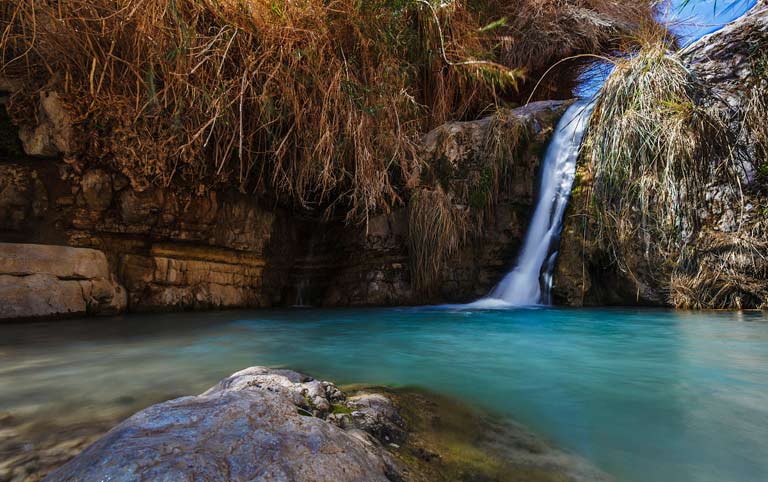 Picturesque Devil's Fall in Pokhara
-
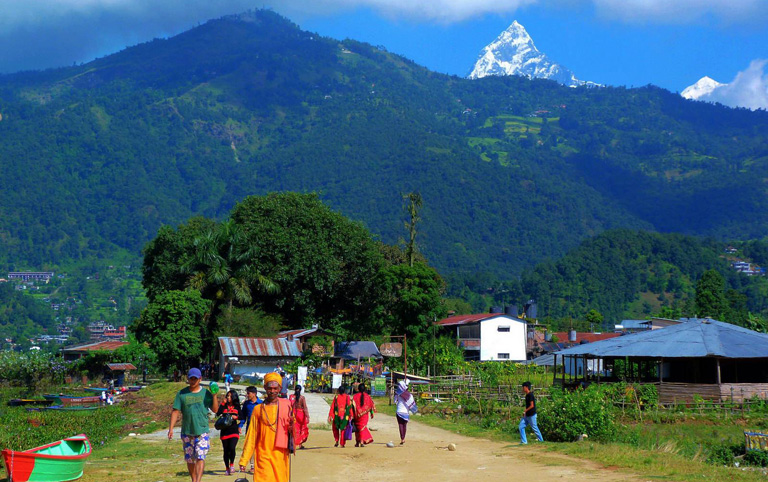 Beautiful Landscape of Pokhara
-
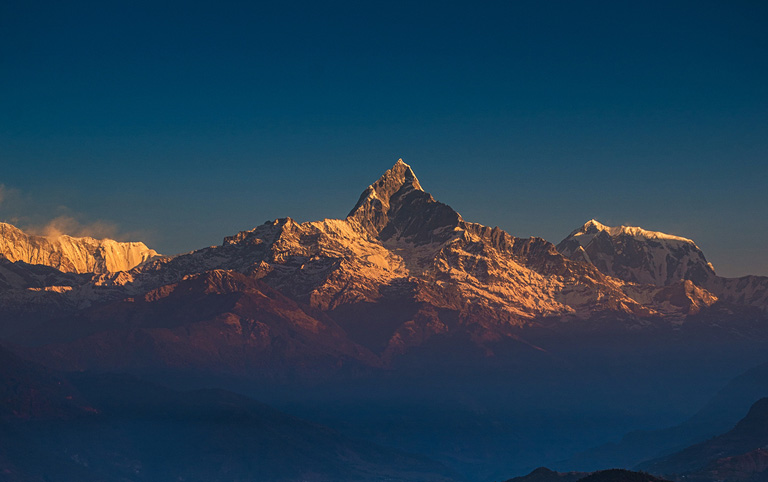 Watch Sunrise from Sarangkot in Pokhara
Day 4 Pokhara - Kathmandu & Kathmandu Sightseeing, About 25 minutes' Flight (B)
This morning, take a morning flight back to Kathmandu. After arriving at Kathmandu Tribhuvan International Airport, meet your tour guide, then move to another sister city of Kathmandu and Patan - Bhaktapur which is offers you the less disturbed cultural experience. In the ancient time, Bhaktapur was also known as Bhadgaon(the land of rice). The city was one of three medieval city-states in the Kathmandu Valley as well as the best preserved one. You can please your eyes with beautiful medieval arts and grand architecture, and walk through the stone patched streets to explore local culture and lifestyle. Not to be missed place include Bhaktapur Durbar Square, Nyatapola Temple square, Bhaktapur national art gallery and the 55 windows palace. There is also a pottery square where you can find a traditional way of producing pottery which has been passed down from generation to generation.
After a shortwhile driving from Bhaktapur, you will get to the giant Buddhist stupa of Boudhanath which is the largest stupa in the world with a height of 131ft (39.93 m), also one of the most important Buddhist sacred sites in Kathmandu valley. The stupa was built around the 5th century A.D. with a highly unique three level mandala style structure. The location of the stupa is on the ancient trade road to Tibet where the merchants from Tibet rested and hanged prayer flags here for centuries.
After the nice refreshing tour of the Heritage and religious sites, return to your hotel in Kathmandu downtown.
-
 Giant Boudhanath Stupa
-
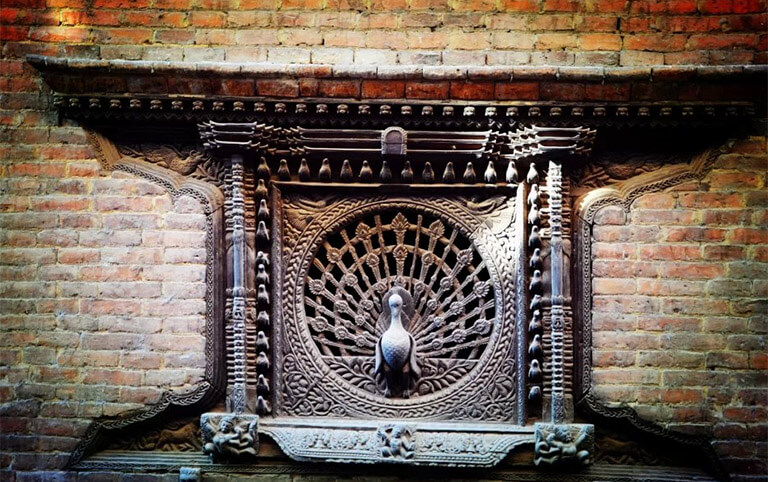 Window of Peacock in Bhaktapur
Day 5 Kathmandu - Lhasa / About 1.5hrs' Flight
Today will be free until be escorted to the airport and take a flight to Lhasa. Upon arrival at Lhasa Gongga Airport, you will be picked up by local tour guide at the airport hall, then be escorted to your hotel in Lhasa city in a private vehicle. The rest of the day is free for you to explore the local areas and acclimatize yourself to the air, temperature and high altitude of Lhasa.
High Altitude Acclimation Tips:1) go for some leisure walking to acclimate the high altitude but avoid strenuous activity after arrival; 2) you'd better not have bath, in case of catching a cold; 3) drink more water, and have some fruit; 4) have a good rest.
Day 6 Lhasa (B)
Today you will visit popular attractions in Lhasa city and suburb to explore Tibetan culture. You will firstly go to visit the beautiful Norbulingka which used to be the former summer palace of Dalai Lamas in the ancient time, and now is a public park. Dotted with various kinds of precious flowers and plants, it is the genuine "Plateau Oxygen Bar". In addition to its magnificent buildings and colorful flowers, Norbulingka also features some big Tibet event activities during big festivals, like Tibetan shows in annual Shoton Festival. Next, drive several kilometers to the western outskirts of Lhasa to visit Drepung Monastery. Drepung, in Tibetan, means "prosperity". Since its establishment, Drepung Monastery has always been one of the most important Buddhist monasteries in Tibet. In its heyday, there were more than 10,000 monks lived and studied in the monastery. Throughout its history, many important and famous Tibetan leaders used to study here, especially the Dalai Lamas. So Drepung Monastery is also respectfully known as the "Mother School of Dalai Lamas". You can also enjoy a panoramic view of Lhasa from Drepung Monastery.
In the afternoon, you will be taken to another famous monastery in Lhasa - Sera Monastery. It is famous for the spectacular "Buddhism Debating". As a daily routine, the monks gather in a courtyard, and debate on the Buddhist doctrines with supplemented gestures, which is thought to be helpful to facilitates better comprehension of the Buddhist philosophy to attain higher levels of study. After enjoying the "Buddhism Debating", you will be transferred back to the city. The rest time is your own free time to rest.
The Etiquette of Visiting Monastery: 1) you shouldn't wear short and uncover shoulders; 2) taking off your sunglasses and hat before entering the chapels; 3) taking photos is usually not allowed inside the chapels.
-
 Courtyard for Buddhism Debating in Sera Monastery
-
 First Sight of Drepung Monastery
-
 Enjoy the bright flowers in Norblingka
Day 7 Lhasa (B)
Start today's cultural heritage journey from the Potala Palace Square, where you can admire the grandeur of Potala Palace and capture classic photos of its magnificent front facade. From here, continue to the landmark - Potala Palace, an outstanding symbol of Tibetan architecture mainly composed of the White Palace and the Red Palace with many cherished cultural heritages. After entering the gate of Potala Palace, you need to walk up about 30 minutes along the zigzag stone paths with white-and-red walls to the White Palace. Remember to ascend the steps slowly and take some stops for sightseeing and rest which will be helpful to reduce high altitude sickness. Then you will explore the palace in an orderly way from the White Palace to the Red Palace with explanations accompanied by your local guide. After exploring Potala Palace, enjoy a leisurely walk through Zongjiao Lukang Park, a scenic lakeside park located behind the palace. Here, you can experience authentic local life, often seeing Tibetans gathering for singing and dancing, chatting, exercising, and walking kora. On clear days, the lake also offers beautiful reflections of Potala Palace.
Continuing your exploration, you will then get to Jokhang Temple, widely regarded as the spiritual heart of Lhasa and the most sacred religious site in Tibet as it enshrines the revered Jowo Rinpoche, a life-sized (about 1.5 meters / 5 feet) statue of Shakyamuni Buddha depicting him at the age of twelve. In the square before the temple, you will witness devoted pilgrims performing full-body prostrations, gradually polishing the stone flagstones beneath them-a deeply moving and unforgettable sight. The day’s exploration concludes at Barkhor Street, the bustling circular street that surrounds Jokhang Temple. The local Tibetans usually walk clockwise on the street for several circles, as part of their daily pilgrimage. Lined with lively shops and stalls, Barkhor Street is also an excellent place to browse for traditional Tibetan handicrafts and local specialties, offering a vibrant glimpse into both the spiritual and everyday life of Lhasa.
Optional Activity: If your physical strength permits, you can take a short climb to the Chakpori Hill Viewing Platform, which is precisely the location featured on the back of China's fifth series 50-yuan banknote. From this platform, you can appreciate the terraced architecture of Potala Palace ascending the mountainside.
Tips of today: 1) Potala Palace (3,700m) is situated at a higher elevation than the average city altitude (3,650m) and requires climbing many steps, so please walk slowly and take breaks as needed; 2) taking photos, videos and wearing hats are not allowed in the palace; 3) please bring some water, a hat, sun cream, and sun glasses with you.
-
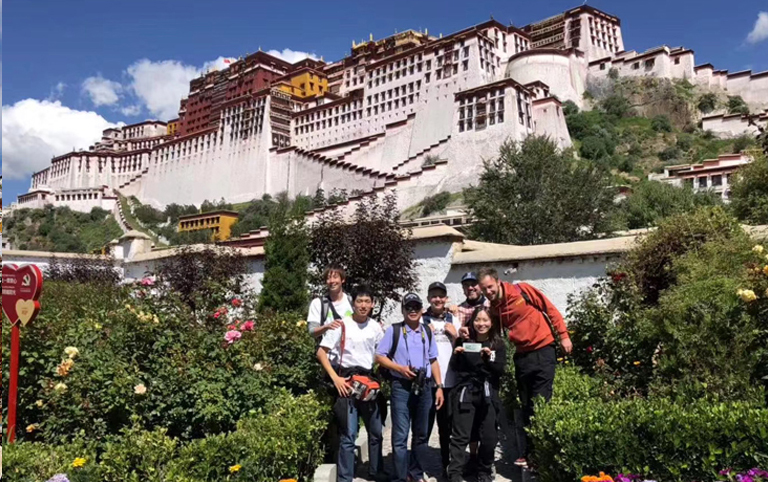 Armin's Group from Germany visited Potala Palace
-
 Jokhang Temple Exterior
-
 Overview of Barkhor Street
Day 8 Lhasa - Gyantse - Shigatse / 360km, About 8hrs' Driving (B)
Today, you will leave Lhasa and head to Shigatse, the second largest city in Tibet. It may be a long journey, but there are many things to do and see along this scenic road. You will first pass through Shannan City and take a short stop in the viewing platform of Yarlung Tsangpo River Valley (4,280m), where you can take a view of the snaking road and gorge scenery. Go on with your trip and you will reach your first highlight - holy Yamdrok Lake (4,441m). As the largest fresh lake in the northern of the Himalaya Mountains, it spreads about 675 square meters from south to north, like an eardrop lying in the arms of snow-capped giant mountains. Viewing from a distance, you can see fertile pastures full of yaks and sheep, and some small Tibetan villages along the lakeshore. Keeping driving not so far from Yamdrok Lake, you will get to the imposing Karola Glacier (5,400m) towering aloft on the right side of the road. Go on driving, you will pass by Simi La Pass (4,330m) and have several minutes' break here to take some photos of Simila Mountain and Manla Reservoir.
Continuing your trip, you will get to the historical county - Gyantse. Feel hungry? Have a good lunch in the town, then go to visit the mysterious Palcho Monastery. The monks and tradition of three important sects of Tibetan Buddhism - Sakyapa, Zhalupa and Gelukpa, peacefully coexist in this monastery. Its Kumbum, which is 35 meters high and has 76 small chapels with hundreds images of Kriyatantras, is believed to be the largest such structure in Tibet.
After the Gyantse sightseeing, keep drive about 1.5 hours, and you will arrive at your hotel in Shigatse city. Have a good rest!
Tips of today: 1) some attractions are at high altitudes, so move slowly and bring an oxygen tank to prevent altitude sickness; 2) wear warm clothes to prevent from cold and wild; 3) pack some food and drinks with you because you will spend much time on the road.
-
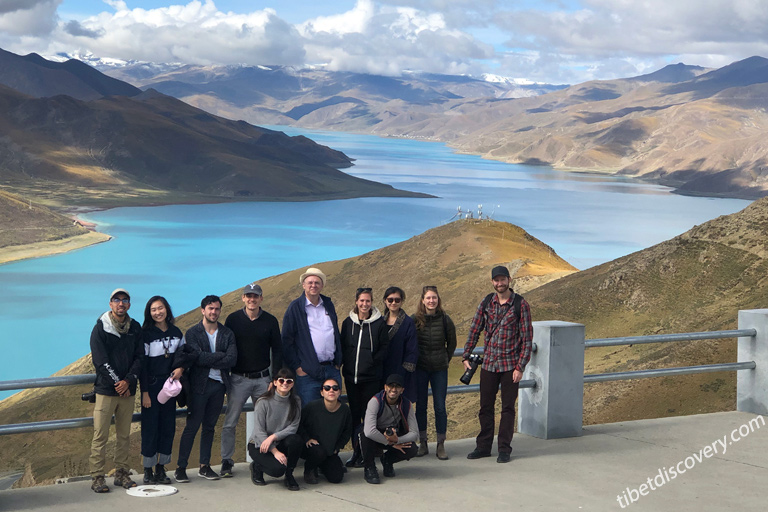 Our Guests visited Yamdrok Lake with Tibet Discovery
-
 White Pagoda of Palcho Monastery
-
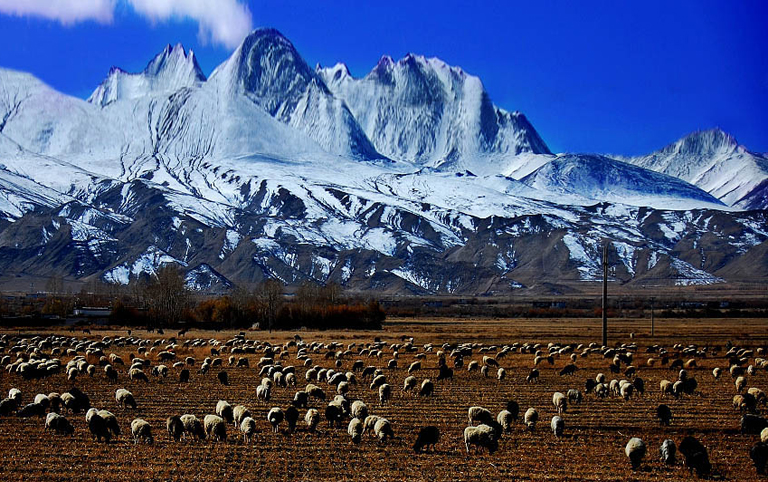 Black rocks of Karola Glaceier are contrasting starkly with the surrounding snow-capped peaks
Day 9 Shigatse - Mount Everest / 350km, About 7hrs's Driving ( B )
After breakfast, embark on your once-in-a-lifetime Mount Everest expedition. Departing from Shigatse and traveling along National Highway 318, the scenery outside the window gradually transforms from farmland to vast mountains and deserts. Upon reaching the Gyatsola Pass (5,248 meters), you will first see fluttering prayer flags and the prominent Mount Everest Nature Reserve signpost. This is one of the highest points on G318, symbolizing your official journey toward the summit of the world. Next, you arrive at the Mount Everest National Park gate, the formal entrance to the core area. The large signboard is a classic photo spot.
Following this, you will begin ascending the Gawula Pass (5,200 meters). It is the highest, most open, and most spectacular viewing platform for the Himalayas in the world. On clear days, you can see four snow-capped peaks over 8,000 meters from here: Mount Makalu (8,463 meters, 5th highest in the world), Lhotse (8,516 meters, 4th highest), Mount Everest (8,848.86 meters, 1st highest), and Cho Oyu (8,201 meters, 6th highest), along with many peaks over 7,000 meters. Descending from Gawula Pass, you enter the famous "Everest 108 bends." Vehicles travel along zigzag roads, continuously descending with sharp turns one after another. Each hairpin turn offers a different perspective on the grandeur of the Himalayas.
After descending, you arrive at the thriving Tashi Dzong Town, also known as Everest Town. This is the most important supply point before reaching Everest Base Camp. Here, you can buy water and snacks. At the nearby eco-shuttle transfer point, you switch to the park's unified eco-electric vehicles for the final journey to Everest Base Camp (5,200 meters). When the eco-shuttle comes to a stop, the massive pyramid-shaped peak of Mount Everest stands before you, unobstructed. The remaining time is yours to enjoy up close with the world's tallest mountain. Walk to the 8,848.86-meter measurement monument for photos, gaze at the "flag cloud" drifting from the summit, and feel the peak moment of life.
In the evening, stay overnight in a tent lodge at Base Camp or Rongbu Temple Guesthouse.
-
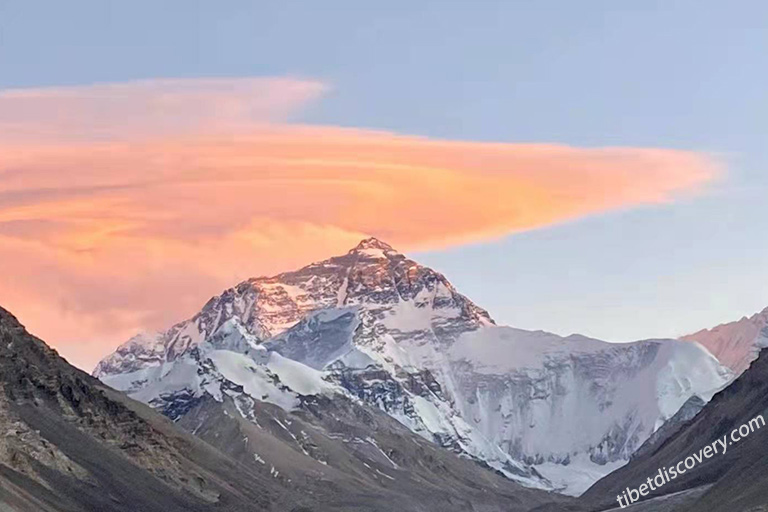 Mount Everest Flag Clouds photographed by Our Guest
-
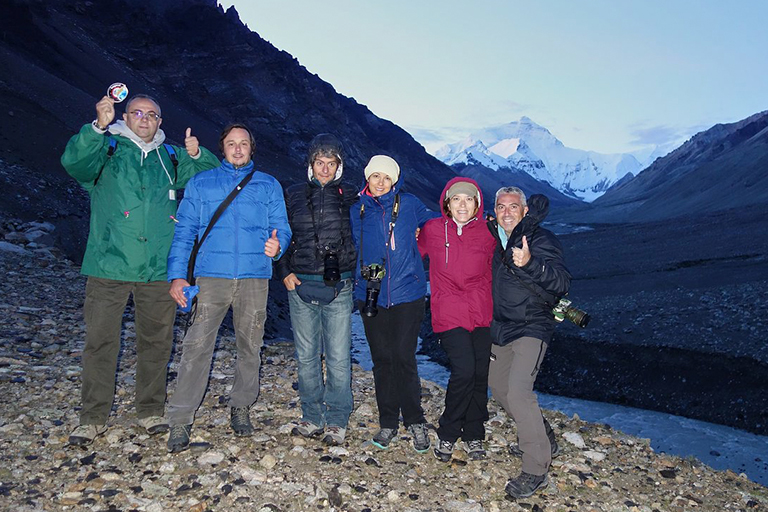 Alfonso's group from Italy visited Mount Everest with Tibet Discovery
-
 Tashilhunpo Monastery is the oldest and largest Gelugpa Monastery
Day 10 Everest - Gyirong Town / 370km, About 8hrs' Driving
Wake up early to enjoy the marvelous sunriseon the peak of the world from Rongbuk Monastery. The top part of the Mount Everest is always covered with snow all the year round, and when the sun shines on the mountain, the peak is like a giant white pyramid, which is one of the most famous sceneries of Mount Everest. In bright days, you can also see a wisp of cloud hanging above the top of Mount Everest. It flies eastward in the fast western wind just like a flapping flag. This unique phenomenon is the spectacular “Cloud Flag”. The cloud will change from surging waves into a thin cooking smoke or from galloping steeds into the mysterious veil of a goddess.
Till now your Mount Everest adventure is about to end. The rest of today is to drive to Gyirong Town. The views along the road are stupendous. In clear days, you can see the clear face of Shishapangma Peak and enjoy the beautiful view of Pekutso Lake.
Accommodate at Gyirong Town.
Tips of today: 1) the sunrise usually starts around 6:30 am to 7am on Mount Everest; 2) breakfast is not included.
-
 Charming Sunrise on World Highest Mountain
Day 11 Gyirong - Kathmandu
Today, drive about 25 km to Gyirong Port at China-Nepal border. The rest of today is to transfer to Kathmandu. Kathmandu is only about 160 km from Gyirong Port, but remind the road condition is not as good as Tibet roads. It usually takes more than 6 hours to drive to Kathmandu from Gyirong Port because the road is narrow and bumpy, and buddy in rainy season. After arriving at Kathmandu, check in to your hotel in downtown.
Day 12 Flight from Kahtmandu to Paro - Drive to Thimphu / About 1h's Flight & 1h15mins' Driving (B, L, D)
Welcome to Bhutan, the Land of the Thunder Dragon! Upon arrival, you will be greeted by your local travel guide and driver in Paro International Airport, and then be escorted to Paro Town to start your wonderful journey.
You will firstly visit Rinpung Dzong, also known as Paro Dzong, is reputed as the finest example of Bhutanese dzong. Dzong, always served as the religious, military, administrative and social centers, is a distinctive Bhutan architecture in style with a complex of courtyards, temples, offices and monks’ accommodation surrounded by towering walls. According to Bhutanese tradition, dzong is always built on a hill top with the purpose of observing the attackers. Perching on the side of Paro Valley Wall, Rinpung Dzong was an important bastion for the Kingdom of Bhutan against invasion from the north. At present, it houses the Monastic Body and government offices, and serves as the religious, military, administrative, and social centers of their district.
After appreciating these charming architectures in Rinpung Dzong, visit Bhutan National Museum which is housed in Rinpung Dzong’s watchtower, keeping the rich culture and history of Bhutan. There are many impressive collections displayed in its five galleries, including traditional thangkas, festival masks, religious statues, interesting carvings, etc. Nextly, take a leisure walk through the cantilever bridge to Paro Town to attend an archery game which is Bhutan's official national game, played almost every day on the ground. Lastly, drive about 1.5 hours to Thimphu, the capital of Bhutan Kingdom, for accommodation.
-
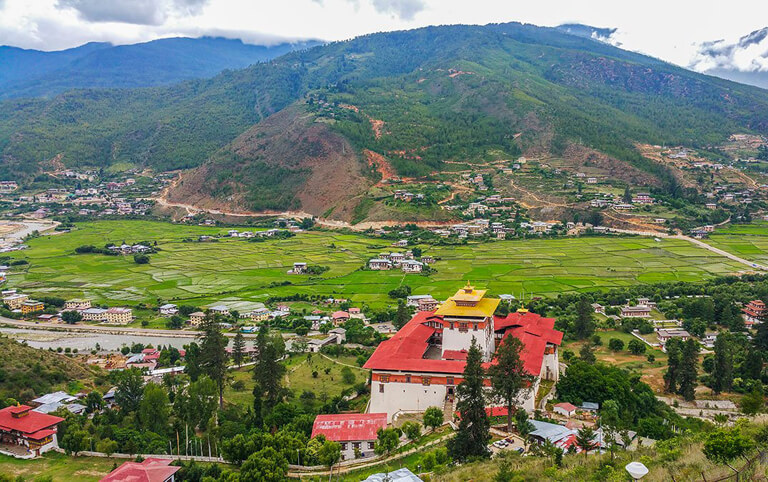 Seeing Rimpung Dzong from National Museum
-
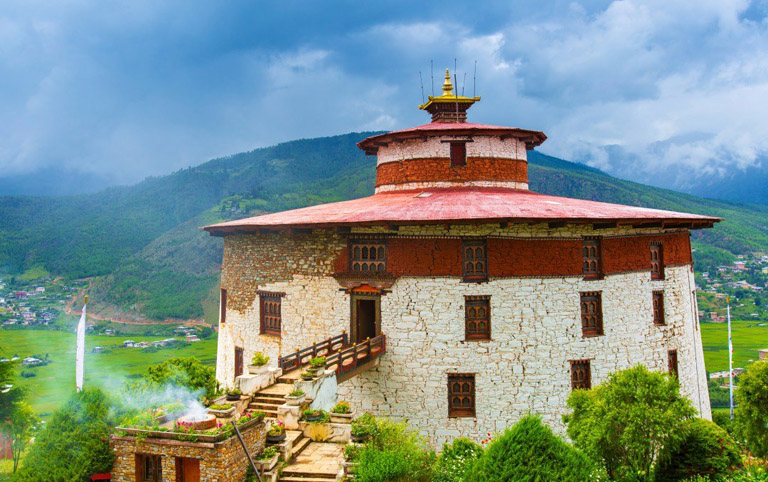 Bhutan National Museum in Paro
-
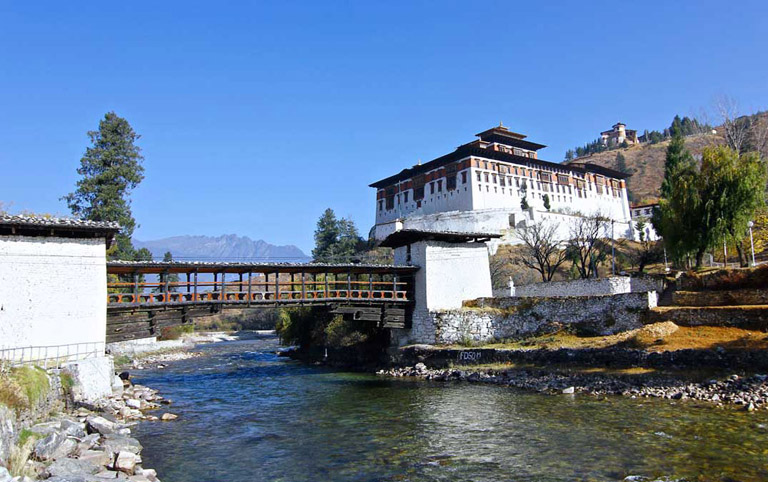 Rimpung Dzong in Paro
Day 13 Thimphu Sightseeing - Drive to Punakha / 80km, About 2.5hrs' Driving (B, L, D)
This morning you will start the day by visiting the National Memorial Chorten (shrine), a monument dedicated to the past 3rd king of Bhutan, Jigme Dorji Wangchuck. More than a memorial stupa, it is also one important religious center for Bhutanese daily worship. Then go to visit National Institute for Zorig Chusum, a school where students are taught to make Bhutan’s 13 traditional arts and crafts, like painting, woodcarving, embroidery, statue-making and so on. Next, go to Bhutan Post Office Headquarters, an informative and indulging museum with excellent exhibition of the evolution of Post & Telegraph in Bhutan as well as good details on historical and symbolic interpretation behind stamps. Afterward, drive to Buddha View Point where a massive bronze statue of Buddha Dordenma sits. The statue is placed on a lotus and below it is a meditation hall housed with 125,000 small statues of Buddha. This Buddha dominates over the valley of Thimphu, and you can hardly tell whether the view from Buddha Dordenma or the view of Buddha Dordenma is more spectacular.
Leaving Thimphu, drive through a forest of pine and hemlock, up to cross over the Dochu La Pass (Alt: 10142ft/ 3,050 m). From the place, you can enjoy the panoramic views of the majestic Himalaya Mountains. Keep driving along the winding road to the fertile valley of Punakha (Alt: 4430ft/ 1,350 meters).
Accommodate in Punakha Town.
Tip: there are many other interesting museums where you can probe into Bhutan's culture, history and local people's daily life, including Simply Bhutan Museum, National Textile Museum, National Library and Archives of Bhutan, etc. Feel free to tell your travel consultant if you are interested in visiting any one of them.
-
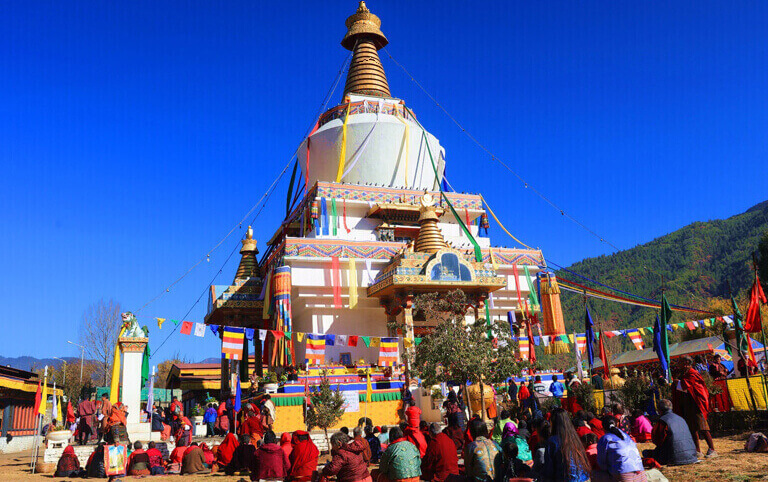 Bhutan National Memorial Chorten in Thimphu
-
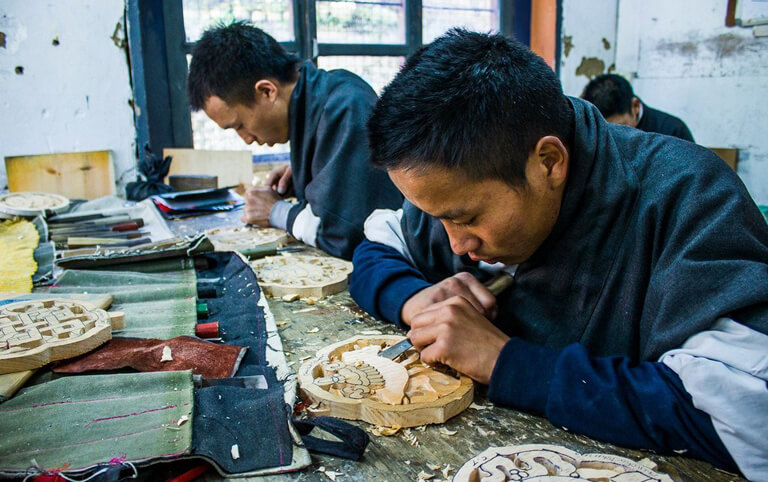 Wood-carving in Traditional Painting School
Day 14 Punakha Sightseeing - Drive to Paro / 130km, About 3.5hrs' Driving ( B, L, D )
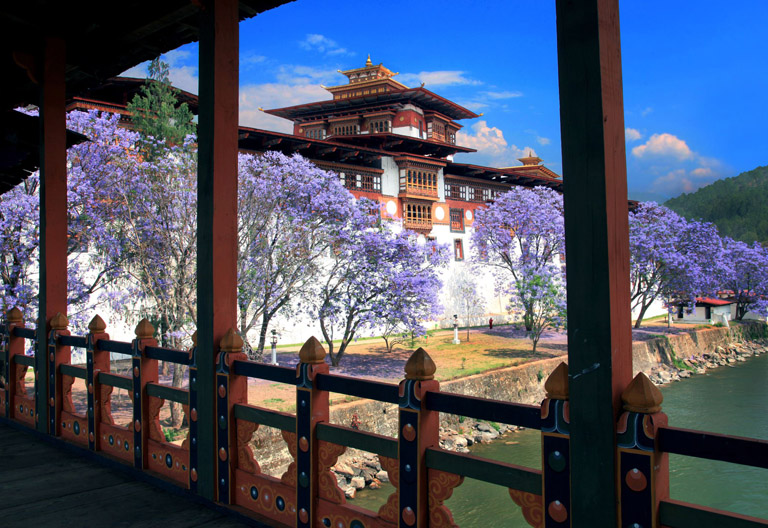
After breakfast, you will go to visit Punakha Dzong, situated between Pho Chhu and Mo Chhu (male and female rivers) and featuring in three docheys (one more than other dzongs). It is praised by many people as the most beautiful one in Bhutan’s 21 dzongs, especially in spring when the lilac jacaranda trees in blossom. Next, move to Wangdu Phodrang Dzong, where you can get a commanding view of the below valleys. In fact, Wangdu Phodrang Dzong enjoys an important status in the history as well, and it was the second capital city in the early days. Since Wangdu Phodrang is situated on the ridge, you can walk down to the bridge and have a short hiking to the village of Rinchangang. After the wonderful sightseeing, drive to the Chimi Lhakhang, a mysterious temple built in 1499 by the legendary “Divine Madman” - lama Drukpa Kunley. There is a tradition that the childless women can visit this temple to receive a wang (blessing) from the saint, then they will have a child.
After lunch, drive about 3.5 hours back to Paro. Have a good night in Paro Town.
-
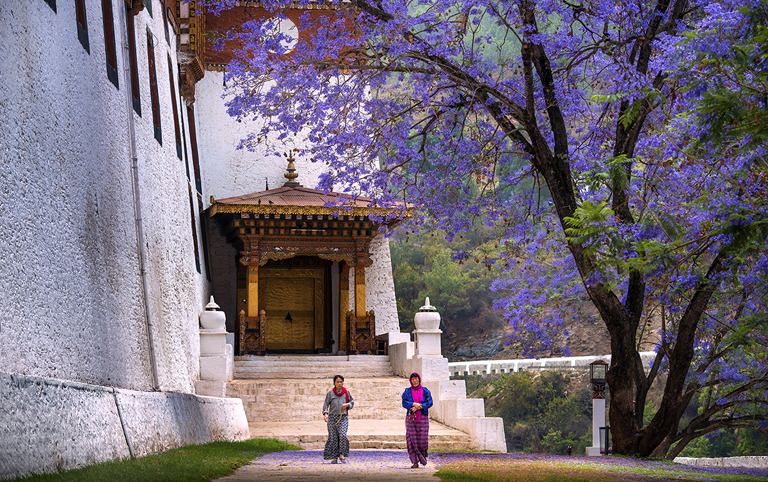 Beautiful Blue Poppy in Punakha Dzong (April ~ May)
-
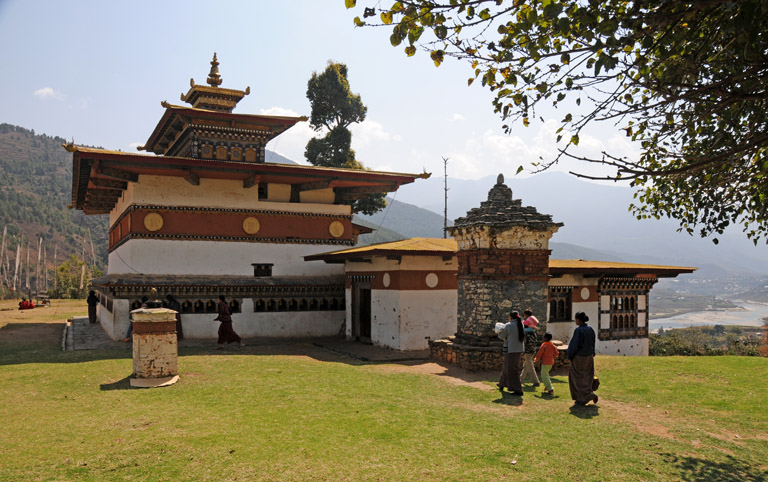 Chimi Lhakhang - Temple of Fertility
Day 15 Paro - Takshang (Tiger’s Nest) About 20mins' Driving Plus 2~3hrs' Hike (B, L, D)
Start the day with short drive to Paro’s upper valley. If the day is clear, you’ll have an unforgettable view of the “Goddess” – Mt.Chomolhari (23,640 feet).
Afterward, it’s a short drive to Taktsang trail ahead. Take a challenging but necessary 2~3 hours’ trek to Taktsang Monastery, the most famous monastery in Bhutan, also known as “Tiger Nest Monastery, because Guru Rinpoche reportedly flew to the site on the back of a flying tiger late in the 7th century. Between blue pines and a blue sky, the monastery perches miraculously on a cliff nearly 2,700 feet above Paro’s valley floor. Break along the way for tea and snacks in small tea house, and the view of both Taktsang Monastery and Paro Valley is magnificent.
Hike down the mountain, then drive back to Paro for accommodation.
Tips: 1) it takes about 2 ~ 3 hours to trek from the parking lot to Taktsang Monastery, and you could ride a horse for the first hour; 2) photography is strictly forbidden in the monastery, but you can take a nice shot on your road to Taktsang Monastery; 3) travelers have to deposit all belongings (cameras, phones or other electronic equipment and bags) at the entrance.
-
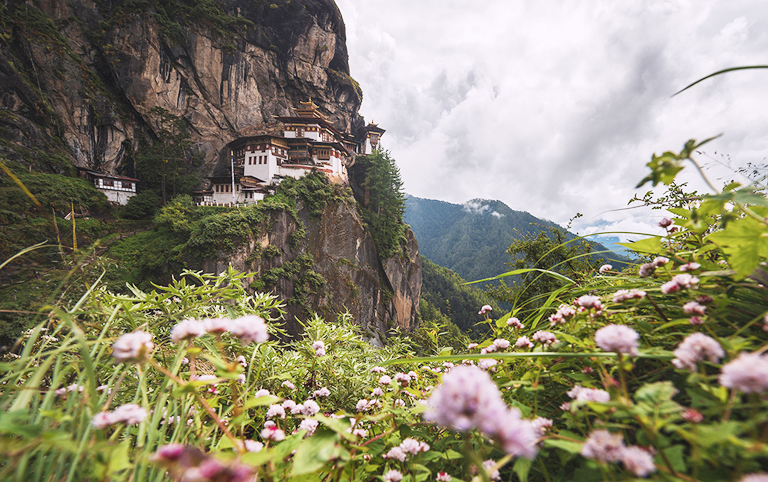 Mysterious Tiger’s Nest Monastery
Day 16 Paro Departure (B)
Your journey in Bhutan comes to an end today! After breakfast, your guide will pick you up from the hotel to the airport in time for the scheduled flight to your next destination. Before that, you can take a rest at the hotel or go for a walk nearby.
Tips: Please pack your luggage carefully, especially for small things like camera charge, power adaptor, mobile phone, phone charger, wallet and towel.

Useful Trip Notes
- 1. Necessary Visa and Permits for Nepal Tibet Bhutan Tour
Travelling to Nepal, Tibet and Bhutan requires several travel documents, including Tibet Travel Permit, Tibet Group Visa,Tibet Border Pass, Nepal Visa, and Bhutan Visa.
Tibet Entry Permit: Also called Tibet Travel Permit, Tibet Entry Permit is issued by Tibet Tourism Bureau which has to be obtained before your trip, because you must have it to take your flight/train to Tibet. Besides, you also need Border Pass which is obligatory for entering Tibet form Nepal and traveling to Mount Everest (or some other border areas). These permits can only be applied to by authorized travel agency on behalf of travelers. Traveling with Tibet Discovery, we can deal with all the permits for you.
Tibet Group Visa: If you travel to Tibet from Nepal, whether by flight or overland driving, Tibet Group Visa is a must. It can only be applied from the Chinese Embassy in Kathmandu. You just need to complete the visa application form with passport-size photo attached and hand in your origin passport, we will apply the visa for you. During the application period, your passport will be kept in the embassy, but it is available to use the copy of your passport to travel in Nepal.
Nepal Visa: You can get multiple entry Nepal Visa for 15, 30, 90 days ahead of departure or upon arrival at Kathmandu Tribhuvan Airport.
Bhutan Visa: All foreigners (except for citizens of Bangladesh, India, and Maldives) must obtain a visa before visiting Bhutan. Only the licensed Bhutanese tour operators or one of their international partners (like Tibet Discovery) can help apply for Bhutan Visa. - 2. Recommended Months to Visit Nepal, Tibet, Bhutan
It is recommended to have a Nepal Tibet Bhutan China Tour in spring (April ~ June) and autumn (September ~ October). It rains a lot in Nepal and Bhutan’s summer (July ~ August) and the winter is rather cold in Tibet. - 3. High Altitude Sickness
The average altitude of Tibet is about 4000 meters above the sea level (Lhasa: 3700m; EBC: 5200m;). You may suffer a bit from High Altitude Sickness in the beginning days of your Tibet trip if you haven’t had rich high plateau travel experience. But don’t worry too much, the high altitude can be acclimatized usually in 2~3 days. Our suggestion is to take a physical examination and get suggestions from your doctor, and also bring some medicines to prevent from High Altitude Sickness before your trip. While in Tibet, you should keep warm all the time, avoid strenuous activities, drink more water and eat more vegetables and carbohydrates. You’d better not take showers during the first two days after your arrival at Tibet. If you don’t feel well, get help from your tour guide or go to the hospital without any delay. While in Kathmandu and Bhutan, you don't have to worry about the High Altitude Sickness. - 4. How to Get to Kathmandu
Travelers can take inbound international flights to Kathmandu from Lhasa, Chengdu, Guangzhou, Hong Kong, Kunming in China, Thailand, India, Qatar, Turkey, Dubai, Malaysia, Singapore and the United Arab Emirates directly. Overland travel from Tibet, India or Bhutan is also available. - 5. Packing and Wearing Ideas
Firstly you can’t forget your passport, Chinese Visa and Bhutan Visa. A large backpack and a smaller one are recommended (the smaller one can be used for daily activities). Also bring the necessary medicine you need. Other stuffs like sunglasses, snow glasses, hats, lip balm, sun block are recommended.
As for wearing, you are suggested to dress in layers (both thin and thick jackets). Down jacket is necessary in Spring and Autumn. A pair of durable and comfortable shoes is necessary.
Recommended Tibet Group Tour Packages
Escorted by a skilled driver and companied by a professional local tour guide to organize all the activities, all you have to do is to enjoy your fantastic Tibet journey.Following are some other recommended Tibet group tour packages that you may be interested in. You can also contact us to customize a trip if you want..
-
Lhasa / Gyantse / Shigatse / Everest / Gyirong / Kathmandu / Paro / Thimphu / Punakha / Tiger's Nest / Paro
15 Days Tibet Nepal Bhutan Himalaya Exploration In-depth Tour
Highlights: Potala Palace, Mount Everest, Durbar Square, National Memorial Chorten, Punakha Dzong
Prefer to tailor a trip that totally suits your requirements and interests? Our 20+ professional, helpful and friendly travel experts are ready to help! Tell us your needs, and one of our experts will get to you with trip details within 0.5~23.5 hrs. You can also call us at 86-28-85227275 / 86-28-85223672.

 Karen
Karen Wonder
 Jack
Jack Rita
Rita Johnson
 Vivien
 Wing
Wing Ariel
Ariel Leo
Leo Tracy
Tracy Evelyn
 April
April Phoebe
 Kelly
Kelly Shirley
 Reya
Reya Juliet
 Elk
Elk Samantha
 Felix
Felix Sean
Sean